
Yusril Proposes Classifying Under-Invoicing and Illegal Fishing as Corruption
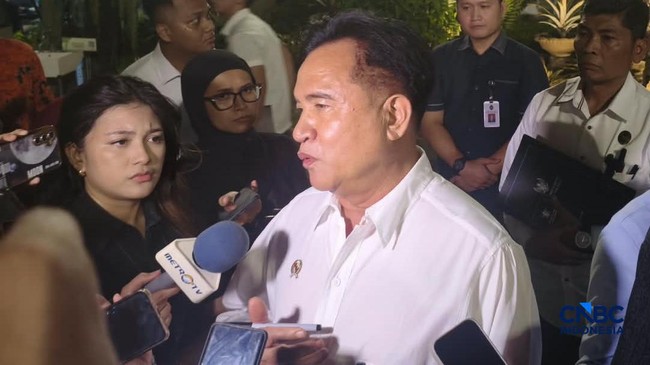
Jakarta, CNBC Indonesia – Coordinating Minister for Law, Human Rights, Immigration and Corrections Yusril Ihza Mahendra said many forms of manipulation are not currently classified as corruption under Indonesian law. One example is the frequently occurring practice of manipulating transaction values, or under-invoicing.
He said this needed to be aligned with the Corruption Eradication Law, particularly by broadening the definition of losses to the national economy caused by practices such as under-invoicing and smuggling.
Under-invoicing also drains the country’s wealth because the reported value or volume of exports is lower than the actual amount. This harms the national economy and allows certain parties to profit from transaction manipulation.
Yusril also said that many definitions of corruption are inconsistent between the Corruption Eradication Law and the UN Convention against Corruption (UNCAC).
“Activities such as under-invoicing and stealing fish from our seas should not be forgotten; they also drain our nation’s wealth,” Yusril said after meeting President Prabowo Subianto at the State Palace on Monday (26 October 2026).
He therefore proposed that the meaning of losses to the national economy be included in discussions on improving the Corruption Eradication Law.
“In my view, the current Corruption Eradication Law has two elements: losses to the state, and losses to the national economy. The latter has not been developed sufficiently. If someone steals fish or engages in under-invoicing in the mining sector, they clearly harm the national economy; that should also constitute corruption,” he said.
Yusril added that many actions causing losses to the state are not yet classified as corruption. He cited under-invoicing, smuggling and tax fraud as examples.
The National Economic Council (DEN) previously clarified remarks concerning its review of possible changes to the definition of corruption. In an official statement, it said its recommendations to amend the Corruption Eradication Law would not remove state financial losses from the definition of corruption. Articles 2 and 3 of the law, corresponding to Articles 603 and 604 of the Criminal Code, would remain in place.
The DEN’s recommendations focus on two areas. First, clarifying the elements of proof to make law enforcement more certain, objective and consistent. Second, broadening the scope of anti-corruption efforts by adopting offences in UNCAC that are not yet covered by national law.
The recommendations were submitted to President Prabowo Subianto at Merdeka Palace in Jakarta on 20 October 2026, with the aim of providing legal certainty, strengthening the effectiveness of anti-corruption efforts and promoting sustainable economic growth.