
Yusril: Preaching Makes an Important Contribution to Democratic Life
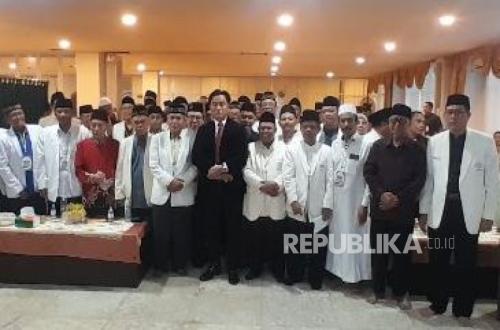
JAKARTA – Coordinating Minister for Legal Affairs, Human Rights, Immigration and Corrections Yusril Ihza Mahendra said preaching makes an important contribution to democratic life.
Preachers have an opportunity to explain to the public that religious observance, civic responsibility and respect for the law need not be seen as conflicting values.
“In the Islamic tradition, the values of justice, trustworthiness, consultation and social responsibility have an important place,” he said when opening the Training of Trainers (TOT) and National Instructor Coaching for the National Defence Cadre Preachers (CINMKBN), organised by the central board of Harakah Bakomubin at the Hidayatullah Da’wah Centre on Thursday (22 October 2026).
Yusril also spoke about the history of the preaching movement in Indonesia. Harakah Bakomubin, he said, did not emerge in a vacuum, but was rooted in the deep awareness of Islamic scholars and preaching figures.
They initiated Harakah Bakomubin in 1996 at a national gathering at the Pondok Gede Hajj Dormitory. The initiative was led by highly dedicated figures, including the late Toto Tasmara, Anwar Sanusi and Tatang Natsir Fathuddin, among many others.
He said Bakomubin, which has since transformed into Harakah Bakomubin, had demonstrated a consistent commitment to its four main pillars: service, preaching, education and community reform.
“The change of name and strengthening of the organisation’s structure do not break the chain of history. Rather, they renew its efforts so that it can remain adaptive and professional, and at the forefront of safeguarding brotherhood and national unity,” Yusril said.
He expressed his highest appreciation to Harakah Bakomubin for preserving this history while moving forward—not only by developing preachers’ rhetorical skills, but also by equipping them with national insight, legal awareness and a spirit of national defence.
The minister also said Indonesia was built on the reality of pluralism. Its people have highly diverse religious, ethnic, linguistic, customary and cultural backgrounds.
This diversity is fundamental to the life of the nation, he said, but does not automatically produce unity.
Differences can be a source of richness when managed wisely, but they can also develop into conflict if sharpened to foster hostility.