
Yusril: Polri as Pillar of Humanistic Justice in National Legal Transformation
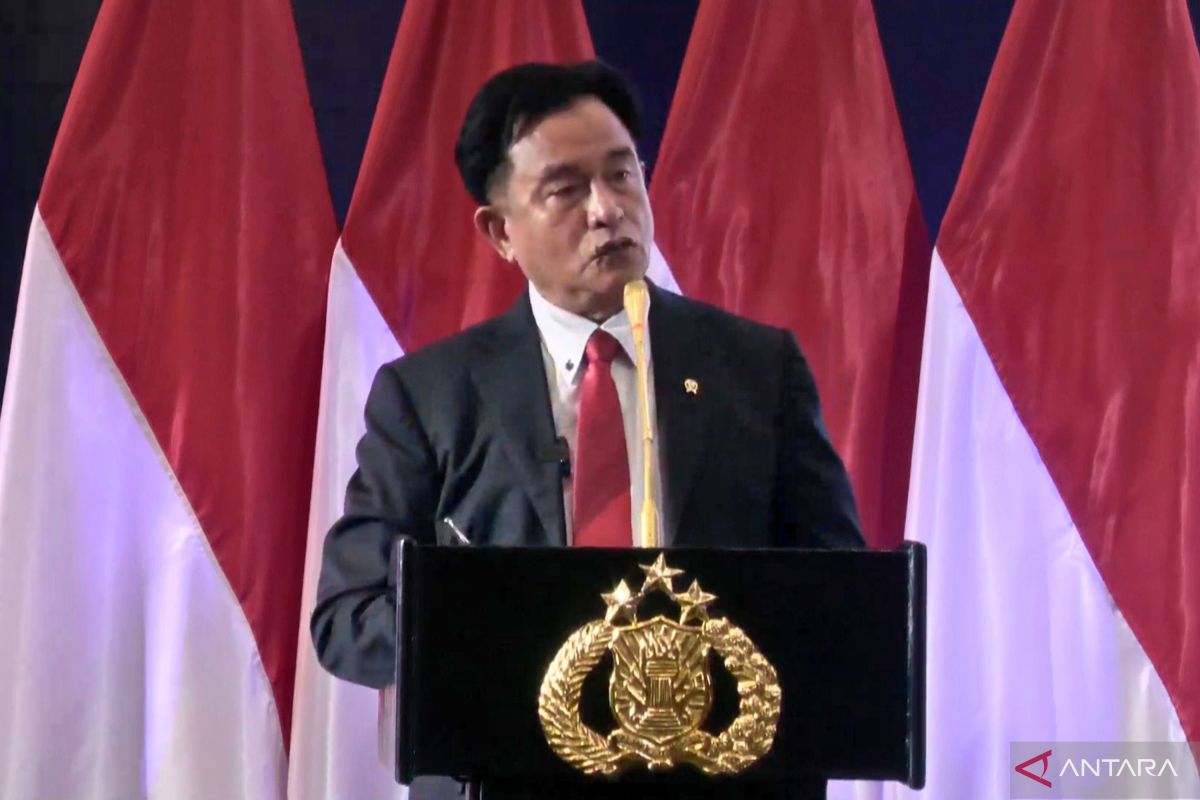
Jakarta (ANTARA) - Coordinating Minister for Law, Human Rights, Immigration, and Corrections Yusril Ihza Mahendra stated that the Indonesian National Police (Polri) must become a pillar of humanistic justice in the national legal transformation. This is because Polri holds a key position in the criminal justice system as the main entry point for law enforcement processes. “Therefore, the quality of law enforcement is greatly determined by how Polri carries out its investigation and prosecution functions professionally, transparently, and upholding the principles of due process of law,” Yusril said during a technical working meeting in Jakarta on Thursday, as monitored online. Yusril stressed that Polri is not merely a repressive law enforcement apparatus, but also a representation of the rule of law that is present directly among the people, where the law is felt, tested, and judged by the public. Therefore, he emphasised the importance of synchronising Polri’s roles and functions with the Astacita programme to realise a just, humanistic, and accountable legal system. Yusril explained that the national criminal law reform, marked by the birth of the new Criminal Code (KUHP), the new Criminal Procedure Code (KUHAP), and the Penal Adjustment Law, must be followed by real changes in field practices. According to him, the law must not stop at the text of the legislation but must live in the behaviour of law enforcement officials. In addition, Yusril also highlighted the paradigm shift in sentencing from a retributive approach to a more restorative, corrective, and rehabilitative one. He stated that this approach places justice not merely as punishment, but as an effort to restore, protect victims, and guide offenders to reintegrate into society. “Modern justice is not only measured by the ability to punish, but by the state’s ability to maintain a balance between public interests, victim protection, and respect for human dignity,” Yusril affirmed. In the context of Astacita, Yusril explained that the national criminal law transformation is part of a broader agenda to strengthen democracy, human rights, as well as legal and bureaucratic reforms. Therefore, cross-institutional synergy is needed, including between Polri, the Prosecutor’s Office, the Supreme Court (MA), and related ministries. The former State Secretary also emphasised the importance of strengthening Polri’s legal function as a “conceptual kitchen” that ensures every legal change can be translated into internal regulations, standard operating procedures, education, and institutional practices. On the other hand, Yusril added that the utilisation of technology and digital legal information systems is one of the keys to accelerating adaptation to the continuously evolving legal dynamics. However, Yusril reminded that the use of technology must remain within the corridor of ethics and accountability. “Modern law must be supported by an intelligent system, but still grounded in humanistic values and state responsibility,” he said. He also underlined eight strategic agendas that Polri needs to undertake, including harmonisation of internal regulations, strengthening the culture of due process of law, protection of vulnerable groups, development of digital legal information systems, and improvement of cross-institutional coordination. He opined that the success of Polri’s synchronisation with Astacita will greatly determine the quality of the rule of law in Indonesia. It was emphasised that Polri must be able to become an institution that not only enforces the law but also delivers orderly, humane, and trustworthy justice to society. The working meeting was held by the Polri Legal Division for the 2026 fiscal year as a strategic forum to strengthen Polri’s legal role in supporting the national criminal law transformation.