
Yusril: Luhut Wants State Losses Excluded from Corruption, Citing SOE Experience
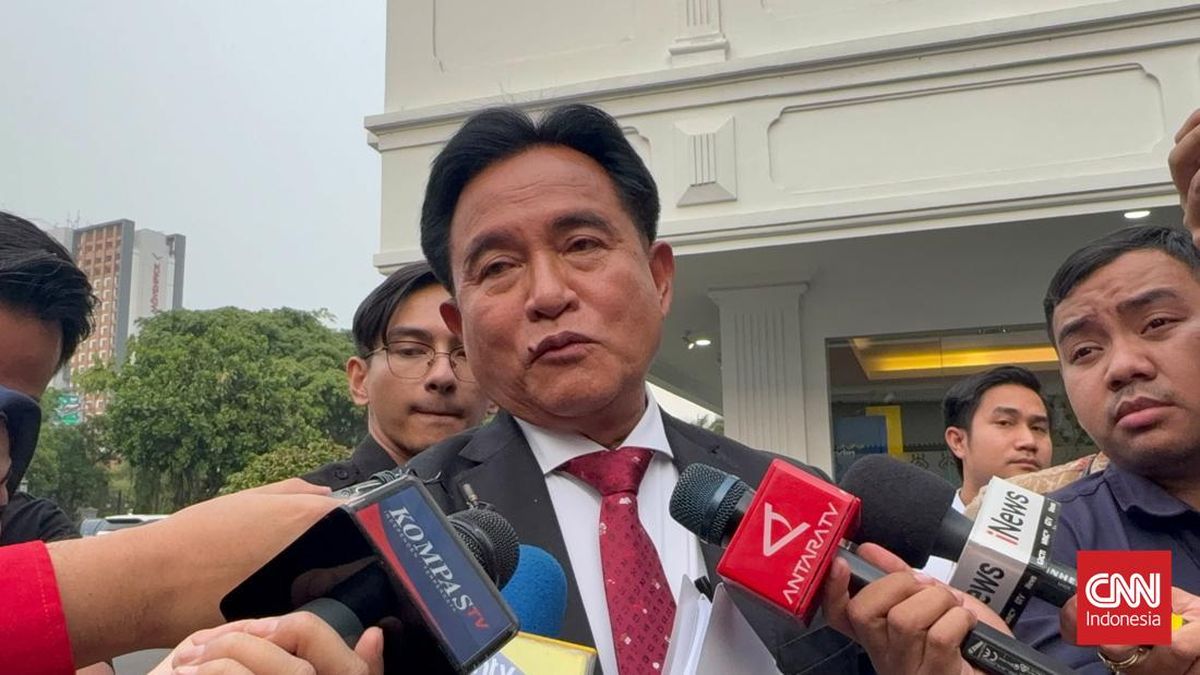
Coordinating Minister for Legal, Human Rights, Immigration and Corrections Yusril Ihza Mahendra said National Economic Council chairman Luhut Binsar Pandjaitan’s proposal to remove state losses from the category of corruption was based on experience managing state-owned enterprises (SOEs).
“I tend to understand it that way. Mr Luhut is not putting forward a theory, but something also based on practical experience, particularly in the management of SOEs,” Yusril said at the Presidential Palace in Jakarta on Monday (26 October).
Yusril said many SOEs had incurred losses in practice, which were then charged as criminal acts of corruption.
He cited the Covid-19 pandemic, when many people borrowed money from state-owned banks but defaulted. The resulting losses at the banks were then prosecuted as corruption, he said.
“Should we maintain this kind of approach or not? In other countries, it is not considered corruption; it is regarded as an ordinary business loss. There can be force majeure,” he said.
Yusril also acknowledged that several aspects of the Law on the Eradication of Corruption need to be aligned with the UN Convention against Corruption (UNCAC).
One example, he said, was trading in influence. In his view, the concept is broadly similar to abuse of authority as set out in Indonesia’s anti-corruption law.
Yusril said corruption occurs when an official uses their position to facilitate a business matter.
“That is actually quite similar to trading in influence. We just need to make it more compliant with the UN Convention against Corruption,” he said.
The issue of removing state losses from the category of corruption arose after Luhut met President Prabowo Subianto last week.
Luhut claimed that Prabowo had approved a study by the National Economic Council stating that corruption should be limited to bribery and should not include state financial losses.
Luhut later corrected his remarks. He explained that the recommendation to improve the anti-corruption law did not remove state financial losses from the definition of corruption, and that Articles 2 and 3 of the law, or Articles 603 and 604 of the Criminal Code, would remain in place.
Luhut said the council’s recommendations focused on two points: clarifying the elements of proof to make law enforcement more certain, objective and consistent; and widening the scope of anti-corruption efforts by adopting UNCAC offences not yet covered by national law.
UNCAC’s categories of corruption include bribery of national public officials; bribery of foreign public officials and officials of public international organisations; embezzlement, misappropriation or other diversion of property by a public official; trading in influence; abuse of office or authority; illicit enrichment; bribery in the private sector; embezzlement of property in the private sector; laundering the proceeds of crime; concealment of the proceeds of crime; and obstruction of justice.
Meanwhile, Law No. 20 of 2001, the second amendment to Law No. 31 of 1999 on the Eradication of Corruption, identifies at least 30 acts as corruption offences. One concerns state financial losses, covered by Articles 2 and 3.