
Yusril: Human Rights Must Form the Basis of Development Policy
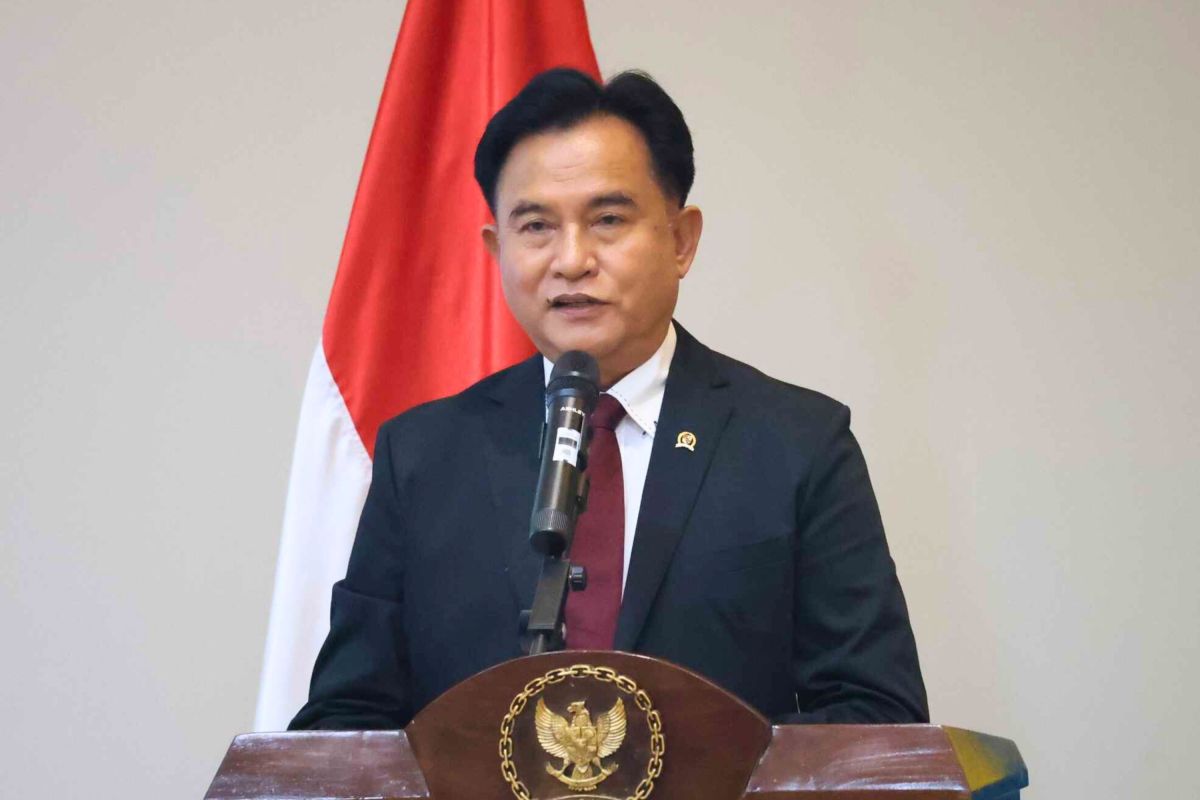
Jakarta (ANTARA) - The Coordinating Minister for Law, Human Rights, Immigration, and Correctional Affairs, Yusril Ihza Mahendra, has asserted that human rights must serve as the foundation for development policies.
“Human rights must not be placed as a mere supplement in the development agenda, but must be present from the policy planning stage, decision-making, implementation, through to the evaluation of state policies,” Yusril stated in Jakarta on Wednesday.
In light of this, Yusril expressed his appreciation to the National Commission on Human Rights (Komnas HAM) for launching its 2025 annual report on Monday (6/7).
Yusril expressed hope that the report would serve as a stepping stone to strengthen justice, increase state accountability, improve public policy, and advance human rights protection for all Indonesian people.
According to him, the Komnas HAM annual report is not merely a formal accountability document for a state institution, but also serves as a space for the public to assess the implementation of human rights mandates in Indonesia, while acting as evaluation material for the government to improve policies sustainably.
Yusril emphasised that human rights are not a gift or an act of generosity from the state to its people.
“The state does not create human rights, but is obliged to recognise, respect, protect, fulfil, uphold, and promote them,” he said.
Consequently, Yusril stated that the theme of the Komnas HAM 2025 Annual Report, titled “Upholding Justice, Promoting State Accountability,” is highly relevant to the needs of a constitutional state.
Justice and accountability, he added, cannot be separated, as justice without accountability will only remain a promise, while accountability without an orientation towards justice may end up as mere administrative procedure.
The most frequently reported issues relate to the right to welfare, followed by the right to justice and the right to security.
Yusril noted that these figures should not be read merely as statistics, because behind every complaint, there are individuals, families, and communities who feel their rights are not yet protected.
He did not deny that human rights issues are becoming increasingly complex. Issues regarding welfare, agrarian conflicts, civil liberties, digital transformation, the protection of vulnerable groups, and the accountability of authorities, he noted, cannot be resolved through isolated sectoral approaches.
Yusril argued that while national development remains essential to drive economic growth, investment, infrastructure, food security, energy, and industrial downstreaming, development must not be pitted against human rights.
“Development that respects human rights will, in fact, possess stronger legitimacy, better social resilience, and more sustainable benefits,” said Yusril.
Furthermore, he highlighted the importance of following up on Komnas HAM’s recommendations. These recommendations should not stop as mere correspondence between institutions but must be translated into a clear work agenda, featuring designated persons in charge, measurable timelines, and objective monitoring mechanisms.