
Yusril: Election Law Amendment Targeted for Completion in 2.5 Years of Prabowo's Administration
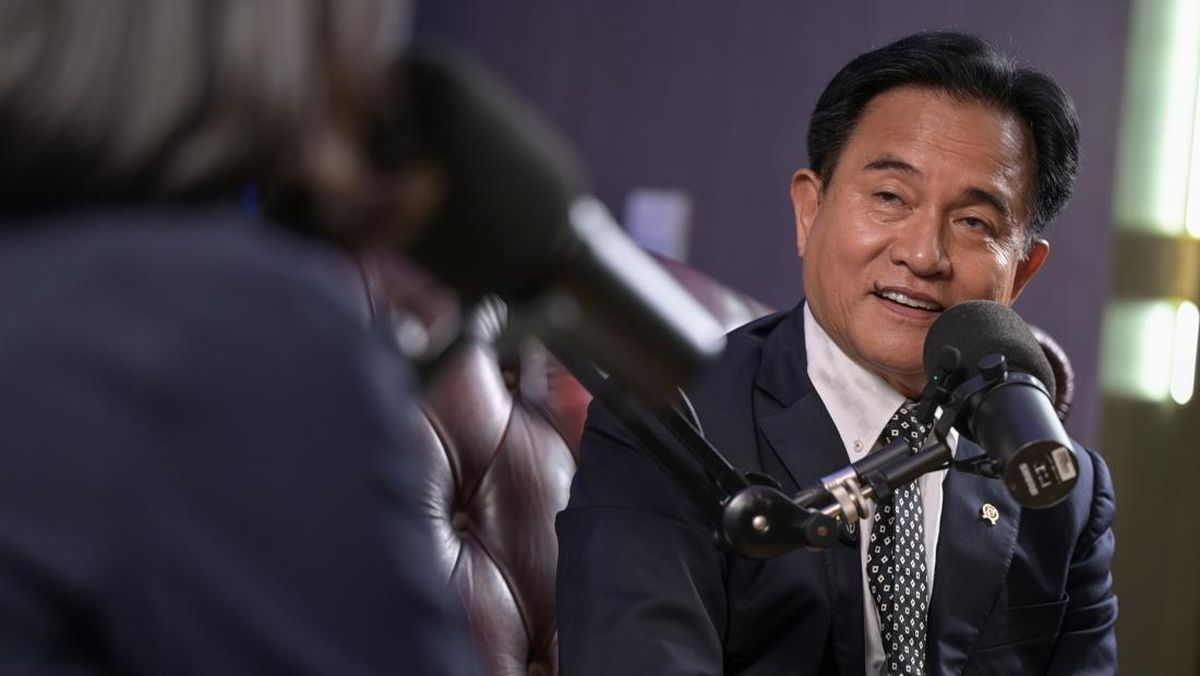
Coordinating Minister for Law, Human Rights, Immigration, and Corrections Yusril Ihza Mahendra stated that the revision of the General Elections Law (RUU Pemilu) is targeted for completion within 2.5 years of President Prabowo Subianto’s administration. Yusril explained that this target is set considering the preparations needed for the 2029 elections. “Our target is actually for this RUU to be completed at the 2.5-year mark of this administration, so there is enough lead time to prepare for the election 2.5 years before it is held in 2029,” Yusril said in response to questions from Antara in Jakarta on Wednesday (22/4). He also reminded of the potential for judicial review of the law at the Constitutional Court (MK) after the RUU Pemilu is passed. “The Constitutional Court might issue cancellations or new interpretations again, sometimes causing surprises, and that not only troubles the government in terms of budget and security, but also burdens the General Elections Commission (KPU) as the implementer on the ground,” he said. Therefore, Yusril hopes that discussions on the RUU Pemilu can begin in mid-2026. However, this depends on the DPR as the initiative for the revision comes from the parliament. “If the DPR has finished drafting, it will be submitted to the President, and of course the President will issue a presidential letter to appoint several ministers to discuss the RUU,” he said. According to Yusril, the government is currently in the stage of anticipating the DPR’s draft of the RUU Pemilu. Later, the government will submit a list of problem inventories (DIM). “And we are awaiting directions from Mr President because there are several very crucial issues related to some Constitutional Court decisions,” Yusril said. Previously, DPR RI Chair Puan Maharani, when met at the parliamentary complex in Senayan, Jakarta, on Thursday (16/4), said that the RUU Pemilu is still being discussed with party leaders. Meanwhile, Deputy Chair of DPR RI Sufmi Dasco Ahmad said that they do not want to rush the discussion of the RUU Pemilu because they want the resulting election law to be truly good. Dasco, at the parliamentary complex on Tuesday (21/4), said that DPR leaders are asking political parties, both in parliament and outside, to conduct simulations of the electoral system to support the discussion of the RUU. In addition, he stated that the discussion of the RUU Pemilu cannot be rushed because there have been many Constitutional Court decisions. Do not let the RUU Pemilu be discussed hastily, only to trigger new lawsuits at the MK. “We’ve been back and forth with the General Elections Law being sued, the MK annulling it, the MK deciding, then the MK deciding something else, so this time, please, let’s all be patient,” he said. 10 issues for change Previously, member of Commission II of the DPR, Ahmad Doli Kurnia, revealed that there are 10 issues for change in the RUU Pemilu, some of which are mandates from Constitutional Court (MK) decisions. He detailed that the 10 points of change are, first, the legislative election system. The RUU Pemilu will reopen discussions on changing the election system, whether it remains open proportional, closed, or even a mixture. Second, discussions on changing the parliamentary threshold. Third, discussions on changing the presidential threshold, both based on MK decisions. To date, said Doli, several factions are not yet in agreement on changing the parliamentary threshold, although for the presidential threshold, the MK has requested its abolition. Fourth, discussions on changing the number of seats per electoral district (dapil). Fifth, the system for converting votes into seats in the DPR. Sixth, the issue of separating local and national elections referring to Decision Number 135/PUU-XXII/2024. Seventh, discussions on improving the system to curb money politics practices up to vote buying. Eighth, digitalisation in every stage of the election. Ninth, discussions on changing the election organising bodies, which have long been criticised for professionalism and integrity. And finally, regarding the resolution of election disputes. For a long time, he said, he has been pushing for the establishment of a special judicial body for election dispute resolution. “Well, those are some or 10 issues, 5 contemporary and 5 classic ones that will definitely be discussed in the election law discussions,” Doli said.