
Yusril directs Imipas Ministry to initiate revision of Presidential Regulation on Refugee Handling
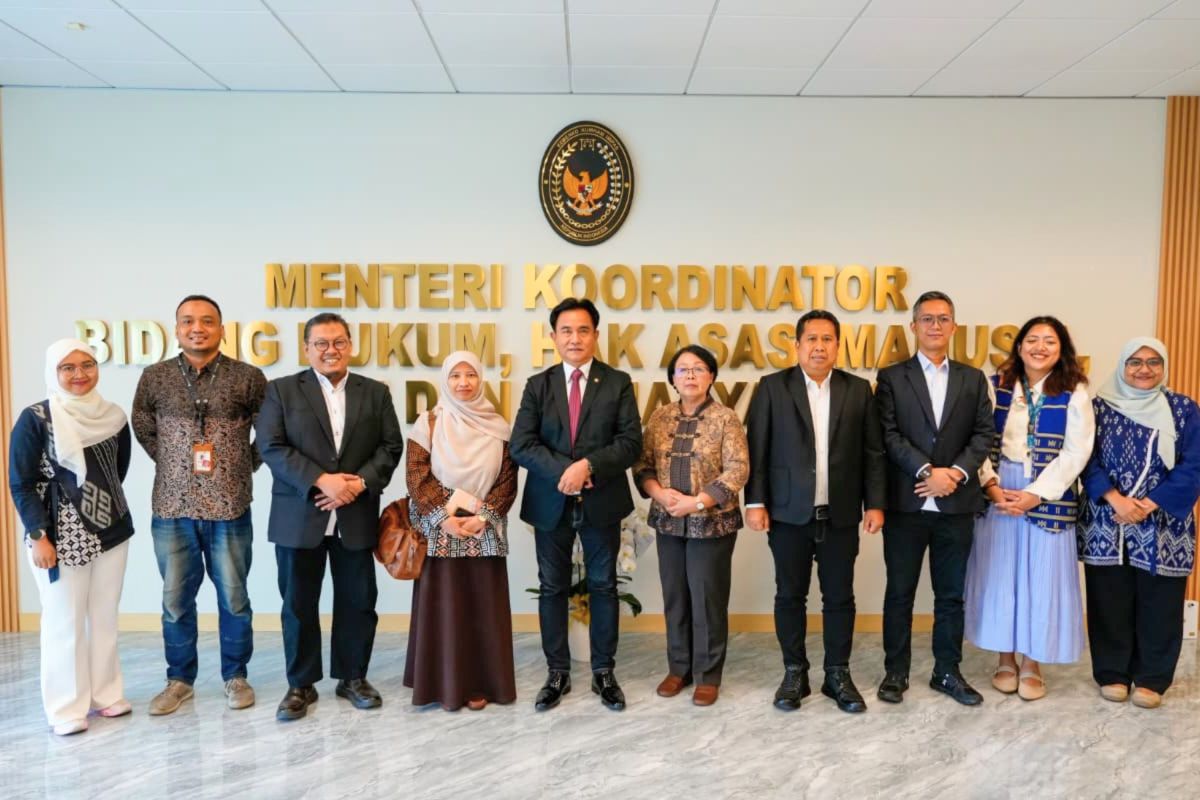
Coordinating Minister for Law, Human Rights, Immigration, and Corrections Yusril Ihza Mahendra will direct the Ministry of Immigration and Corrections to initiate a revision of Presidential Regulation (Perpres) Number 125 of 2016 concerning the Handling of Foreign Refugees. According to him, the ministry has the strongest relevance as it directly intersects with immigration aspects in refugee handling. “We will direct it so that it is focused and structured,” said Yusril, as confirmed in Jakarta on Wednesday.
The revision of the Perpres originated from discussions during an audience with the Research Team of the Political Research Centre of the National Research and Innovation Agency (BRIN) in Jakarta on Tuesday (11/8). Yusril assessed that the issue of foreign refugees is a long-standing problem closely linked to aspects of law, human rights, and immigration.
He argued that following the division of ministries, refugee handling requires clarity regarding authority and the party serving as the primary custodian. It was noted that since the Coordinating Ministry was divided into two, refugee affairs have been in a ‘grey area’ where it is unclear which ministry is responsible. “The refugee issue is closely related to law, human rights, and immigration, so this input is very valuable,” he stated.
On the other hand, he opened up the possibility of arrangements allowing refugees who have obtained status from the United Nations High Commissioner for Refugees (UNHCR) to access limited work opportunities while in Indonesia. However, this idea is considered to need careful study to align with immigration and employment regulations.
The Coordinating Minister emphasised that the various inputs provided will serve as material to be followed up in the process of revising the Perpres. The government also needs to ensure the process runs in a coordinated manner by paying attention to legal, human rights, immigration, and security aspects, as well as the capacity of central and regional governments.
Meanwhile, Deputy for Immigration and Corrections at the Coordinating Ministry for Law, Human Rights, Immigration, and Corrections, I Gede Nyoman Surya Mataram, explained that Perpres Number 125 of 2016 has so far had limitations because it primarily regulates the division of tasks between parties, while implementation on the ground faces various problems, especially regarding the provision of shelters by regional governments. According to Surya, this condition has contributed to problems in several regions.
He conveyed that the proposal to revise the Perpres had actually been submitted since 2023, but there has been no ministry or agency that has firmly taken a position as the initiator. The BRIN Research Team, led by Professor Tri Nuke Pudjiastuti, presented research results and an academic manuscript compiled as input for the government in the Perpres revision process.
The research also involved several partners, including Gadjah Mada University, Padjadjaran University, UNHCR, and Dompet Dhuafa. In its presentation, BRIN conveyed a number of strategic issues that need attention in the revision of the Perpres, including refugee data collection mechanisms, institutional clarity and division of authority between central and regional governments, the status of refugees and asylum seekers, the principle of non-refoulement, economic empowerment, and strengthening the role of civil society.
BRIN also highlighted the increasingly limited international funding conditions, which impact support for refugees through UNHCR, the International Organization for Migration (IOM), and civil society organisations. Therefore, BRIN assesses that a more comprehensive approach is needed so that refugee handling is not only oriented towards shelter, but also prepares long-term solutions in the form of resettlement to third countries or voluntary repatriation.