
Yusril: Corruption Will Not End Just Because KPK Exists, The Problem Lies in Ethics
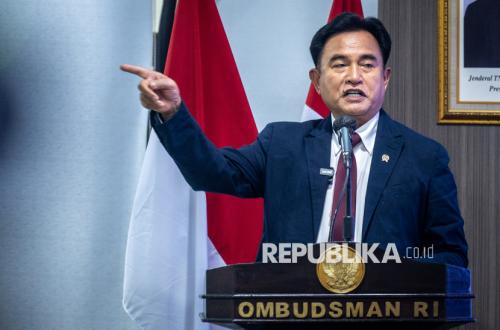
Coordinating Minister for Law, Human Rights, Immigration, and Corrections Yusril Ihza Mahendra assessed that eradicating corruption in Indonesia will not succeed if it only relies on legal instruments and law enforcement without being accompanied by the development of public ethics and morality. According to him, the root of the corruption problem no longer lies in a lack of regulations or institutions, but in weak ethical awareness.
Yusril made the statement during the inauguration of the Cetiya Tian Shi Hua Guan Di Jing in Pantai Indah Kapuk (PIK), North Jakarta, on Sunday (19/7/2026). “The problem is not the absence of legal norms, nor the absence of law enforcement institutions. But why hasn’t corruption been eradicated? In fact, it is getting worse,” Yusril said.
He explained that Indonesia actually possesses relatively complete anti-corruption instruments. In addition to various laws, the government has established special institutions such as the Corruption Eradication Commission (KPK) and the Corruption Court (Tipikor). However, these various instruments have not been able to stop corrupt practices that continue to repeat themselves.
Yusril admitted that his long experience in the legal field, including his involvement in drafting various laws and regulations, led him to the conclusion that law enforcement alone is insufficient to eliminate corruption. “Hundreds of laws I have drafted. Various institutions I helped create, expanding investigative powers, establishing the KPK, establishing the Corruption Court. But why hasn’t corruption been eradicated?” he said.
The Professor of Constitutional Law emphasized that the main foundation of a clean state is not just legal certainty, but also ethics based on religious values. According to him, the constitution and various regulations will be meaningless if they are not supported by the moral awareness of the community. “The Constitution, laws, government regulations, whatever we make will be meaningless if the state is not built on an ethical foundation that must be constructed based on the religious beliefs that live and thrive in our homeland,” Yusril stated.
Therefore, Yusril believes that building an anti-corruption culture must start from character education from an early age. He assessed that this change cannot be achieved in a short time, but requires a cross-generational process.