
Yusril Confirms Government Will Not Interfere with 'Pesta Babi' Film Screenings
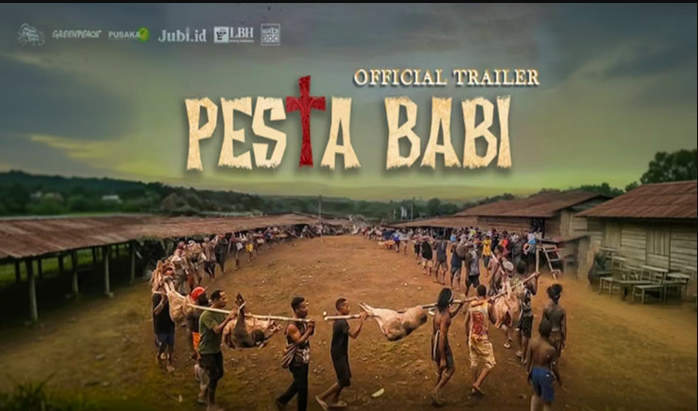
The Coordinating Minister for Law, Human Discretion, Immigration, and Correctional Affairs, Yusril Ihza Mahendra, has reaffirmed that the government has never instructed authorities to disperse public screenings or discussions regarding the documentary film ‘Pesta Babi’.
“The government has never provided direction to regional authorities to take action to disperse or prohibit students or members of the public,” Yusril stated during a visit to the State University of Surabaya (Unesa) on Tuesday.
Yusril noted that the government continues to respect the creative freedom and expression of artists through such films. He stated that the criticisms presented in the film, which focuses on cases in Papua, are viewed as positive input for the government to conduct evaluations, particularly regarding environmental impacts and the rights of local communities.
“The government views the positive criticisms presented in the documentary film favourably, as they serve as material for government assessment,” he said.
He acknowledged that the national rice field printing programme initiated in 2022 has the potential to create biases on the ground, including potential conflicts of interest among residents and issues regarding forest conservation in southern Papua.
Yusril also assessed that the film’s title has triggered prejudice in certain regions due to cultural differences. He noted that the term “pesta babi” (pig feast) is a common expression in Papua used to describe large celebrations. However, Yusril urged creators to actively provide explanations to the public to prevent misunderstandings.
“Like artists, creators must not remain silent or merely hide behind the shield of creative freedom,” Yusril added.
The Constitutional Law Professor from the University of Indonesia also sought to clarify the use of the term ‘colonialism’ within the film’s narrative to prevent historical misinterpretations that could potentially divide the nation. He emphasised that Papua is a legitimate part of the Unitary State of the Republic of Indonesia based on the official United Nations referendum, and noted that food security programmes are also being implemented in other regions, such as Kalimantan.
According to Maruli, the dispersal of screenings in several areas was the result of coordination and decisions made by local governments to maintain regional security.
The documentary ‘Pesta Babi’, produced by WatchDoc and created by Dandhy Dwi Laksono and Cypri Dale, has drawn public attention after several screening agendas were dispersed in various regions. The documentary highlights the issues faced by indigenous communities in South Papua who are affected by large-scale industrial and food projects, while simultaneously sparking debate by raising issues of modern colonialism and militarisation in Papua.