
Yusril Calls for Influence-Peddling and Private-Sector Corruption to Be Covered by Anti-Corruption Law
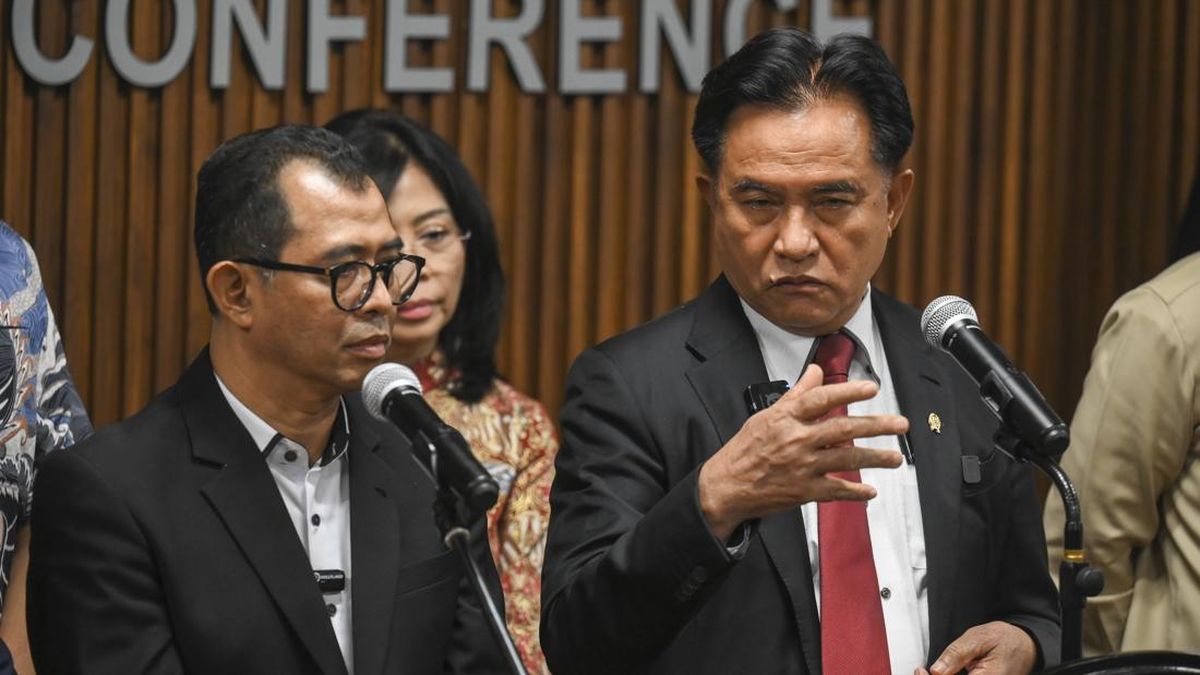
Coordinating Minister for Legal, Human Rights, Immigration and Corrections Yusril Ihza Mahendra has called for influence-peddling and private-sector corruption to be included as categories of corruption through a revision of the Anti-Corruption Law.
“We will indeed include those [influence-peddling and the handling of corruption in the private sector]. We need to update the law on corruption offences,” Yusril said at the Presidential Palace complex in Jakarta on Wednesday (21 October).
Yusril said there had been few significant changes to Indonesia’s anti-corruption legislation since its last revision in 2001.
“So it is still going round in circles. What Mr Luhut said is right: many government officials, state officials and SOE officials do not dare to make decisions because they are worried about making a loss. Then, when there is a loss, it is called corruption. But when there is a profit, nothing happens. In business, you can make a profit or a loss,” he said.
Yusril said that since Indonesia ratified the United Nations Convention against Corruption (UNCAC) in 2006, Indonesian regulations should have been brought into line with the convention. However, the Anti-Corruption Law currently in force is still Law No. 20 of 2001, and it has not been revised since UNCAC was ratified.
“It has now been 20 years and it has not been done, so we are still using the definition of corruption set out in Law No. 31 of 1999,” he said.
He said UNCAC places greater emphasis on recovering state losses and on bribery.
The issue of whether state financial losses should be excluded from corruption offences arose after National Economic Council chair Luhut Binsar Pandjaitan said that President Prabowo Subianto had approved the council’s study, which stated that corruption was limited to bribery and did not include state financial losses.
Luhut later corrected his remarks. He explained that the recommendation to improve the Anti-Corruption Law would not remove state financial losses from the definition of corruption, and that Articles 2 and 3 of the law—or Articles 603 and 604 of the Criminal Code—would remain in place.
Luhut said the council’s recommendations focused on two areas. First, clarifying the elements of proof to make law enforcement more certain, objective and consistent. Second, broadening the scope of anti-corruption efforts by adopting offences set out in UNCAC that are not yet covered by national law.
UNCAC’s corruption offences include bribery of national public officials; bribery of foreign public officials and officials of public international organisations; embezzlement, misappropriation or other diversion of property by a public official; influence-peddling; abuse of functions or office; illicit enrichment; bribery in the private sector; embezzlement of property in the private sector; laundering the proceeds of crime; concealment of the proceeds of crime; and obstruction of justice.
Indonesia’s Law No. 20 of 2001, the second amendment to Law No. 31 of 1999 on the Eradication of Criminal Acts of Corruption, classifies at least 30 acts as corruption offences. One is causing state financial losses, as provided for in Articles 2 and 3.
Source: jawawa.id (https://jawawa.id/newsitem/yusril-calls-for-influence-peddling-and-private-sector-corruption-to-be-covered-by-anti-corruption-law-1792590763)
Originally published by CNN Indonesia (https://www.cnnindonesia.com/nasional/20261021194144-12-1418160/yusril-dorong-perdagangan-pengaruh-korupsi-swasta-diatur-uu-tipikor), translated from Indonesian