
Yusril Affirms Sexual Orientation Cannot Be Criminalised
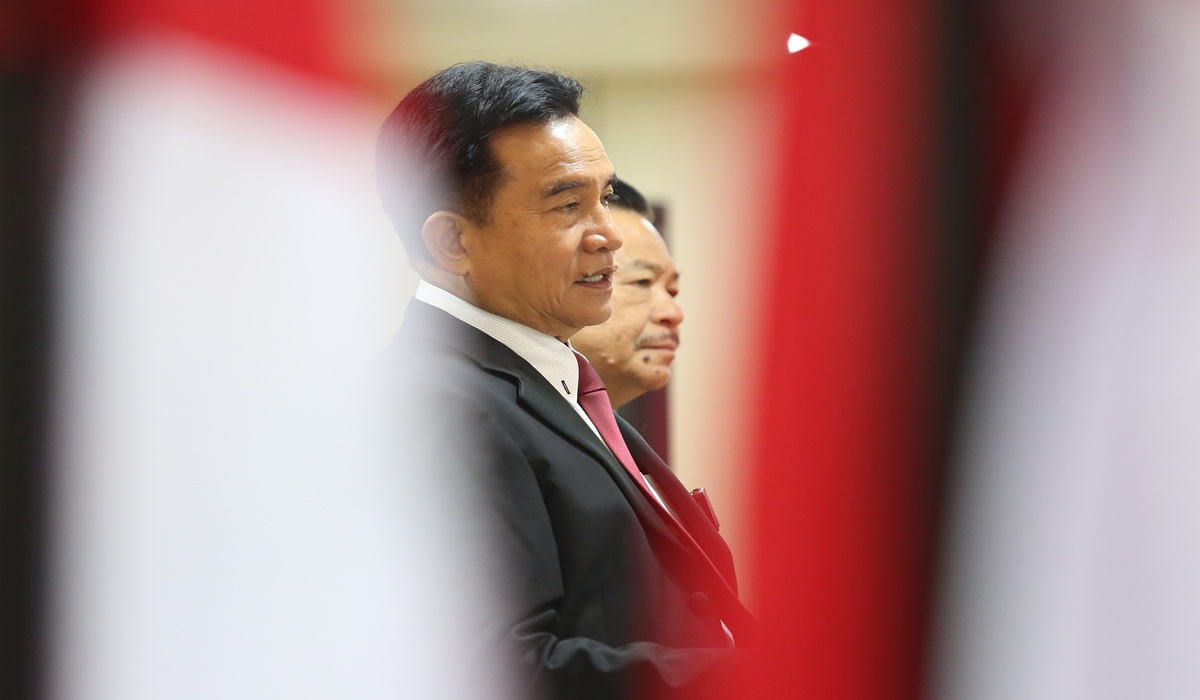
Coordinating Minister for Legal Affairs, Human Rights, Immigration and Corrections Yusril Ihza Mahendra has explained that Presidential Regulation 111/2025 on State Defence was drawn up as a follow-up to Law Number 3 of 2002 on State Defence. Under the policy, threats to the state are divided into three categories: military, non-military and hybrid threats. It does not specifically regulate LGBT matters, let alone classify sexual orientation as a threat.
“This Presidential Regulation does not specifically discuss LGBTQ. LGBTQ is merely one of the elements mentioned as potentially constituting a non-military threat to the existence of our nation and state,” Yusril said in a statement received by Media Indonesia on Thursday (9 July).
He emphasised that non-military threats have a very broad scope. Beyond social and cultural issues, the category also covers natural disasters, disease outbreaks, global warming, the spread of atheism, and various ideologies deemed contrary to Pancasila.
On that basis, Yusril asked the public to understand the regulation in its entirety. According to him, the concept of state defence is not solely about armed attacks, but also concerns ideological, cultural and social resilience, as well as the mindset of society.
“A military threat is a threat in the form of a physical attack by military force, whether from outside or within the country. A non-military threat is far broader, including matters relating to ideology, culture, lifestyle and attempts to influence the way people think,” he said.
Yusril also stressed that the government takes no issue with the existence of individuals who identify as LGBTQ. The existence of individuals with a particular orientation or identity, he said, is a social reality long recognised in various traditions and legal systems.
“What is at issue is not the individual. Individuals are never a threat to national defence. What is considered a threat is the dissemination of beliefs, ideologies, philosophies or cultures which, if widely practised, could potentially affect national resilience,” he explained.
Within that framework, the government deems it necessary to anticipate the spread of propaganda through official media, social media, the internet and various other communication channels. According to Yusril, the move is intended to safeguard the nation’s cultural values, Pancasila, and Indonesia’s character as a religious and plural nation.
Nevertheless, Yusril cautioned that Presidential Regulation 111/2025 must not be used as a licence for persecution, intimidation, violence or discrimination against LGBTQ individuals.
“This regulation must not be interpreted as a basis for persecution. Their rights as citizens remain respected,” he asserted.
He also assured that the government has no agenda to draft specific legislation on LGBTQ. To date, he said, there have been no discussions at either government or DPR level regarding such a regulation.
Yusril further stressed that the new Criminal Code also does not stipulate criminal sanctions based on a person’s sexual orientation. What it regulates are acts that meet the elements of a criminal offence, such as sexual violence, pornography or indecent acts.
“What is punished is the act, not a person’s sexual orientation. A person’s sexual orientation cannot be criminalised,” he said.
Deputy Speaker of the DPR Saan Mustopa has asked the Indonesian Ulema Council (MUI) to promptly submit the draft and academic paper for the LGBT Criminal Bill.
MUI Chairman KH Anwar Iskandar has asked the government to firmly reject LGBT and not imitate the West. He emphasised legal protection and plans for humane education.
In recent years, the issue of lesbian, gay, bisexual and transgender (LGBT) people has resurfaced in Indonesian public discourse.
The MUI is finalising the academic paper and the LGBT Criminal Bill to be pushed onto the DPR’s legislative agenda in order to curb sexual deviation in the public sphere.
A number of residents took part in a campaign and declaration rejecting LGBT (Lesbian, Gay, Bisexual and Transgender) in Padang.