
Yuke: Setu Babakan Revamp Must Protect Residents' Livelihoods
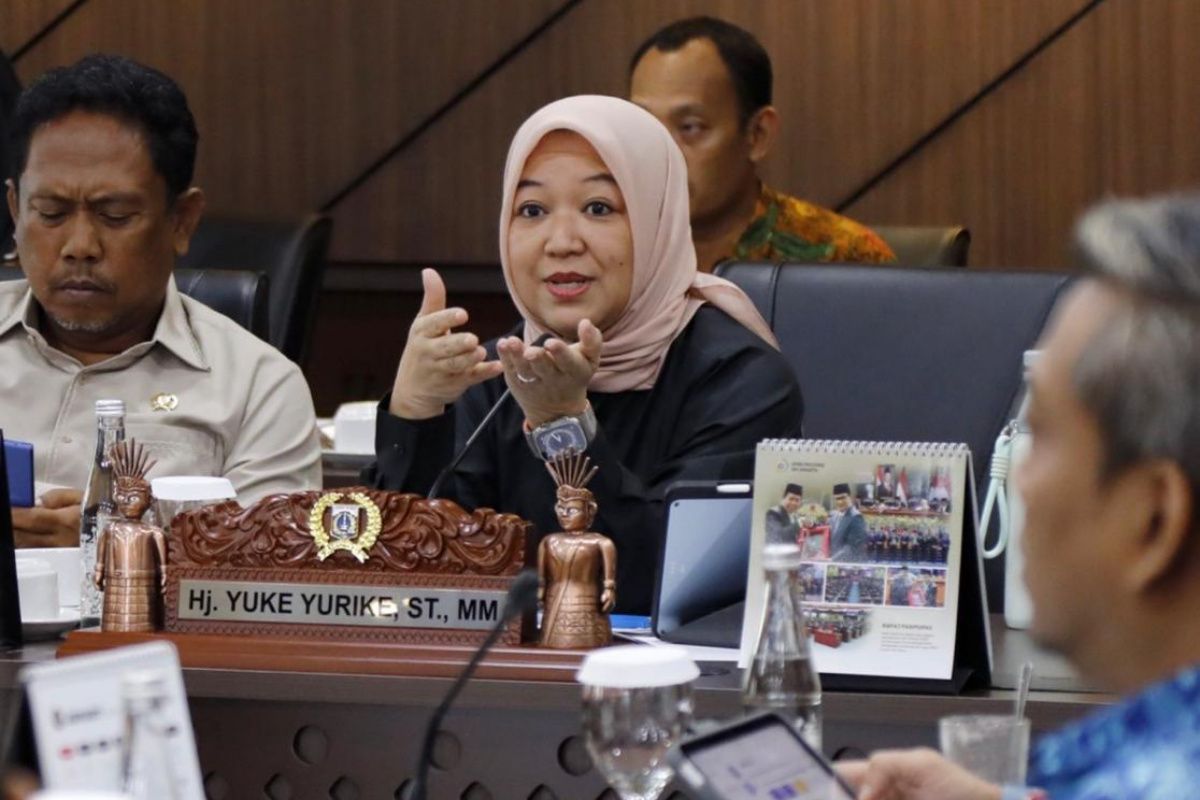
Jakarta (ANTARA) - Yuke Yurike, chair of Commission D of the Jakarta DPRD, has requested that the redevelopment of the Setu Babakan area not focus solely on physical improvements but also prioritise the sustainability of businesses belonging to street vendors (PKL) and local residents who have long depended on the area for their livelihoods.
“If zones are indeed being created for street vendors, the Setu Babakan area is actually very large and could accommodate more traders. What matters is that local residents still get space to do business,” Yuke said in Jakarta on Thursday.
Yuke revealed that a number of street vendors are currently undergoing relocation because they had previously been trading above a water channel.
Nevertheless, she hopes the relocation site will not be too far from the Setu Babakan area so that the vendors do not lose customers and sources of income.
Beyond the Setu Babakan redevelopment, she is also pushing for the optimisation of unused assets owned by the Jakarta Provincial Government to support community-based waste management.
According to her, many plots of government land have been left idle for months or even years and could be used as locations for processing organic waste.
“Even the existence of small plots of land can help the community process leaf waste and other organic waste, thereby reducing the burden of transporting rubbish to the final disposal site,” Yuke said.
Furthermore, Yuke also touched on the need to resolve cross-agency asset issues that frequently hamper the construction of public facilities, such as the repair of footpaths used by residents to access schools and places of worship.
“I hope the government will study the possible use of the TPU land in Pondok Ranggon, which is considered necessary for the community for the construction of a school,” Yuke said.
According to her, the need for educational space is just as important as the provision of other public facilities, so the best solution must be sought through coordination between agencies.
“If it is indeed possible, a middle way must certainly be found so that the community’s needs, whether for educational facilities or other land functions, can both be met,” she said.