
Yuan to Upgrade? China Must Dismantle Its Financial System
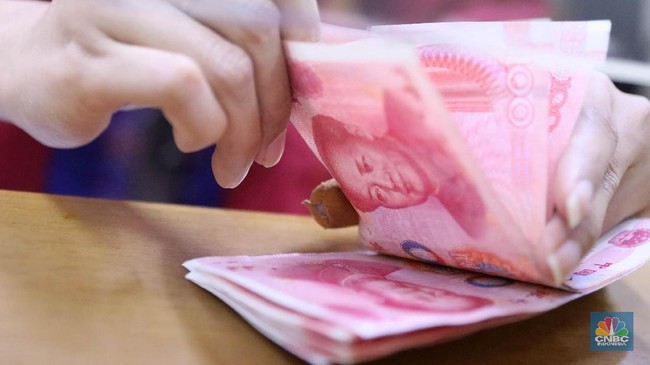
The closure of the Strait of Hormuz and rising tensions in the Middle East are not only shaking the energy markets but also thrusting the Chinese yuan back onto the global stage. This currency is beginning to attract more serious attention, although it is not yet strong enough to directly challenge the US dollar.
The conflict in the Middle East is once again questioning the dominance of the dollar, particularly in oil trade.
For decades, global oil has been nearly synonymous with the US dollar. This system strengthened in the 1970s when the US and Saudi Arabia reached an agreement making the dollar the primary currency for oil transactions, in return for flows of surpluses into US financial assets.
Now, that order is being tested again. Geopolitical tensions in the Middle East, especially following US and Israeli attacks and Iran’s move to close the Strait of Hormuz, have sparked speculation that oil-exporting countries might start seeking alternatives to the dollar.
Discussions on this have intensified following a Lloyd’s List report stating that Iran is pushing for payments in yuan for tanker ships. Even analysts at Deutsche Bank, in a note dated 24 March, suggested that this conflict could mark the “beginning of petroyuan”.
Notably, the Chinese yuan’s movements over the past year have been quite impressive.
According to Refinitiv, as of the market close on Tuesday (21/4/2026), the yuan has strengthened by around 6.45% against the US dollar over the last year.
This strengthening is reflected in the exchange rate movement, rising from around CNY7.29/US$ to CNY6.82/US$. From an economic perspective, this development is certainly not entirely unfounded.
China is one of the world’s largest oil buyers. Therefore, using the currency of the largest buyer for oil transactions has a solid economic basis.
Additionally, some exporting countries are starting to have reasons to reduce their dependence on the dollar, especially as geopolitical volatility increases and asset diversification becomes increasingly important.
The Yuan’s Biggest Hurdle Is Not in Trade, But in Financial Markets
From a trade perspective, the yuan indeed has more room to grow. According to Reuters, the portion of China’s trade transactions settled in its own currency in 2025 reached about 13.7 trillion yuan, equivalent to US$2 trillion. This figure accounts for around 27% of China’s total trade.
For crude oil, the value of transactions priced in yuan in 2024 reached 1.1 trillion yuan. However, that amount is only about 6% of China’s total oil imports from the Middle East. Thus, although the petroyuan narrative is appearing more frequently, its scale of use remains relatively limited so far.
On the other hand, China’s cross-border payment system, CIPS, often seen as a rival to SWIFT, also recorded a daily transaction record of 1.22 trillion yuan last week. This shows that the infrastructure for using the yuan in international transactions is indeed continuing to develop.
However, the rising use of the yuan in trade does not automatically make it ready to serve as a global store of value.
This is the biggest obstacle. Oil-exporting countries may be willing to accept payments in yuan. But after receiving yuan, the next question is where to place those funds.
To become a global currency, a country cannot rely solely on having a large trade volume. It must also have deep, liquid, easily accessible, and trusted financial markets to accommodate large inflows of foreign funds.
At this point, China still lags behind. Its capital account is not fully open. Its domestic financial markets are also not as free and deep as the US dollar markets. As a result, foreign investor interest in placing funds in yuan-denominated assets remains limited.
For illustration, the US government bond market alone exceeds US$30 trillion in value.
Funds from the Gulf region even hold more than US$300 billion in US government debt securities. This is the market that has long served as the primary “parking lot” for surpluses from oil-exporting countries.
China does have a large bond market, with a value approaching US$30 trillion if including local government and corporate bonds. However, foreign ownership in this market is only around 1.7%.
This figure indicates that China’s bond market has not yet truly functioned as a primary home for global capital.
Therefore, the yuan’s journey to upgrade cannot rely solely on geopolitical turmoil or the push for oil transactions in yuan.
To make the yuan more attractive, Beijing must dare to implement larger financial reforms, from deepening markets and improving liquidity to opening broader access for foreign investors.
The Yuan Is Considered Undervalued
Beyond war factors, the yuan is fundamentally still viewed as too cheap or undervalued.
China’s official current account surplus last year reached US$735 billion, or slightly above 3% of gross domestic product (GDP). This value is equivalent to about 30% of the total global current account surplus combined.
Meanwhile, China’s official trade surplus reached US$1.2 trillion, about 6% of GDP, and nearly equal to 40% of the world’s total trade surplus. In nominal terms, both figures are at record highs.
The size of this surplus makes the argument that the yuan should be stronger quite reasonable.
The International Monetary Fund (IMF) in its country report in February also assessed that China’s external position is stronger than the level reflected by medium-term fundamentals and desired policies.
According to IMF economists, the yuan has even weakened in real terms for four consecutive years, with a cumulative weakening of 14% since 2021.
The IMF estimates that the real effective exchange rate of the yuan could be undervalued by up to 20%.
Even two China watchers who are former US Treasury officials, Brad Setser and Mark Sobel, assess that the yuan could be