
YPMAK Reviews Coastal and Highland Working Groups
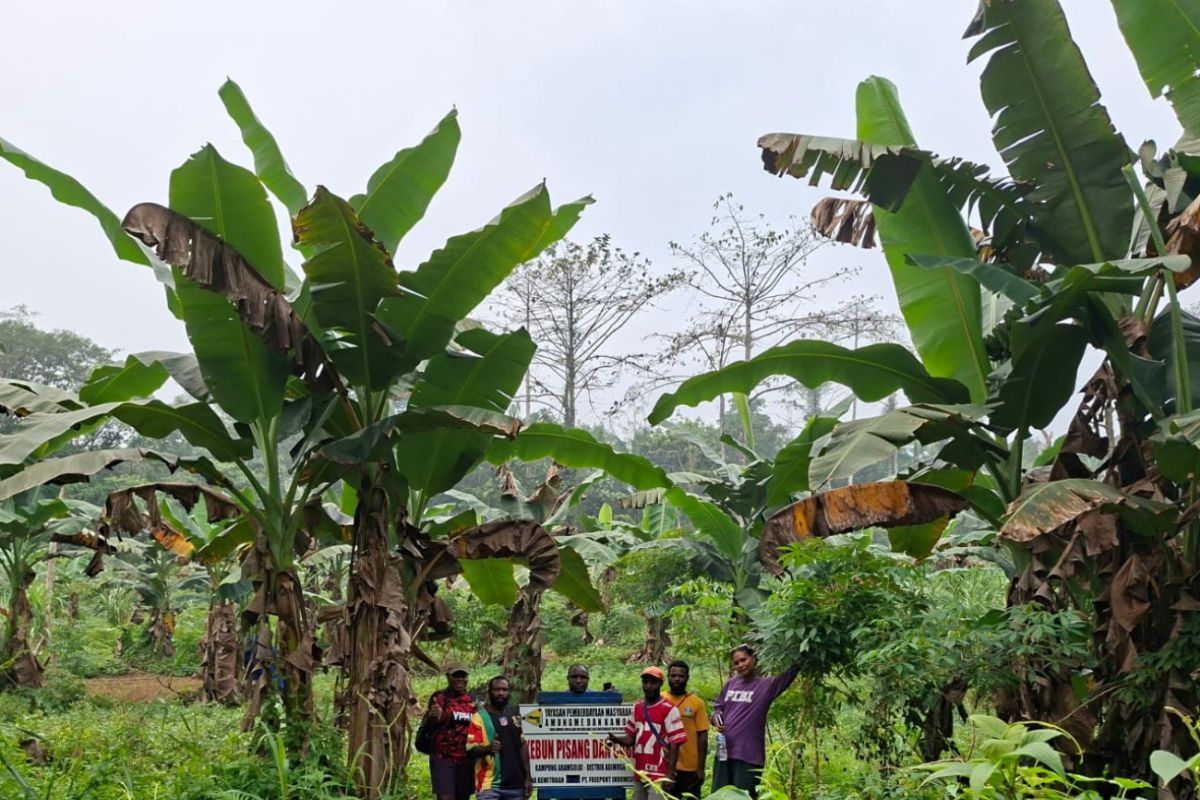
Timika, Central Papua (ANTARA) – The Amungme and Kamoro Community Empowerment Foundation (YPMAK), which manages PT Freeport Indonesia’s partnership funds, has monitored and evaluated several village working-group programmes across the mountainous and coastal areas of Mimika.
The review covered 14 working groups in coastal areas and one in the highlands. They are running various community economic empowerment programmes, including plantations, livestock farming and fisheries initiatives such as providing fishing nets and boat engines.
Monica Maramku, head of YPMAK’s Socio-Economic Monitoring and Evaluation Division, said in Timika on Friday that the programmes reviewed in October 2026 were too early to assess for results, as most were plantation projects. Coconut planting, for example, was generally still at the planting stage.
“Coconuts are one of the priority programmes of YPMAK’s Socio-Economic Programme Division, aimed at producing virgin coconut oil (VCO). The results may not be visible soon, because this is a long-term programme and it takes years for the trees to grow and bear fruit,” she said.
The working groups’ coconut-planting programmes are being carried out in several villages, including Waituku, Wacakam and Nakai in Jita District, and Ohotya in Far East Mimika District.
She welcomed the community’s willingness, through the working groups, to develop programmes not only for the present but also for the future.
“In my view, this coconut-planting programme is a good one. It may not be for us today, but for generations to come,” she said.
In addition to coconut planting in coastal areas, plantation programmes are being carried out in villages in Agimuga District, which is included in the highland working group. Banana cultivation is the main commodity in the programme there. It was funded from the 2025 budget and is expected to continue with funding from the 2026 budget.
“We have seen no disbursement of the 2026 budget yet. We hope the plantations will continue under their plans,” she said.
She said Kiliarma and Amungun villages in Agimuga District had completed their first banana harvest and were continuing to plant bananas. In Aramsolki village, also in Agimuga District, the land was loosened after the banana harvest to make way for chillies, tomatoes and other short-term crops.
The farmers involved in the working groups face a key obstacle: there is not yet adequate market access for their bananas.
“That is what our Monitoring and Evaluation Division is assessing together with colleagues in the Socio-Economic Programme Division,” she said.
As for the provision of fishing gear and boat engines to coastal fishers, she said the impact would become apparent once they had gone out to sea and generated added value through sales or consumption.
Overall, the monitoring and evaluation found that programmes run by the working groups in 15 villages varied. Some were continuations of earlier initiatives, while others were entirely new.
“One village’s programme last year was to procure a boat, while this year it chose to procure a boat engine. A truly continuous programme is, for example, coconut planting,” she said.
Source: jawawa.id (https://jawawa.id/newsitem/ypmak-reviews-coastal-and-highland-working-groups-1794585223)
Originally published by Antara (Indonesian) (https://www.antaranews.com/berita/5852827/ypmak-tinjau-pokja-pesisir-dan-dataran-tinggi), translated from Indonesian