
YPMAK evaluates Kampung Sehat programme in Ohotya Village
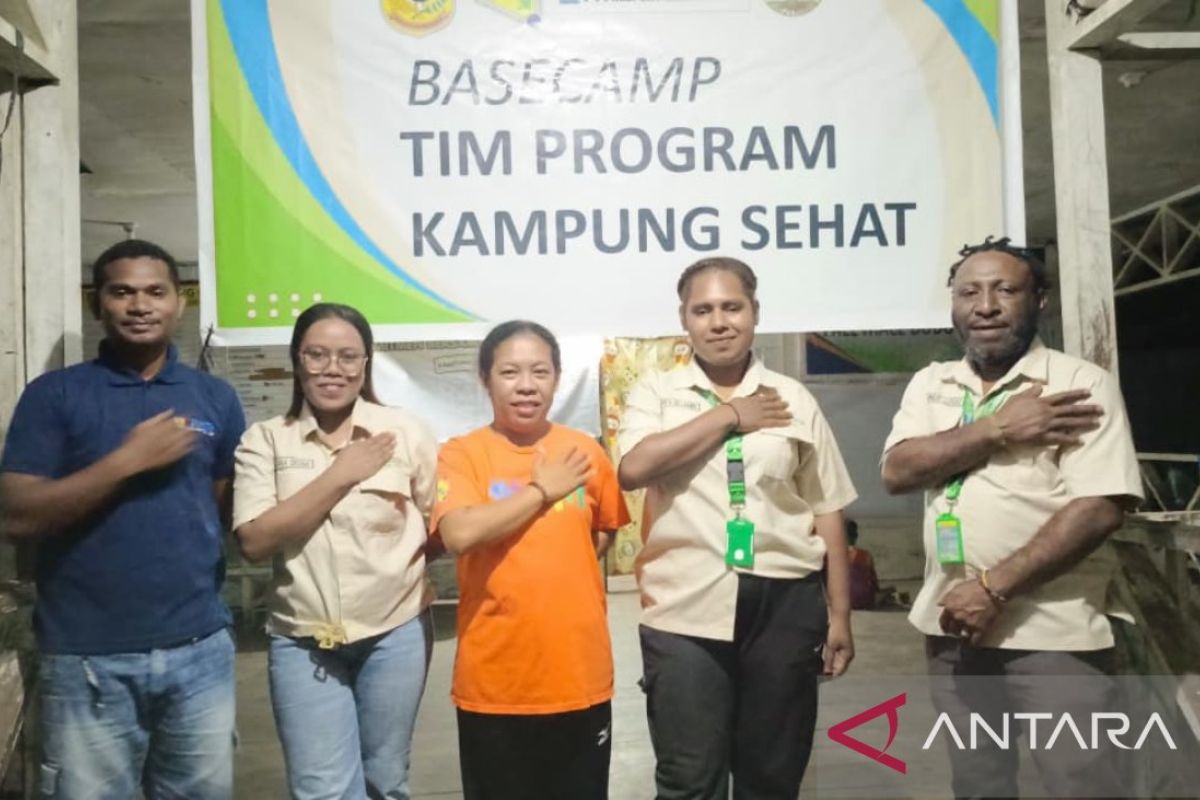
The relationship between programme implementers and the community is also running well because there is a willingness to cooperate in supporting services for residents.
The Amungme and Kamoro Community Empowerment Foundation (YPMAK), which manages partnership funds from PT Freeport Indonesia, has conducted monitoring and evaluation of the Kampung Sehat programme in Ohotya Village, East Mimika Jauh District, Mimika Regency, Central Papua.
Riana Wadibar, Head of the Health Programme Monitoring and Evaluation Division at YPMAK, said in Timika on Sunday that the activity is a routine agenda to ensure that health programmes entrusted to partners are running in accordance with the objectives and needs of the community.
“The monitoring and evaluation activity we carried out in Ohotya Village is actually more of a routine activity conducted by YPMAK in order to monitor and supervise programmes that have been entrusted to partners to run health programmes,” she said.
She explained that implementing partners are an extension of YPMAK in providing health services in villages deemed to need service support.
“Also how coordination is carried out across agencies, namely how collaboration with community health centre officers or with other partners whose programmes may overlap with YPMAK programmes through the Papua Ecology Foundation,” Riana explained.
Riana expressed appreciation for the programme implementers working in the field who continue to provide services to the community.
“I really appreciate their hard work, and also how they tirelessly always do their best to serve the community,” Riana said.
She assessed that the relationship between programme implementers and the community is also running well because there is a willingness to cooperate in supporting services for residents.
Kristianus expressed hope that a number of programme support needs can be improved, especially equipment and food for the officers.
“Things like equipment and food must be improved again,” he said.
Currently, the officers are using the village hall as their residence because it has bathroom facilities deemed more adequate to support their activities.
Kristianus also hopes that water facilities can be repaired because officers still rely on well water that has a salty taste.
“Things like their water tank need to be built because it is a pity; when they want to bathe they usually use well water, and it is salty,” Kristianus said.
He noted that Ohotya Village is inhabited by more than 700 people with more than 140 households. The majority of local residents work as fishermen.
The monitoring and evaluation is expected to serve as evaluation material to strengthen the implementation of the Kampung Sehat programme while ensuring that health service needs and supporting facilities for officers and the community can continue to be improved.