
Yovie Widianto Learns from K-Pop: Culture Can Become an Economic Engine
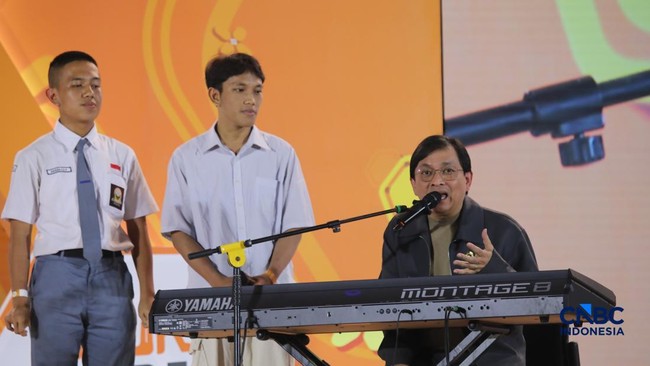
Jakarta, CNBC Indonesia - Special Staff to the President for Economic Creative Yovie Widianto believes Indonesia has a large potential to build a creative economy power like South Korea. He says culture is not just an expression of art, but an economic asset and a tool of global diplomacy if managed seriously.
In a Musical Talks presentation at Jogja Financial Festival 2026, Yovie cites Korea as a country with a successful music industry due to its strategy of creative soft power. He highlights how South Korea has turned K-pop, film, drama, fashion, and games into a national identity and at the same time an engine of the country’s economy.
‘If managed properly, creative works can become a national identity, a diplomacy instrument, an economic engine, and global influence,’ Yovie said.
Indonesia, he noted, actually has cultural capital no less significant. Yovie notes Indonesia has more than 550 cultural nodes from Sabang to Merauke. Even differences in culture can be found within a single nearby region.
‘South Jogja and North Jogja differ. Sleman and Bantul also have distinct styles,’ he said.
Therefore, he believes Indonesia’s local culture should be developed into high-value creative economy products through technology, branding, storytelling, and digital distribution. ‘Through branding, storytelling, and digital distribution, cultural value can cross space, time, and markets,’ Yovie said.
The author of many Indonesian hit songs also reminded the younger generation to remain proud of using Indonesian in the face of globalisation. He said the Indonesian language is in fact an important capital in the national creative economy. ‘If you come to my house, there is no more English. Indonesian is the main capital of Indonesia’s creative economy,’ he said.
Besides culture, Yovie also stressed the importance of protecting the economic interests of those in the creative industry, especially musicians and songwriters. He revealed that his songs have been played more than 6.3 billion times on Spotify. However, royalties received by Indonesian songwriters are still behind South Korea. ‘In Indonesia one stream can be one rupiah divided by 200. Korea can be 27 times that,’ Yovie said.
Yovie said South Korea has built its creative industry not only through cultural popularity but also through an economic system that supports creators. Therefore, he called for regulatory improvements and a more proactive approach to digital platforms so that Indonesian creative works have greater economic value. He even revealed that one of his songs won an award at the Mnet Asian Music Awards (MAMA) in South Korea and competed with large K-pop groups such as BTS and NCT. He said this proves Indonesian creative works can compete on the global stage. ‘Indonesia is one of the richest countries in terms of culture. It depends on how we value it economically,’ he said.