
Youth Wellbeing, Haze and a Middle Ground for Neighbouring Countries
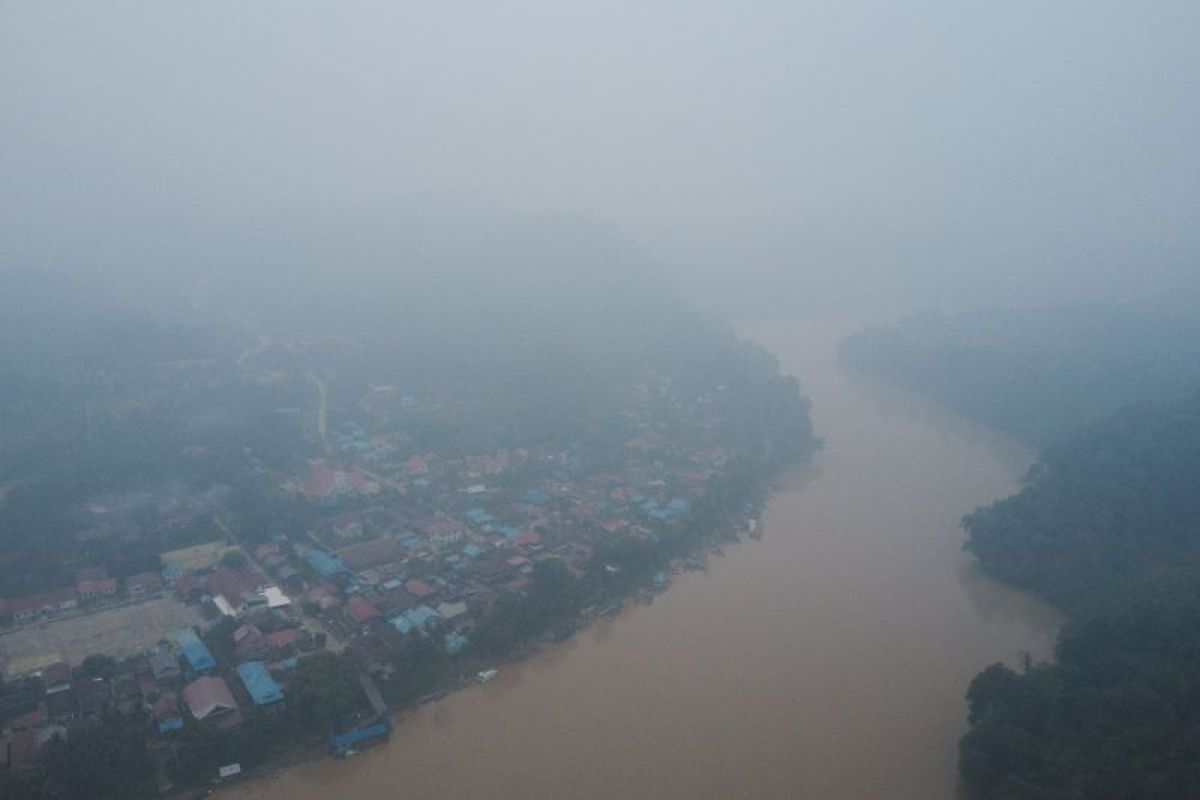
Jakarta (ANTARA) - Haze has once again put relations between Indonesia, Malaysia and Singapore to the test. As smoke from forest and land fires follows the wind across national borders, an environmental problem quickly becomes a diplomatic one. Debate over the smoke’s origins and responsibility for addressing it has resurfaced.
Each country has a duty to protect its people. Indonesia is responsible for tackling fires within its territory, while Malaysia and Singapore have the right to advocate for healthy air for their citizens. Amid the tensions, a fundamental question is often overlooked: what happens to young people who have to breathe polluted air because of a problem they did not create?
This question should provide a meeting point for regional diplomacy. Smoke recognises no passport, and the wind recognises no national borders. Forest and land fires will not be resolved simply by deciding who is most at fault. What is needed is a clear division of responsibilities, transparent information and the political will to address the root causes.
Reuters reported on 22 October 2026 that hotspots had begun to decline after rain fell in several parts of Indonesia. However, the risk of fire had not entirely disappeared. Carbon emissions from forest and land fires between 15 and 21 October were still estimated at around 14.44 million metric tonnes. This shows that rain can help put out fires, but does not automatically resolve problems in forest and land governance.
Visible flames are only the surface of a much larger problem. Underlying factors include unsustainable land management, dried-out peatlands, land clearance, weak prevention, burning practices, oversight of concessions and weather conditions that heighten fire risks. The success of fire management should therefore be measured not only by the number of hotspots extinguished, but also by the ability to prevent fires from recurring.
From a health perspective, smoke from forest and land fires does more than darken the sky. It contains a mixture of harmful gases and particles, including fine particulate matter known as PM2.5, with a diameter of 2.5 micrometres or less. These particles can penetrate deep into the lungs, and some components can enter the bloodstream. Exposure can cause eye and throat irritation, coughing, headaches and shortness of breath, and can aggravate asthma and heart disease.
Children are particularly vulnerable because their lungs are still developing and their oxygen needs are relatively high compared with their body weight. Pregnant women, older people and those with respiratory illnesses also face greater risks. If exposure recurs every year, it should not be dismissed as an ordinary seasonal nuisance, but treated as a public health protection issue.
Particular attention should be paid to the development of young people’s brains and cognitive abilities. The brain requires a continuous supply of oxygen to maintain the functioning of nerve cells. One hazardous gas that can be produced by the incomplete burning of carbon-containing materials is carbon monoxide (CO). It is colourless and odourless, making it difficult to detect without specialist equipment.
Carbon monoxide binds to haemoglobin around 200–250 times more strongly than oxygen. When inhaled, CO forms carboxyhaemoglobin, reducing the blood’s ability to carry oxygen and hindering its release to tissues. The brain and heart are among the organs most vulnerable to oxygen deprivation. At high exposure levels, CO poisoning can cause headaches, dizziness, nausea, confusion, impaired coordination, loss of consciousness and even death.
However, the effects of haze on intelligence should not be oversimplified into the claim that any exposure immediately deprives the brain of oxygen and lowers a child’s intelligence. Smoke from forest and land fires is a mixture of pollutants, including PM2.5, CO, nitrogen oxides and other compounds. Its effects depend on the type and concentration of pollutants, the duration of exposure, individual circumstances and other environmental factors. Air pollution is also associated with cognitive and neurological disorders, although the scale of its impact on child development must be assessed against appropriate scientific evidence.
The key message is clear: air quality is not only a matter of lung health, but also part of protecting young people’s development and quality of life. Children who repeatedly have to limit outdoor activities because of haze lose opportunities to learn, play and remain active in a healthy way. Protecting them must be an important part of environmental policy.
The Indonesian government needs to strengthen peatland and water management, early-warning systems, patrols in fire-prone areas, concession oversight and law enforcement against those responsible for burning. Companies managing land must also be accountable for preventing and tackling fires in their operating areas. Ecosystem restoration and forest conservation should be treated as long-term investments, not merely as add-ons to development.
Malaysia and Singapore can contribute through data-sharing, monitoring technology, atmospheric research, stronger firefighting capacity and support for conservation. Such cooperation is more productive than intensifying diplomatic disputes without bringing about tangible change.
ASEAN already has a foundation for cooperation in the ASEAN Agreement on Transboundary Haze Pollution, which provides a framework for preventing, monitoring and addressing cross-border haze. The regional goal of a haze-free ASEAN by 2030 needs to be translated into concrete action. One step would be to build a shared information system integrating data on hotspots, weather, wind direction, air quality, peatland conditions and land use.
Transparent data can reduce suspicion between countries and help ensure that decisions are evidence-based. But cooperation must go beyond information-sharing. It requires rapid-response mechanisms, regular reviews, adequate funding and measurable allocations of responsibility.
Indonesia’s forests belong not only to the present generation, but are also an ecological inheritance for those to come. Protecting them means safeguarding wildlife habitats, maintaining water systems, storing carbon and reducing disaster risks. Development that sacrifices ecological foundations could bring far greater health, economic and social costs.
At this point, the interests of Indonesia, Malaysia and Singapore converge: human safety and environmental sustainability. Indonesia must be open to criticism and improve its forest and land governance. Malaysia and Singapore have the right to protect their people while advancing regional dialogue. ASEAN must ensure that shared agreements are implemented in practice, rather than remaining diplomatic documents.
Differences in national interests are natural, but should not override the fundamental priorities of human health and environmental conservation. Finding a middle ground does not mean reducing responsibility; it means allocating it proportionately and ensuring that each party contributes within its remit.
Source: jawawa.id (https://jawawa.id/newsitem/youth-wellbeing-haze-and-a-middle-ground-for-neighbouring-countries-1792731252)
Originally published by Antara (Indonesian) (https://www.antaranews.com/berita/5806767/kualitas-generasi-muda-kabut-asap-dan-jalan-tengah-negara-bertetangga), translated from Indonesian