
Youth Unemployment Is Rising Across Europe: Which Countries Are Worst Affected?
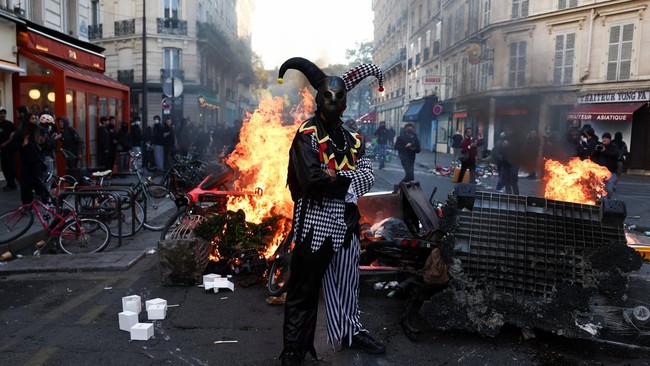
Youth unemployment, which remains high in several European countries, is fuelling growing social unrest and a wave of demonstrations that has spread from France to other nations.
Eurostat data show that in August 2026, the unemployment rate among people aged 15–24 in the European Union stood at 15.4% — more than one in seven of those in the labour force in that age group.
The figures highlight the challenges young people face in entering the European labour market.
But unemployment is not the only issue emerging amid the protests. Demonstrations in various countries have also been driven by rising living costs, expensive housing, and calls to improve education and public services.
Seasonally adjusted Eurostat data show that Estonia had the highest youth unemployment rate among countries and territories with figures for August 2026, at 28.4%. This means nearly three in ten people aged 15–24 in the country’s labour force were unable to find work.
Sweden followed at 23.8%, then Finland at 23.3% and Spain at 22.7%. Youth unemployment stood at 20.8% in Luxembourg, 20.6% in France and 20.3% in Italy.
By contrast, Germany recorded a youth unemployment rate of 7.4%, while the Netherlands stood at 8.8% and Malta at 9.7%. The figures show that the challenge of entering the labour market varies across Europe.
France and Italy, both of which have seen demonstrations, each recorded youth unemployment above 20%. Spain’s rate was also high, at 22.7%. These figures alone, however, do not prove that high unemployment triggered demonstrations in those countries.
Eurostat data also show that the number of unemployed young people in the EU reached about 2.97 million in August 2026, up from around 2.95 million in August 2025. In the eurozone, the figure rose over the same period from about 2.35 million to 2.39 million.
Protests spread from education to living costs
The wave of demonstrations in Europe shows that public discontent is not focused solely on jobs.
CNBC International reported on Tuesday, 20 October 2026, that protests which began over education in France developed into broader demonstrations, while actions elsewhere highlighted the cost of living, housing and access to public services.
In Italy, demonstrators took to the streets to protest rising living costs and fuel prices. Protests in several cities, including Milan, led to clashes with police.
In Albania, students demanded improved university conditions, more affordable tuition fees and job opportunities. The protests also developed into calls for Prime Minister Edi Rama to resign.
Education has also come under the spotlight in Greece and Belgium. Students in Greece protested rising rents and a shortage of decent student accommodation. In Belgium, pupils opposed higher education costs and reforms they fear could make access to higher education more difficult.
In Spain, teachers and students demonstrated to demand increased public funding, higher pay, reduced teaching hours and more education staff. Beyond schools, protests over housing also reflect the strain caused by rising accommodation costs.
Portugal is facing similar discontent. Thousands of demonstrators took to the streets to protest soaring housing and living costs. Portugal’s Minister of State and Finance, Miranda Sarmento, identified rising housing costs as one of the main problems affecting the public.
The wider economic context is also a concern. Andrew Kenningham, chief European economist at Capital Economics, said slow economic growth and high government debt were limiting countries’ ability to increase public spending or cut taxes. This could leave governments with less room to respond to public demands.
In France, for example, economic pressures are reflected in a national unemployment rate of 8.3% in the second quarter of 2026, or around 2.7 million people, according to Insee.
Final Insee data show that French inflation rose in September 2026. Consumer prices increased by 3.1% year on year, up from 2.4% in August. A 21.3% rise in energy prices added to pressure on household spending.
Against this backdrop, purchasing power per consumption unit is projected to fall by 0.7% over 2026, according to a Le Monde report citing data from Insee, France’s statistics agency.
An estimate by the French Institute of Economics for the newspaper put the loss in purchasing power since 2024 at the equivalent of about €1,200 (Rp24.2 million) a year for a household of two adults and two children. For a single adult, the estimated annual loss is €600.
High youth unemployment and widespread demonstrations can therefore be viewed as two symptoms emerging amid Europe’s economic and social challenges.
Their relationship cannot, however, be established simply by comparing unemployment figures with a list of protests. Demonstrators’ demands point to broader problems: job opportunities, the cost of living, affordable housing and the quality of public services.
Source: jawawa.id (https://jawawa.id/newsitem/youth-unemployment-is-rising-across-europe-which-countries-are-worst-affected-1792738274)
Originally published by CNBC Indonesia (https://www.cnbcindonesia.com/research/20261023123710-128-778885/makin-banyak-anak-muda-eropa-menganggur-negara-mana-paling-parah), translated from Indonesian