
Youth Movement Emerges: 'Cockroach Party' Protests Economic Hardship and Fuel Prices
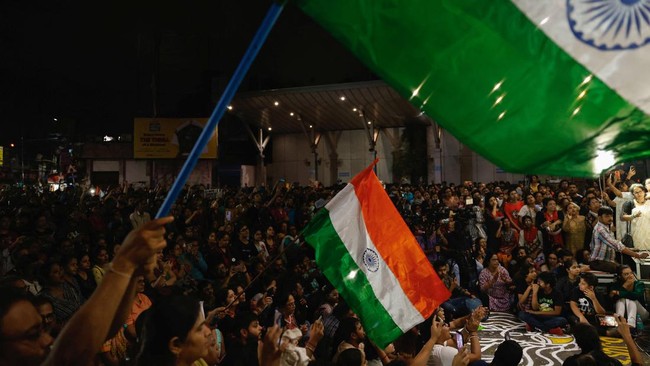
The ‘Cockroach Janta Party’ (CJP) has emerged amongst the youth, a phenomenon currently unfolding in India. What began as a satirical movement born from social media jokes has suddenly transformed into a symbol of resistance. Within weeks, the group has managed to gather tens of millions of internet followers, becoming one of the largest political phenomena among Generation Z.
The movement was pioneered by a 30-year-old communications consultant named Abhijeet Dipke. The Cockroach Party claims to represent the group of ‘lazy, unemployed, and those who are always deemed wrong’. Its popularity has surged alongside the anxieties of Indian youth regarding employment opportunities, the rising cost of living, and various economic issues perceived to be burdening society, including the fourth increase in fuel prices within just a few days.
‘More than two-thirds of the movement’s followers are from Generation Z,’ Reuters reported, quoting a statement from Dipke. The CJP’s Instagram account has successfully amassed nearly 23 million followers in a short period, surpassing the follower count of the ruling party, which took years to build.
The phenomenon began after Dipke posted a simple question on social media in mid-May: ‘What if all the cockroaches united?’ The post went viral. The post was a response to a comment by a high-ranking official who had previously likened some unemployed youths to cockroaches. Although the statement was later clarified, public anger had already spread. The CJP subsequently adopted the cockroach as its mascot and drafted a manifesto highlighting various issues faced by the younger generation. The message spread rapidly through influencers, content creators, and digital communities, becoming a national online movement.
Several observers believe the explosion in the Cockroach Party’s popularity reflects long-suppressed grievances among the youth. Although the government led by Prime Minister Narendra Modi has secured victories in several regional elections and continues to dominate the national political stage, many young people report frustration over limited job opportunities and a lack of improvement in quality of life. Government data shows that youth unemployment remains significantly higher than the national average, a situation exacerbated by exam leak scandals and career uncertainty faced by millions of recent graduates.
‘If the economic conditions were truly good, it would be impossible for millions of young people to rally behind a movement like this,’ said political activist Yogendra Yadav, who led a national anti-corruption movement in 2011. ‘This is a crucial moment that tells us something about the state of our governance: beneath all claims of total dominance, there is a hidden yet widespread unrest.’
Amidst its skyrocketing popularity, Dipke admits to facing various pressures. He stated that he has received physical threats via messaging applications, while the movement’s social media accounts were briefly hacked. His X (formerly Twitter) account was also blocked, leading him to challenge the decision through legal channels. Furthermore, several politicians from the ruling party have accused the movement of undermining democracy and seeking attention through an insect symbol deemed inappropriate.
‘They know this started as satire. But Gen Z now wants this movement to do something real. They do not want this to remain just a meme,’ he said, rejecting all accusations.
Despite its massive success on social media, analysts believe the greatest challenge for this movement is converting digital popularity into real political power. Building an organisation, raising funds, recruiting volunteers, and mobilising masses on the ground is no easy task. Moreover, large protest movements often face pressure from authorities and security risks. However, many supporters remain optimistic that the movement can expand further.
‘I hope they soon establish a clear organisational plan. Gen Z can follow trends very quickly, but they can also abandon them just as fast,’ said content creator Madri Kakoti. For now, the Cockroach Party maintains that it is a social movement and has not yet decided to transform into a formal political party. However, one thing is clear: the emergence of this movement demonstrates significant unrest among a generation of youth who have yet to find a political channel they believe can represent their voices.