
Youth Inclusivity in Electoral Law Reform
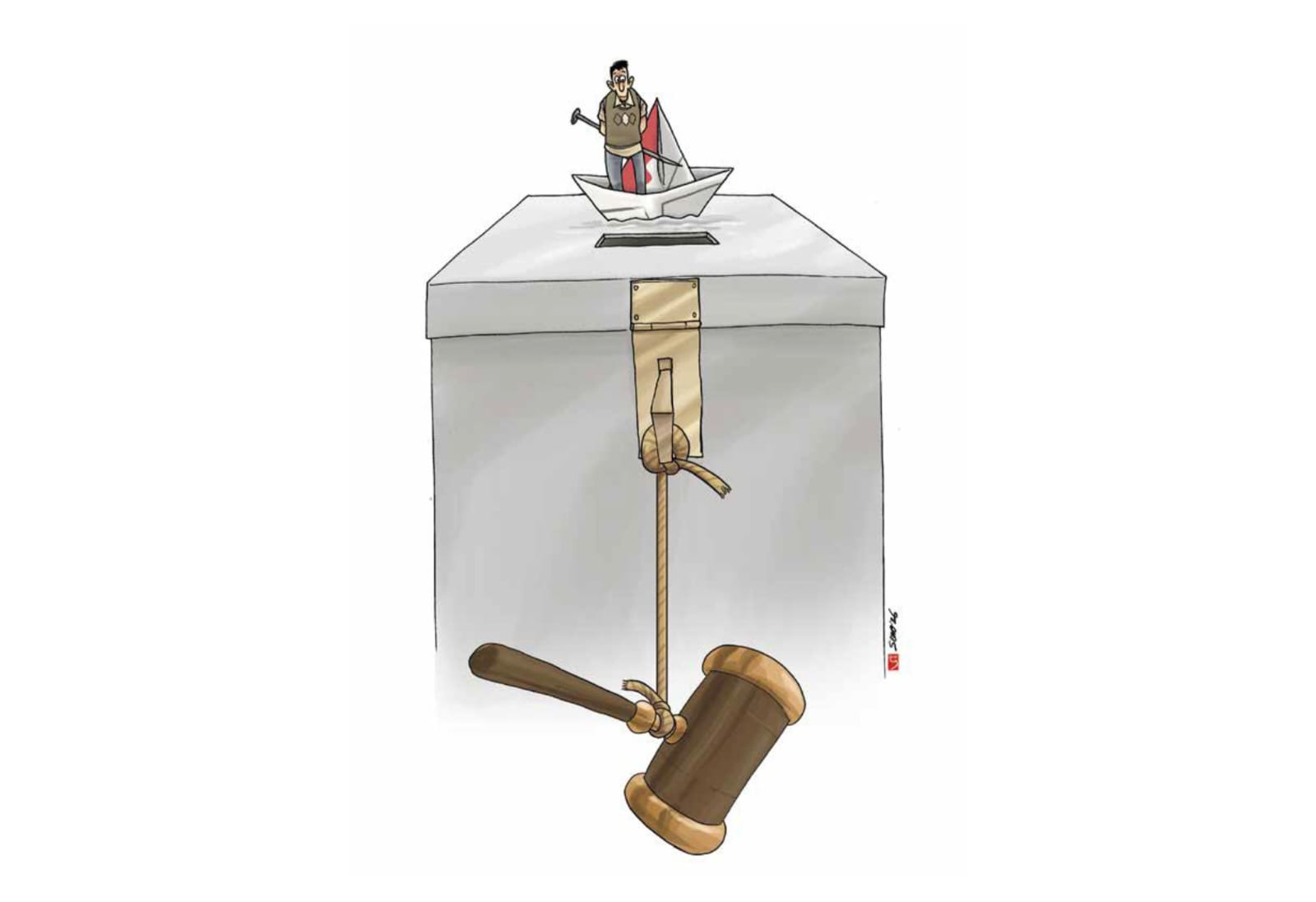
Young people constitute the largest voting bloc in the 2024 General Election. Data from the General Elections Commission (KPU) shows there were 63,953,031 voters aged 17-30 years, or 31.23% of the permanent voter list (DPT). When combined with the 31-40 age group, totalling 42,398,719 voters (20.70%), more than half of Indonesian voters, approximately 51.93%, are citizens aged 17-40 years. This demographic composition indicates that the direction of Indonesian democracy is fundamentally determined by the younger generation.
However, the large number of young voters is not yet proportional to their representation in political institutions elected through elections. Of the 580 DPR members resulting from the 2024 Election, only 27 people (4.50%) are aged 21-30 years and 70 people (11.39%) are aged 31-40 years. Thus, DPR members under the age of 40 number only 97 people, or about 16.72%. Some of them also come from political families that already have prior access to power. The gap between the composition of voters and the composition of people’s representatives shows that the political participation of young people is still far greater as voters compared to as decision-makers.
Youth representation needs attention because democracy requires representative institutions capable of reflecting the diversity of community groups, including age groups. The presence of young people in political institutions is important not only to strengthen demographic representation but also to ensure that the interests and perspectives of the younger generation gain adequate space in the public decision-making process.
The persistently low representation of young people cannot be explained solely as a matter of individual interest or capacity. The barriers faced are structural. High political costs, party recruitment processes that are not yet fully merit-based, and limited institutional support for young cadres are factors that limit their opportunities to run for office and compete on an equal footing.
In the 2024 Election, almost all political parties nominated candidates aged 21-30 years, with some parties even placing more than 15% of their candidates from this age group. However, the large number of nominations has not been proportional to the electability rate. There are major challenges faced due to high political costs, recruitment mechanisms that are not yet fully merit-based, the placement of candidates in less competitive list positions, and the strong influence of power networks in the candidacy process.
Nomination and campaign costs reaching billions of rupiah are obstacles that are difficult for most young people to overcome. A number of elected DPR members reported campaign costs reaching Rp2 billion to Rp4 billion. Various surveys even indicate higher costs to obtain a single DPR seat. Ultimately, this situation encourages political competition that is more advantageous for those with large economic resources or closeness to the political elite.
Another problem lies in the recruitment mechanisms of political parties, which still heavily depend on elite decisions. Many young cadres who have capacity and experience do not get the same opportunities because they lack access to power networks within the party. In fact, political parties should be the main instrument for political leadership regeneration and recruitment that is open and merit-based.
The Academic Paper on the Codification of the Election Bill proposed by Civil Society (comprising Perludem, Netgrit, PSHK, and others) identifies that high political costs cannot be separated from the weak party political funding system. The amount of state funding allocated to parties is still far from the real operational needs of the parties. This condition encourages parties to rely on contributions from candidates, both in the form of dues and various levies, which in practice become barriers for cadres who do not have adequate financial capacity.
Another problem is the regulatory disharmony between the Election Law, the Regional Election Law, and the Political Party Law. Various provisions regarding candidacy, political funding, and party governance are still scattered across different laws that are not always aligned with one another. As a result, efforts to build a more inclusive political recruitment system become increasingly difficult to implement.
The gap between more than half of the voters being aged 17-40 years and only about 16.72% of DPR members coming from this age group shows that electoral law reform is not enough just to expand participation as voters. Reform must also open fairer access for the younger generation to be elected as policymakers.
There are at least three paths that can be taken to strengthen youth representation in politics. First, incorporating affirmative instruments or incentives for young candidates in the revision of the Election Law, which is a priority legislation in the 2026 National Legislation Programme (Prolegnas). This path is the most strategic option because it directly affects the aspects of candidacy, candidate lists, and electoral competition mechanisms. Second, strengthening merit-based regeneration obligations through the revision of the Political Party Law. This step is important to improve the internal party recruitment process. However, reform in this sector faces significant political challenges because it is directly related to the distribution of power within parties. Third, strengthening provisions on youth political participation in the Youth Law. Although important as a normative foundation, its effectiveness is relatively limited because it does not directly regulate the candidacy and electoral competition process. Of the three paths, revising the Election Law is the most relevant option to pursue immediately.