
Youth and the Future Crisis: Higher Education, Increasing Job Scarcity
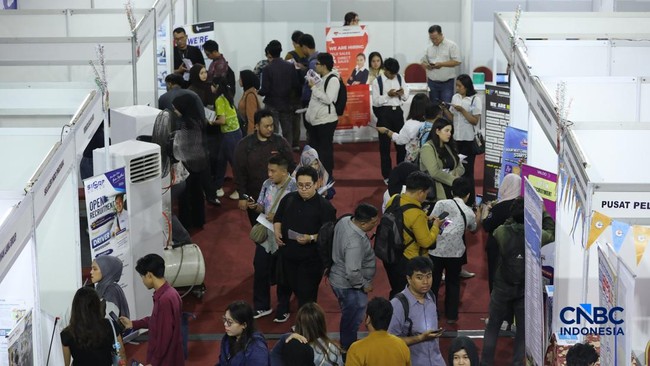
There is a paradox haunting Indonesia today. Our economic growth rate appears solid at 5.11% throughout 2025, supported by a 12.66% increase in investment and 7.03% growth in exports. GDP based on purchasing power parity places Indonesia as the 8th largest economy in the world.
On paper, this country is “growing”. However, on the ground—in narrow urban alleys, in cramped boarding houses for young people, and in the long queues of job fairs that never cease—that growth feels like a figure that never reaches the pocket. This is the quietest crisis: economic growth that is not proportional to the welfare of its younger generation.
Unemployed Graduates, Degrees No Longer Guaranteeing Success
In 2025, as many as 1.01 million university graduates were recorded as unemployed out of a total of 7.28 million national unemployed persons. This figure is not merely a statistic. It is a story of thousands of young people who spend four years in university, tackling dozens of subjects, and paying expensive semester fees, only to end up with a degree in hand and uncertainty ahead.
The Deputy Minister of Higher Education, Fauzan, admitted that universities are not yet fully capable of meeting the needs of the workforce. Many graduates “possess degrees, but their competence is insufficient to dissect the problems surrounding them”. In the eyes of industry, they are not “ready to work” but rather “ready to be trained”. Our higher education still uses “old patterns”, while the dynamics of the era have moved far ahead.
Even more bitter: many graduates ultimately choose to work in the informal sector as drivers, domestic helpers, or security guards just to survive. The degree, once considered a ticket to the middle class, has now become a reminder of an unfulfilled promise.
A Fragile Middle Class, Eroding Purchasing Power
Indonesia’s middle class, the backbone of national consumption and contributor to 81.5 per cent of total household consumption, is experiencing an alarming erosion. In 2021, their numbers reached 57.3 million. By 2025, they have dwindled to 46.7 million. The World Bank even recorded a sharper contraction: from a significant proportion to only about 7 per cent.
A Kompas Litbang survey reveals a grim reality: approximately six out of ten middle-class respondents have barely sufficient income, and 62 per cent of the lower middle class have no savings or emergency funds. They live in “survival mode”, with salaries exhausted by rent, transport, food, and bills, leaving nothing for savings, let alone investment.
This is not merely about lifestyle. It is structural. When purchasing power is eroded, consumption weakens, and economic growth loses one of its primary drivers. This vicious cycle rotates: difficult jobs, low income, weak purchasing power, and ultimately, non-inclusive growth.
Cost of Living Disproportionate to Wages
In DKI Jakarta, the Decent Living Standard (KHL) in 2025 reached Rp5.9 million per month. The 2025 Jakarta Minimum Wage (UMP) is only Rp5.39 million. The difference may seem small, but for workers who must bear the costs of transport, food, and housing in the same city, that gap is the chasm between living decently and merely surviving.
More concerningly, surveys by BPS and several institutions show that the average household cost of living in Jakarta reaches approximately Rp14.8 million per month. This figure is far above any minimum wage. This means one minimum wage is insufficient to support a single household. Young families must both work, or go into debt, or press expenses to an unhealthy limit.
Meanwhile, inequality remains wide. The national Gini Ratio in September 2025 was recorded at 0.363, with urban inequality reaching 0.383. In DKI Jakarta and West Java, urban inequality figures even breached 0.441 and 0.426, respectively. The gap between the rich and the poor is not only persisting; it is widening.
AI and the Demographic Bonus: Opportunity or Disaster?
Amidst all this, two major forces are moving: artificial intelligence and the demographic bonus. The World Economic Forum estimates that 23 million traditional jobs in Indonesia could potentially disappear due to automation by 2030.
Routine administrative tasks, customer service, and manufacturing operations are vulnerable to being replaced by AI systems that work tirelessly. For fresh graduates, the impact is felt immediately: junior roles that once served as career ladders have many been taken over by automation. On the other hand, the government and various parties are optimistic that AI will create 90 million new jobs. However, this optimism must be critically tested.
These new jobs demand high digital skills, while 65% of jobs in 2030 are expected to require AI expertise. Indonesia is still constrained by uneven digital infrastructure and limited access to technological education. Without serious intervention, AI will not only replace jobs but also widen the inequality between those who have access and those who do not.
Meanwhile, the demographic bonus continues to race against time. The 2025 Supas results show Indonesia’s birth rate is approaching the replacement level, and the proportion of the elderly has exceeded 10%. The dependency ratio stands at 45.05, which is still within the ideal range but approaching the limit.
The NEET rate (not in education, employment, or training) for ages 15-24 remains at 19.44 per cent. This means nearly one in five young people is not being absorbed into economic development activities.
The demographic bonus is not an automatic blessing. Without relevant education and adequate job opportunities, that bonus could turn into a social disaster. Indonesia has a narrow window of time to utilise it, and that window is closing.
Source: jawawa.id (https://jawawa.id/newsitem/youth-and-the-future-crisis-higher-education-increasing-job-scarcity-1790509936)
Originally published by CNBC Indonesia (https://www.cnbcindonesia.com/opini/20260927173217-14-771255/anak-muda-krisis-masa-depan-kuliah-tinggi-pekerjaan-makin-sulit), translated from Indonesian