
Young People Unearth Ancestral Knowledge to Strengthen Food Sovereignty in Bayan
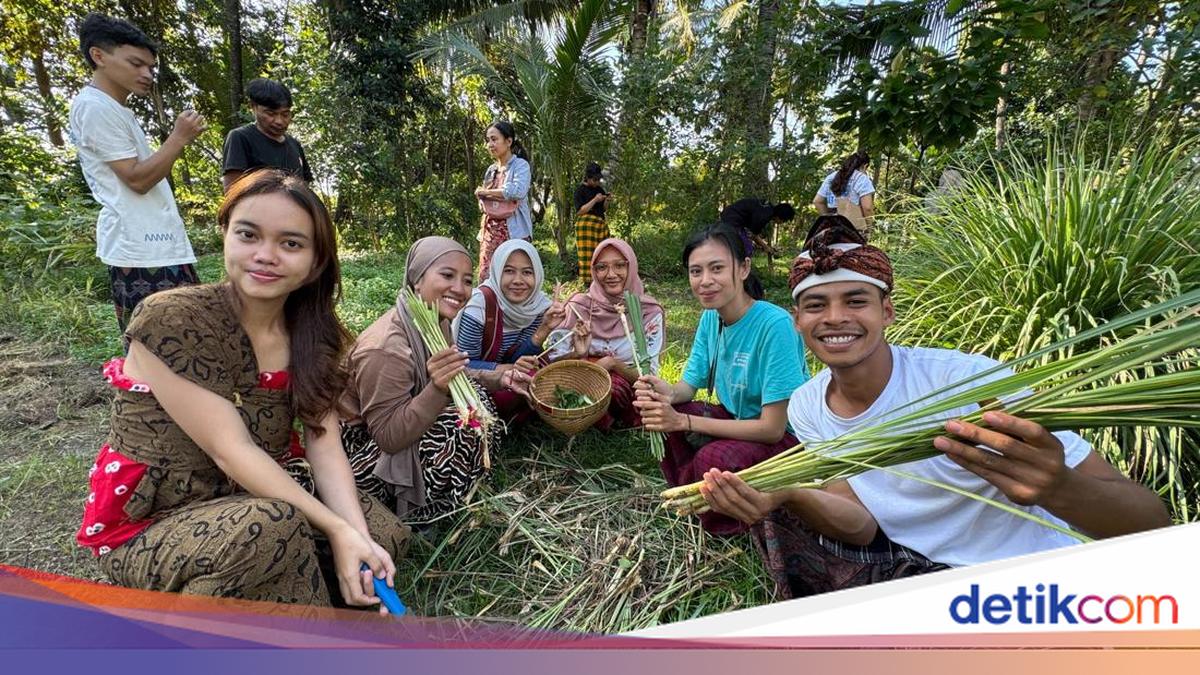
Nelda Hannia and the Yora Hero community have their own way of uncovering the ancestral knowledge of Bayan village, in North Lombok, West Nusa Tenggara (NTB). They are preserving local food as part of efforts to safeguard the identity and food sovereignty of the Bayan Indigenous community.
Through the movement, Nelda and a group of young people in the community are trying to save local foods that are at risk of being forgotten. Their work is not simply about restoring lost plants, but also about preserving knowledge, traditions and the relationship between people and nature.
“Our initiative is about revitalising and transforming local food among the Bayan Indigenous community in North Lombok,” Nelda said on Sunday (15 November 2026).
Nelda said the movement grew out of concern that many local food plants had become difficult to find, leaving younger generations in Bayan unfamiliar with them. Some older residents, too, were beginning to forget the names and uses of plants that once grew in their village.
According to Nelda, the disappearance of local food plants has gone hand in hand with the loss of knowledge passed down by their ancestors. This includes knowledge of plants and farming technologies, as well as Indigenous traditions closely connected to those plants.
“We have lost many plants. It turns out that it is not only the plants that are disappearing; we are losing many other things as well, from knowledge and the agricultural technologies associated with it to our traditions and identity,” Nelda said.
Preserving local wisdom
Nelda said the Yora Hero community is documenting and revitalising local knowledge and wisdom. It is working to identify the food heritage of the Bayan Indigenous community and to grow these plants again.
“We have recorded 129 local food, medicinal and fruit plants. Of these, we have replanted 30 in Bayan,” she said.
Seeds of rare plants have been collected with the help of Indigenous elders, while customary land is being used as a demonstration site for farming. For Yora Hero, customary land serves not only as a place to grow crops, but also as a school and laboratory for preserving local agricultural knowledge.
However, restoring seeds is not the only challenge. Nelda recognises that this knowledge must be reintroduced to young people so that it does not remain merely as documentation.
“Once the seeds were back, we realised that this alone was not enough. We have tried to bring these plants closer to young people by developing different types of food crops. For example, we make sorghum into biscuits,” she said.
Yora Hero is promoting education that is more closely connected to local food heritage. The initiative involves the Bayan Farmers’ Earth Alliance, the Bayan Indigenous school, Santerior Foundation and several vocational secondary schools in Bayan with agricultural programmes.
One approach is to make biscuits from sorghum and introduce herbal plants through learning activities in an organic garden. The group has also developed a learning space for residents and visitors to learn about local plants and make herbal drinks in Karang Bajo Indigenous Village.
The initiative began in 2022. The following year, the group focused on food issues closely linked to the traditions of the Bayan Indigenous community. One such tradition is Gawe Alif, a Sasak ritual centred in Bayan and held once every eight years.
The ritual is understood as a renewal of the earth and a renewal of the natural order and social life. The last Gawe Alif ceremony was held in 1957.
Nelda explained that the continuation of the ritual depends on more than the availability of food crops. It also concerns social systems, the Indigenous community’s stewardship of its territory, and the relationship between people and nature.
“Gawe Alif is understood as the renewal of the earth and the renewal of the order of nature, space, time and social life in Gumi Sasak, particularly in Bayan,” she said.
According to Nelda, holding the ritual again requires several conditions, including the existence of areas managed by the Indigenous community and a customary institutional structure. Revitalising local food is therefore one part of efforts to sustain the life of the Indigenous community.
The initiative has since attracted attention through the 2026 Gaharu Bumi Innovation Challenge. Of 677 applicants from 250 regencies and cities across Indonesia, Ashoka selected 12 initiatives to take part in presentations and an exhibition in Jakarta.
Yora Hero was the only team from NTB selected for the programme this year. Nelda said she had not expected their efforts to preserve local knowledge to receive national recognition.
“We never imagined that a movement we pursue with such joy, simply because we love doing it, would be recognised as a meaningful innovation,” she said.
Source: jawawa.id (https://jawawa.id/newsitem/young-people-unearth-ancestral-knowledge-to-strengthen-food-sovereignty-in-bayan-1794786619)
Originally published by detikBali (https://www.detik.com/bali/nusra/d-8754279/kala-anak-muda-menggali-pengetahuan-leluhur-demi-kedaulatan-pangan-di-bayan), translated from Indonesian