
Young NU Figure Says Police Reform Journey Still Long
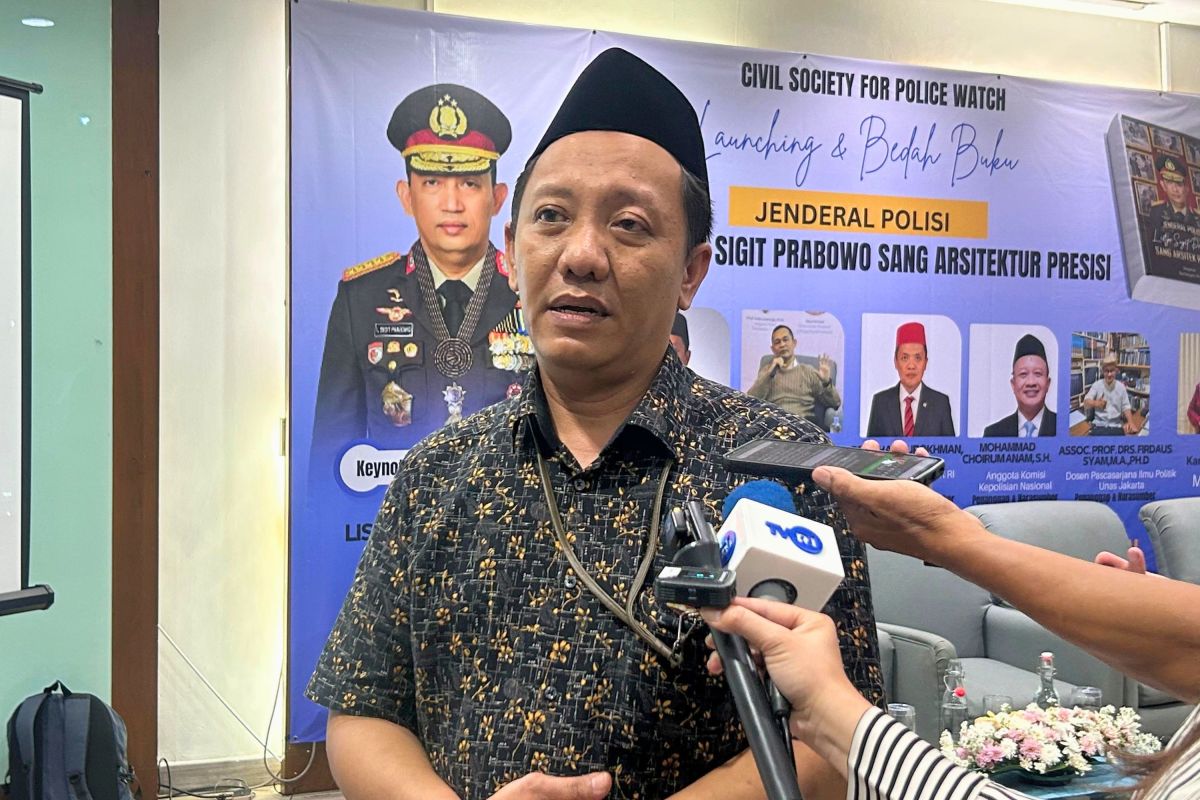
Young Nahdlatul Ulama (NU) figure Ali Ramadhan has stated that the reform journey of the Indonesian National Police (Polri) is still long, as future challenges will not diminish but instead become increasingly complex. However, according to him, Police Chief General Listyo Sigit Prabowo has laid a strong foundation, namely a leadership paradigm that does not rely on brute force but on precise steps. “An institution that has begun to open itself to criticism and made transparency a strength, not a weakness,” Ali said in a statement received in Jakarta on Wednesday. Therefore, he said the PRESISI vision (Predictive, Responsibility, and Transparency with Justice) is an endeavour on a journey that is not yet finished and perhaps never will be. He argued that leading in a democratic era is an endless commitment to continuously improve, learn, and serve. Ali assessed that leadership is a process that does not grow instantly, something evident from the Police Chief’s career track record. To illustrate General Sigit’s leadership journey as the National Police Chief, as well as his steps in facing democratic disruption and answering the institution’s future challenges, Ali launched a book titled ‘Jenderal Listyo Sigit Prabowo, Sang Arsitek Presisi Polri’ (General Listyo Sigit Prabowo, the Precision Architect of Polri). In the book, Sigit’s career path is depicted as the result of years of fieldwork, not an instant route, let alone one based on political connections. Furthermore, Ali added that Sigit’s service terrain within the police institution is reflected not only through dedication but also through achievements and a concretely articulated vision. Beyond examining biographical aspects, he explained that the book also dissects the PRESISI vision as Polri’s working paradigm and places it within the academic framework of democratic disruption. According to him, the PRESISI concept is Polri’s paradigm for responding to various institutional challenges, such as virality or the post-truth phenomenon, as well as the demand for due process of law in the digital era. He said this refers to the thoughts of Clayton Christensen, Jürgen Habermas, and Fareed Zakaria to explain the role of the police institution as a shock absorber amidst the pressures of social polarisation, social media virality, and rising public expectations. Ali interpreted Polri as a democratic balancer, meaning the police are not solely responsible for the effects of democratic disruption. “In truth, safeguarding democracy is a collective national responsibility and not the sole burden of the police institution,” he said. The book, spanning more than 300 pages, also reviews Polri’s Grand Strategy 2025–2045, a police transformation roadmap towards becoming a ‘Superior Institution’ and Polri 4.0, designed to respond to future hybrid threats.