
Young Man Builds His Own App as Wonokerto Village Cooperative Goes Digital
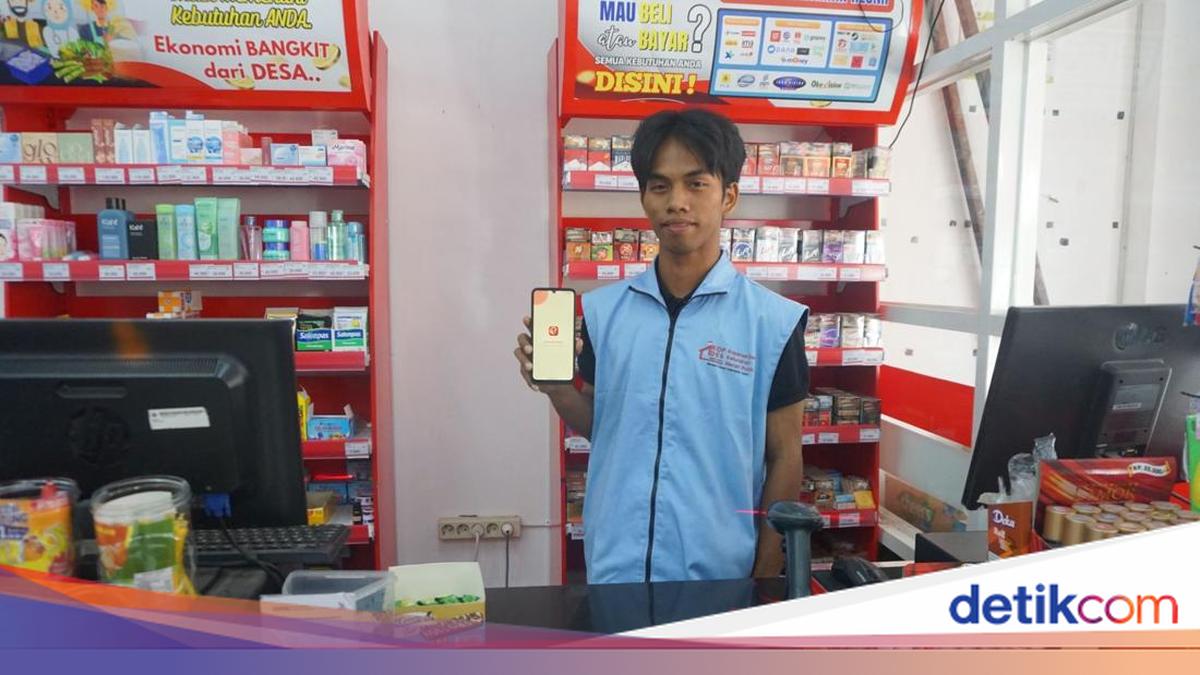
Not all cooperative business in Wonokerto Village, Sukorejo District, Pasuruan Regency, has to be conducted conventionally. As residents go about their buying and selling, the Wonokerto Merah Putih Village Cooperative (KDMP) has begun using a range of digital services, from QRIS payments to a savings and loans app.
To support the cooperative’s management, Nur has also developed the KARSA app, an abbreviation of Koperasi Desa (Village Cooperative). The app is designed to let members check their initial and compulsory savings, as well as their cooperative balance, without having to visit the office.
KDMP Wonokerto chairman M Yusril Suhendra said digitalisation was part of the cooperative’s efforts to improve services and adapt to members’ needs.
“We’re developing the cooperative’s digital services through an app, something like mobile banking,” Yusril told detikcom recently.
He said the app was available in a development version and was being reviewed before its planned release on the Play Store. Each member will have an ID to log in.
Members will be able to see the amounts they have in compulsory and initial savings, as well as the balance they have deposited with the cooperative. Information and news from the cooperative’s website are also expected to be linked to the app.
“So it will all be available in the app. The monthly compulsory savings bill will also appear every month,” he said.
However, Yusril stressed that in-app bill payments were still being developed. For now, the app is focused on helping members view their balances and savings records.
“Bill payments are still under development. At the moment, it is only for checking balances,” he said.
The app was developed by KDMP Wonokerto secretary Nur Muhammad. He said the idea came from a straightforward problem: members had to visit the cooperative office just to pay their compulsory savings.
The initial aim was to spare residents the inconvenience of travelling to the cooperative office to pay their monthly compulsory savings. With KARSA, members can scan a QR code or enter a cash transaction code from home, provided they have sufficient funds.
The system nevertheless includes safeguards. Transactions entered by members are not added to their balances automatically; they must first be verified by an administrator through a web dashboard. The measure is considered important because the data will form the basis of the annual accounts presented at the Annual Members’ Meeting (RAT).
“After entering the savings amount, you have to wait for admin verification; you can’t just click and have it go through. We’re worried it could be misused,” Nur said.
Development took about two months. Nur said tools such as VS Code and Android Studio, along with AI applications including ChatGPT and Copilot AI, helped speed up the coding process. About 63 cooperative members are currently registered on the app.
Implementation still faces challenges, including the digital skills of some members, particularly those who are not accustomed to using apps.
“Older people are bound to find new digital technology confusing. But we have to keep up with the times,” Nur said.
He hopes KARSA will eventually develop into a village-level mobile banking service integrated with transactions at the cooperative’s minimarket and the village information portal.
QRIS, bill-payment services and access to social assistance
Alongside its members’ app, KDMP Wonokerto has begun using several digital services to support the community. One is QRIS payments, used for transactions at the minimarket and the agricultural supplies outlet, known as Saprodi.
The cooperative’s management works with several banks, including BNI, BRI and Mandiri. BRI’s QRIS service is the one most frequently used for cooperative transactions.
The cooperative’s digital services also include Payment Point Online Bank (PPOB) services and assistance in accessing social support, including the Family Hope Programme (PKH) and Non-Cash Food Assistance (BPNT).
“Mandiri focuses on PPOB and social assistance. PKH and BPNT can also be accessed through the Wonokerto Village Cooperative, making it easier for the community to access assistance there,” Yusril said.
These services mean the cooperative is not only a place to shop or save, but also a local service point for payment administration and access to social assistance.
The KDMP Wonokerto minimarket has also begun using a modern retail system. Its E-POS 5 checkout system tracks stock movements in real time, allowing managers to monitor product availability and sales activity.
A full stocktake is carried out every six months. The minimarket closes for one day so staff can count physical stock and compare it with the system’s records.
Fast-selling or high-value items, such as cigarettes and small packaged goods, are checked more frequently, once a month. If customers ask for an out-of-stock item, cashiers record the request for follow-up and reordering. These records are also linked to a WhatsApp complaints service.
Modern systems are used not only to manage stock. Products are arranged in the minimarket according to their value and risk. High-value goods are placed near the till for easier monitoring, while large, heavy items such as cement and bottled water are kept in an open area.
The minimarket’s turnover is said to be around Rp5 million to Rp7 million a day. When subsidised goods such as Minyakita cooking oil are on promotion, daily turnover can exceed Rp10 million.
The figures are among the reasons the cooperative’s management rejects the perception that village cooperatives generate only small sales. Combined monthly turnover at KDMP Wonokerto’s two business units — the grocery outlet and agricultural supplies outlet — is around Rp200 million to Rp260 million.
Cooperative members’ benefits: shopping points and the chance to win prizes
Digitalisation has also been introduced to the membership system. KDMP Wonokerto uses membership cards with barcodes. Whenever members shop at the minimarket, their cards can be scanned by the cashier. Transactions are recorded in a database and accumulate as points over the course of a year.
The points are intended to be exchangeable for prizes towards the end of the year or during the Eid al-Fitr period. Members are also entitled to the cooperative’s surplus, known as sisa hasil usaha (SHU), through the Annual Members’ Meeting (RAT).
“We’ve created a sort of membership-card scheme. Here, it’s a membership card,” Yusril said.
He said the points system was one of the benefits offered to members. In addition to lower shopping prices, members have the chance to receive prizes based on their shopping activity over the year.
“Every time a purchase is made at the cooperative, the card is scanned and the transaction goes into the database. The points then accumulate over the course of a year,” he said.
Yusril added that KDMP Wonokerto currently has around 65 members, up from 26 when the cooperative was established on 21 April 2025.
Social media used to promote the village cooperative
Technology is also being used through social media. KDMP Wonokerto uses Instagram, TikTok and WhatsApp to promote cooperative products and goods supplied by local small and medium-sized enterprises (SMEs), as well as to introduce the cooperative’s activities to the public.
Nur Muhammad said TikTok was one of the busiest platforms for promoting the cooperative. Its content does not always focus on products for sale, but also follows popular trends.
Through this content, the cooperative promotes not only pickled mango, ice pops, salted eggs, repackaged snacks, turmeric and tamarind drinks and other SME products, but also KDMP Wonokerto as a place to shop, a centre of local economic activity and a marketplace for local goods.
Nur said some of the cooperative’s videos had appeared on TikTok’s For You page (FYP). One video had reportedly been viewed around 300,000 times.
“Sometimes we make content not only to promote the products, but also the cooperative itself, so people know there is a village cooperative in Wonokerto,” he said.
He said social media also provided a way to share information about cooperative activities, available products, promotions and members’ activities. This allows communication with the cooperative to continue even when residents are not visiting the outlet.
In this way, social media serves not only as a channel for product promotion but also as a means of introducing KDMP Wonokerto’s identity and activities. The cooperative is seeking to build ties with the community through lighter content that follows trends and shows day-to-day life at the outlet.
Source: jawawa.id (https://jawawa.id/newsitem/young-man-builds-his-own-app-as-wonokerto-village-cooperative-goes-digital-1791946300)
Originally published by detikcom (https://news.detik.com/berita/d-8703548/anak-muda-ini-bikin-aplikasi-sendiri-kdmp-wonokerto-mulai-go-digital), translated from Indonesian