
Young Generation Must Not Be Swept Away by Negative Propaganda in Digital Spaces
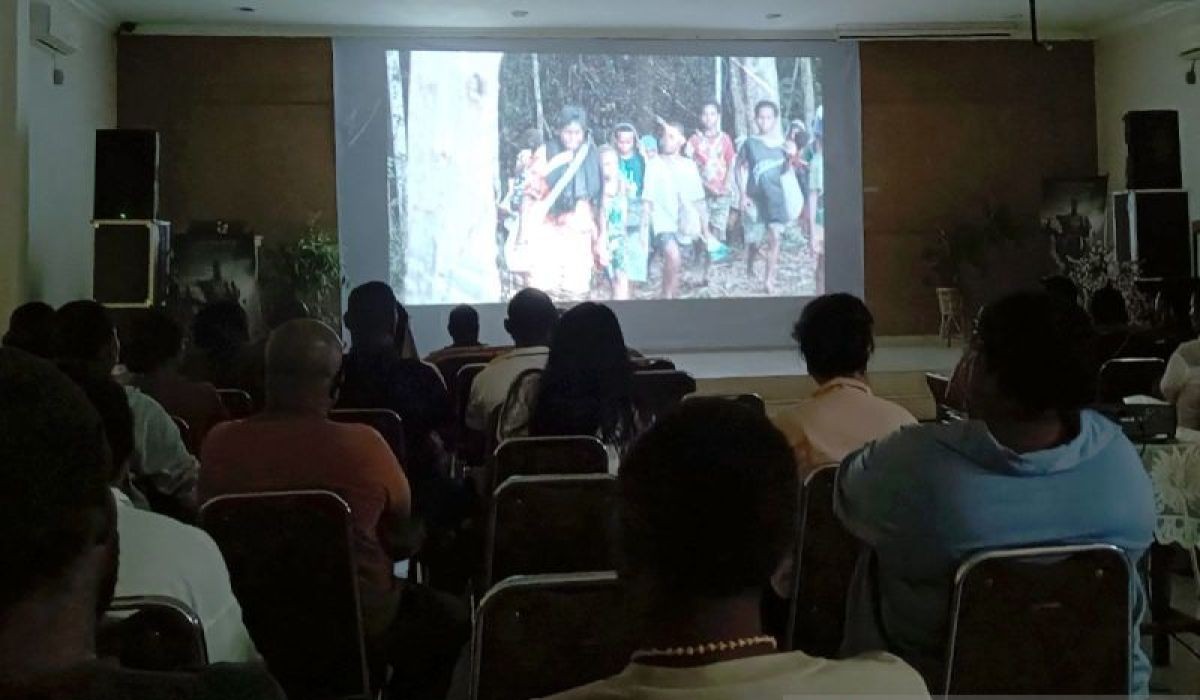
La Ode Anhusadar, an academic from the State Institute of Islamic Studies (IAIN) Kendari, has issued a stern warning to the younger generation to avoid falling into the whirlpool of negative propaganda, disinformation, and pessimistic narratives that are increasingly prevalent in digital spaces. He stated that the commemoration of the Birth of Pancasila should serve as a turning point to restore national optimism, strengthen information literacy, and build an ethical and responsible culture of democracy.
La Ode emphasised that Indonesia’s greatest challenge currently is not merely economic or political, but the weakening ability of the public to critically filter information amidst the rapid flow of digital content. “Today we live in an era where information can be produced and disseminated so quickly. However, speed is not always synonymous with truth. Many narratives are constructed not to seek facts, but to manipulate opinion, shape perceptions, and even foster public distrust towards institutions and fellow citizens,” La Ode said in his statement.
He highlighted the phenomenon of content masquerading as social criticism or documentaries that, in practice, ignore the principles of verification, confirmation, and balanced information. One such example noted was the controversy surrounding the documentary ‘Pesta Babi’, which faced backlash due to allegations of using statements without adequate clarification.
“Democracy provides vast space for freedom of expression, but freedom does not mean ignoring responsibility. Good criticism must be based on verified facts and provide all parties with the opportunity to explain,” he asserted. In both academic and journalistic traditions, verification is non-negotiable. Without this process, information risks becoming disinformation that misleads the wider public. He reminded that democracy requires tested truths, not unilaterally engineered perceptions. While criticism aims to improve situations, propaganda often aims to incite anger, hatred, or specific prejudices.
Addressing the rise of collective pessimism, La Ode noted a trend in digital content that portrays state policies as failures and institutions as inherently wrong, which he argues contradicts the spirit of Pancasila, which promotes mutual cooperation (gotong royong) and deliberation (musyawarah). “If every problem is merely used as material for blame without offering solutions, what emerges is not critical awareness, but social despair. This is very dangerous for the future of the younger generation,” he added.
He urged the youth to be both critical and optimistic—critical in receiving information, yet optimistic about the nation’s future. According to him, optimism does not mean turning a blind eye to problems, but rather the belief that issues can be resolved through dialogue and data. “Pancasila teaches that differences can be managed, problems can be solved, and the future can be built together. We must not become victims of divisive propaganda,” La Ode concluded.