
Yokogawa to Develop Tropical AI Data Centre Testbed into Multi-Megawatt Pilot Facility
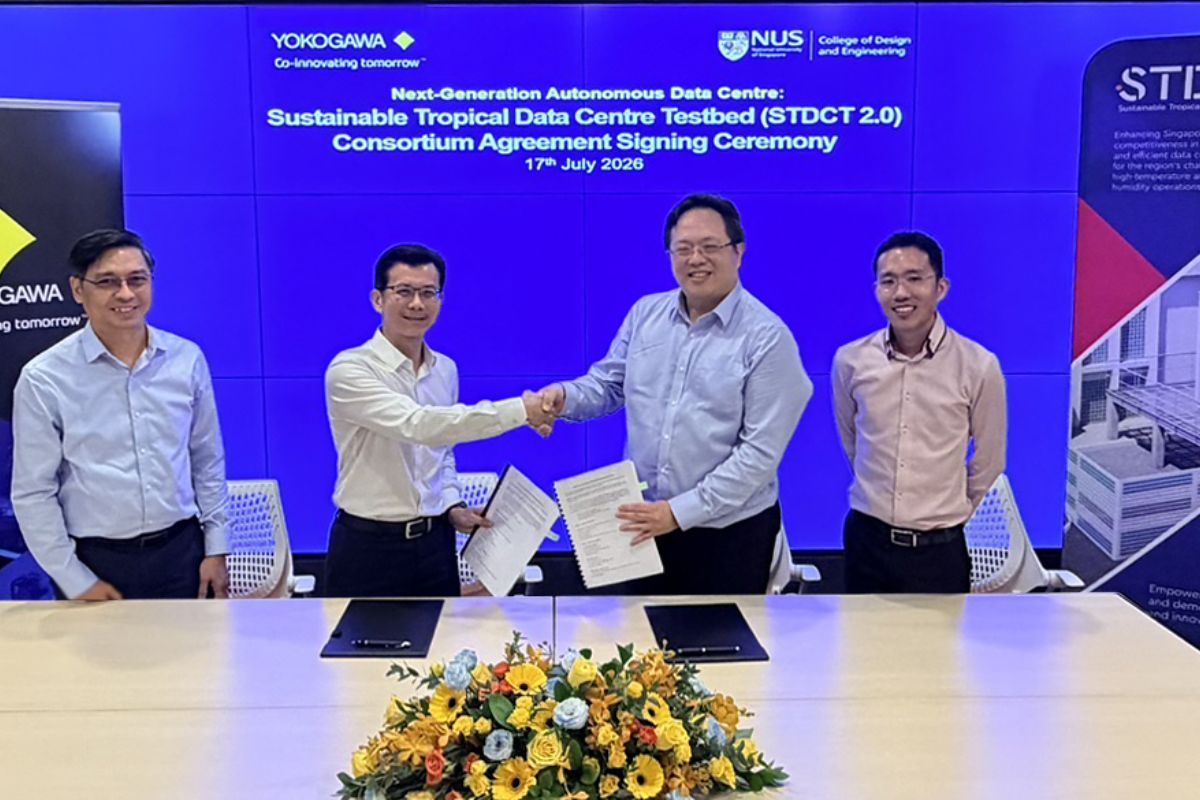
Tokyo and Singapore, (ANTARA/PRNewswire) - Yokogawa Electric Corporation (TOKYO: 6841) has announced that its subsidiary, Yokogawa Engineering Asia Pte. Ltd., has joined the Sustainable Tropical Data Centre Testbed Phase 2.0 (STDCT 2.0) consortium, an initiative led by the College of Design and Engineering (CDE) at the National University of Singapore (NUS). Through this initiative, Yokogawa will leverage its extensive experience in industrial automation and its position as an industry leader in developing autonomous operations to improve operational efficiency, asset reliability, and energy optimisation in next-generation data centre environments.
The rapid adoption of generative AI and cloud computing services is driving demand for data centres globally. However, the industry faces significant challenges regarding energy consumption, operational resilience, and labour shortages. These energy and operational challenges are further complicated in tropical regions such as Singapore, where hot and humid weather increases the demand for cooling systems and energy efficiency, making sustainable data centre innovation increasingly vital.
Singapore has designated the data centre industry as a strategic sector for economic growth. The nation is also developing plans to transform Jurong Island into a hub for next-generation data centres. This initiative, led by JTC Corporation—the government agency responsible for industrial infrastructure—is projected to have a capacity of up to 700 megawatts.
STDCT 2.0 is a testing initiative that brings together partners from academia, industry, and government to develop and test advanced energy management and cooling technologies. The initiative also aims to establish sustainable operational models suitable for AI data centres in tropical climates. In addition to implementing and validating technology, Yokogawa will work with the consortium to establish a joint research agenda to address new challenges that have not yet been optimally addressed by available commercial solutions for data centre operators.
Through its participation in STDCT 2.0, Yokogawa is also strengthening its AI-based technological capabilities and R&D expertise to produce comprehensive solutions. These solutions will support Singapore’s transition towards a sustainable digital economy and enhance the operational efficiency and stability of AI data centres in various countries.
Professor Lee Poh Seng, Director of STDCT and Head of the Department of Mechanical Engineering at the College of Design and Engineering, NUS, stated, “AI is fundamentally transforming the design and operation of data centres. As rack density increases and infrastructure becomes more complex, improving the performance of individual components is no longer sufficient. We must optimise the data centre as an integrated system encompassing computing, power, cooling, control systems, and operations. STDCT 2.0 provides a platform to integrate these various aspects and validate solutions under challenging tropical climate conditions. Yokogawa’s deep expertise in measurement solutions, industrial automation, and autonomous operations is a vital capability in this endeavour. Through this partnership, we aim to develop and prove new approaches so that AI data centres are not only more efficient in energy and resource usage, but also smarter, more resilient, and more scalable for application in Singapore and other tropical markets.”
Kin Wah Chay, President and CEO of Yokogawa Engineering Asia, added, “This initiative reflects Yokogawa’s vision to realise industrial autonomy and to expand our expertise into the rapidly growing digital infrastructure sector. We are excited to join the STDCT 2.0 consortium and collaborate with various leading partners to accelerate development and engage in co-innovation for next-generation AI data centres. By leveraging decades of experience in industrial automation and energy management, we are helping to drive smarter, more efficient, and more sustainable data centre operations in tropical regions.”