
Yogyakarta Tightens Monitoring of Sacrificial Animals
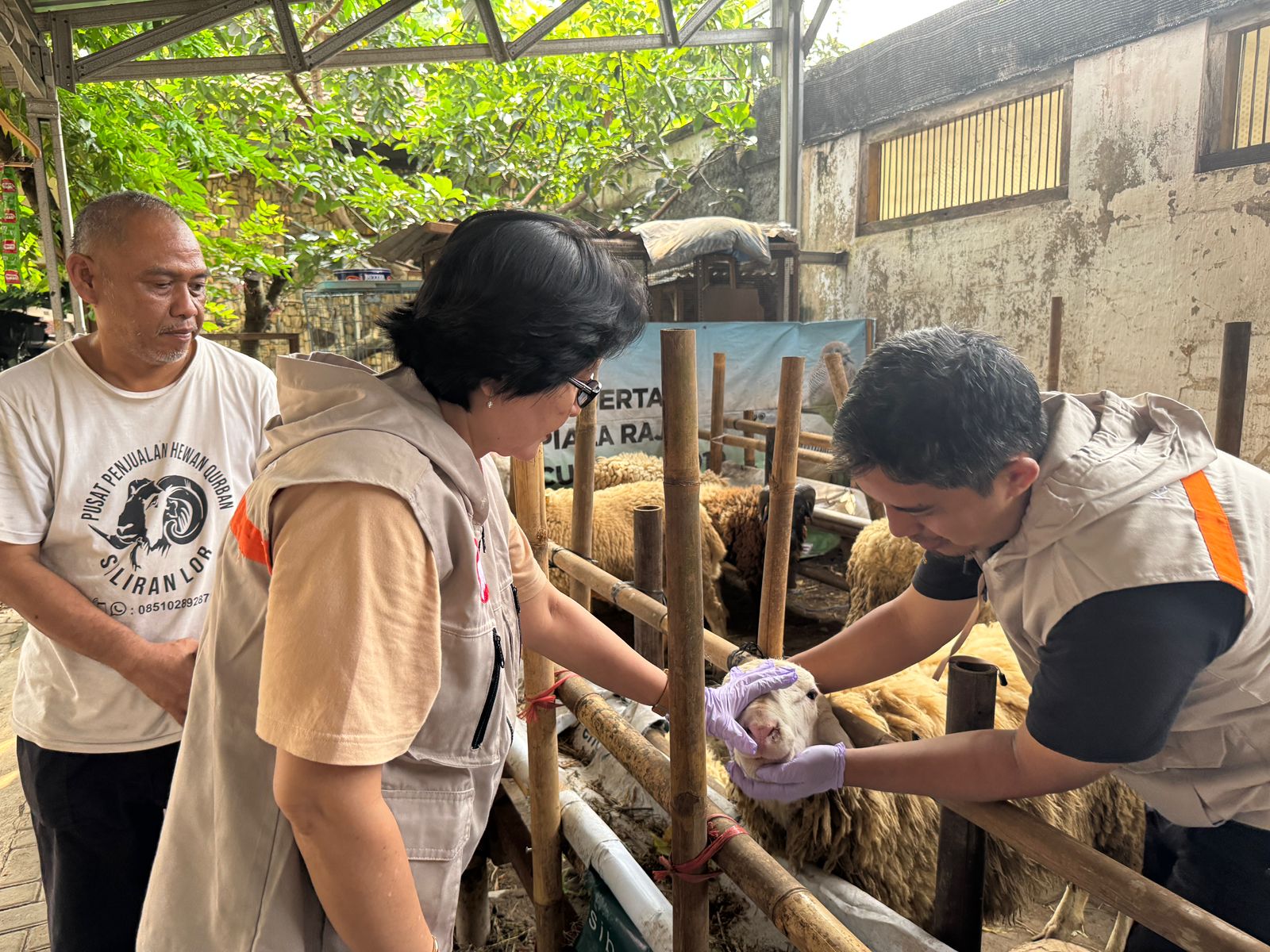
Yogyakarta tightens monitoring of sacrificial animals’ health. Sri Panggarti, Head of the Fisheries and Livestock Section at the Yogyakarta City Agriculture and Food Office, said the department has conducted around 50 monitoring sessions, 29 of which were at temporary markets. A total of 1,718 animals have been inspected, comprising 127 cattle, 1,432 sheep, and 159 goats.
‘We conduct monitoring at temporary markets for animals sold in preparation for Eid al-Adha. Alhamdulillah, people are now more aware and only select healthy animals,’ she said in a press release on Sunday (24 May).
According to Sri Panggarti, both sellers and buyers now understand the characteristics of healthy animals and the requirements for sacrificial animals. If sick animals are found during inspections, the city agriculture office team brings medicine for initial treatment.
Monitoring takes place at several locations, including PPHQ Siliran Lor and PPHQ Siliran Kidul.
For minor complaints or mild illnesses, the team assists with treatment. For more serious cases, they direct to clinics.
‘Alhamdulillah, all animals are currently healthy,’ she added.
She explained that healthy goats have clear eyes, agile movement, good appetite, normal droppings, and clean mouths and noses without discharge. The nasal mirror must also be moist or wet.
The department also urges temporary market sellers to obtain trading permits and ensure animals have an Animal Health Certificate (SKKH) from their origin. ‘The simplest way to check if an animal is healthy is to request the SKKH from the source,’ she said. (H-2)
Health inspections took place over two days, 21-22 May 2026. As of the second day, 460 cattle had been inspected.
Sibison will be sent to Masjid Madinatul Iman or Balikpapan Islamic Center on 27 May 2026, coinciding with Eid al-Adha.