
Yogyakarta Regional Government Reveals Several Obstacles to Making Malioboro Fully Pedestrian
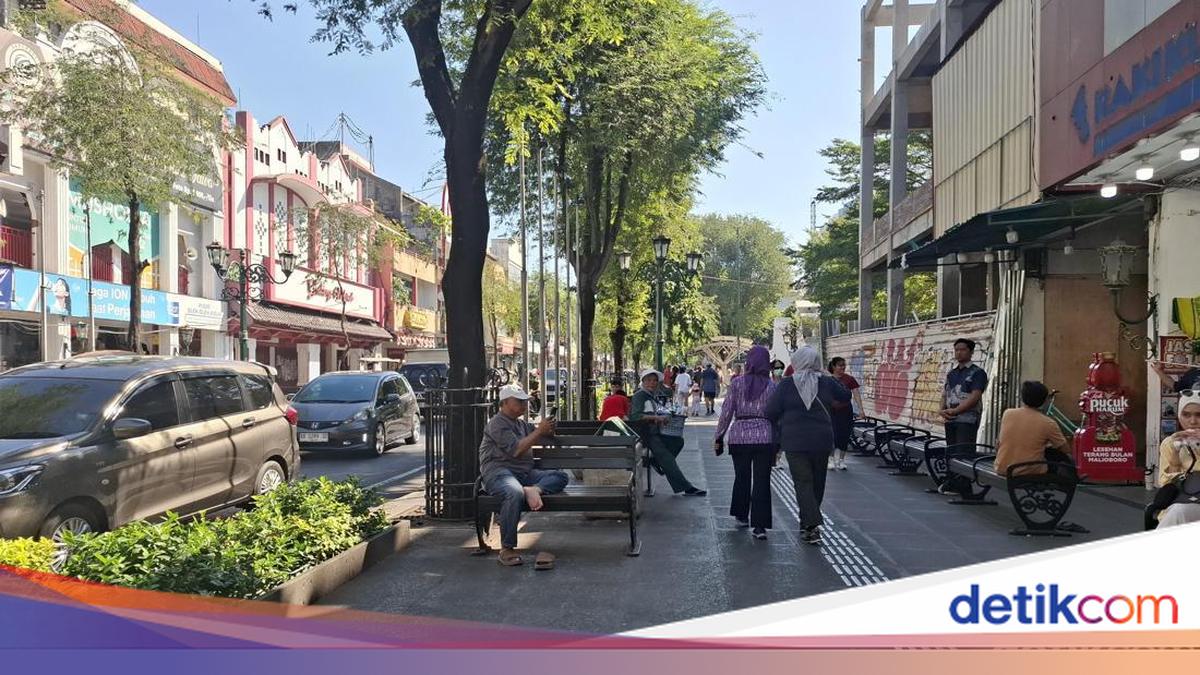
The Yogyakarta regional government has acknowledged that it is still facing obstacles to making Malioboro fully pedestrianised this November. Some of the challenges concern restrictions on movement along the streets adjoining Malioboro.
“These include how to accommodate older people, people with disabilities and others,” said Yogyakarta’s Regional Secretary, Ni Made Dwipanti Indrayanti, when met at the Yogyakarta Regional House of Representatives building on Wednesday (4 November 2026).
Accommodating older people and people with disabilities has proved challenging after barriers on the adjoining streets made it difficult for older people to pass. The Yogyakarta regional government is still working out an appropriate arrangement.
“I think this requires thorough public consultation. I have told my colleagues, ‘Please communicate this to the public so that we can also understand what they expect’,” she added.
Residents still need access
Made said the implementation of full pedestrianisation in Malioboro must also take account of the public, particularly those who need access to the adjoining streets. She acknowledged that the arrangement had yet to be finalised.
“We need to prepare a plan for how activities will be accessed elsewhere, including on the adjoining streets. We need a consistent scheme. For example, if we are now talking about pedestrianisation, which vehicles will be allowed through?” Made said.
“The gaps are on the adjoining streets. Sometimes I also wonder why vehicles are still passing through between 5pm and 10pm or 11pm. It turns out that the weak points are on those streets. The Transportation Agency has carried out traffic engineering through Regol Anom, but the design may not yet be right, so we are still evaluating it,” she added.
Parking infrastructure
Another issue is parking infrastructure, which is considered not yet ready. Although the Yogyakarta city government has made arrangements for tourist-bus drop-offs, parking for private vehicles is still not fully prepared.
“Coincidentally, the lease for our Ketandan parking facility only ends on 28 December. The site has not yet been fully paved. Parking availability must also be included in the plan,” Made said.
“Then there are bus drop-offs. The city already has a policy for buses going to Taman Pintar. There are also several other matters, including the planned reorganisation of the area at Senopati,” she explained.
Zero-emission transport
The final issue concerns zero-emission vehicles that could operate once full pedestrianisation is introduced. Made questioned why the hundreds of electric pedicabs distributed for use are now seldom seen.
“We have, what is it, more than 200 electric pedicabs, but I don’t know where they are. We distributed them, so why aren’t more of them visible in Malioboro?” she said.
She said these issues must be addressed through careful planning and that she would coordinate with various parties to find solutions.
“We have started evaluating this. What we have communicated and what has been implemented do not seem to match the plan precisely,” she said.
Despite the complexity of the issues, Made stressed that the full-pedestrianisation policy for Malioboro would continue.
“It will continue, yes, that’s right, with limitations. We remain committed to this project. In principle, we are committed because it is included in the dossier and the management plan for UNESCO, but that is not the main objective,” she said.
“The main objective is that when we implement this pedestrian policy as planned, all the pieces must fit together,” Made concluded.
Source: jawawa.id (https://jawawa.id/newsitem/yogyakarta-regional-government-reveals-several-obstacles-to-making-malioboro-fully-pedestrian-1793865038)
Originally published by detikJogja (https://www.detik.com/jogja/berita/d-8739570/pemda-jogja-ungkap-sederet-kendala-di-rencana-maliboro-full-pedestrian), translated from Indonesian