
Yogyakarta Mayor Urges Hygienic Qurban Slaughter Process
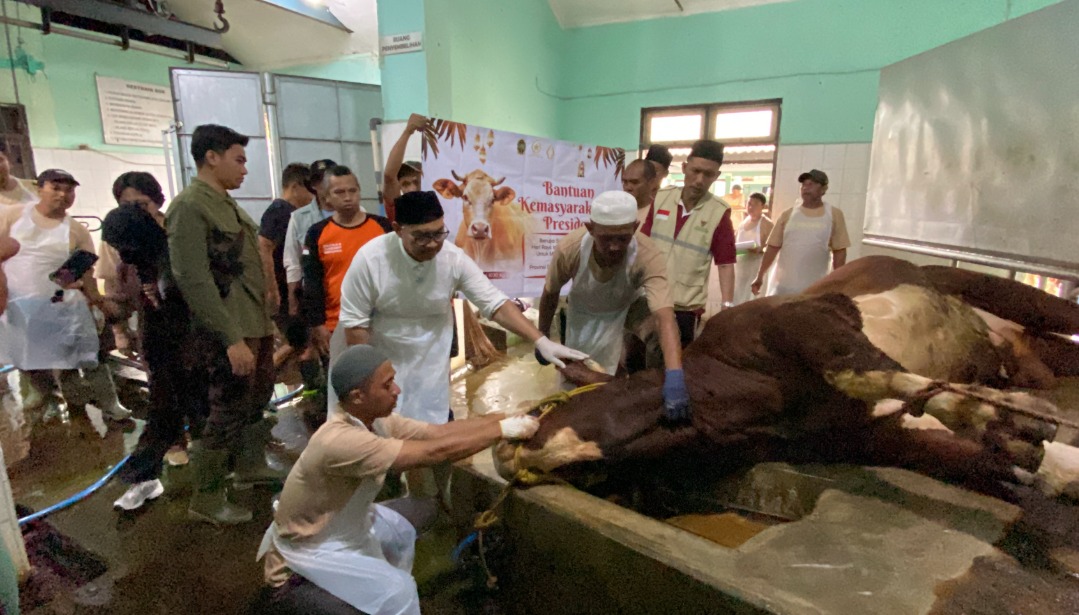
Yogyakarta Mayor Hasto Wardoyo inspected the sacrificial cattle slaughter process at Giwangan Animal Slaughterhouse (RPH) on Wednesday (27/5). He aimed to ensure the process was hygienic, safe, and professional.
One of the slaughtered cattle was a presidential donation of Simmental Limousin breed weighing one tonne. Hasto stated the sacrificial cattle represented the central government’s concern for the community, particularly those in need, and was highly significant for the beneficiaries.
The presidential sacrificial beef will be distributed to 300 households in Kampung Gemblakan Bawah, Danurejan Sub-district, Yogyakarta City, an area predominantly inhabited by low-income residents.
“This assistance brings joy and strengthens community solidarity during Eid al-Adha,” he said.
Hasto also urged those conducting sacrificial slaughter outside the RPH to observe hygiene and waste management. “Mosque trustees are advised to create dedicated drainage channels to prevent improper waste disposal,” he added.
Meanwhile, UGM’s Faculty of Animal Husbandry (Fapet UGM) deployed 20 selected student personnel to supervise sacrificial slaughter outside Yogyakarta City’s RPH from 26 to 29 May 2026. This strategic move follows a collaboration with the city’s Agriculture and Food Office.
“This technical supervision and comprehensive training is crucial to ensure students can oversee halal slaughter processes while applying animal welfare principles and conducting optimal post-mortem inspections on-site,” said UGM’s Halal Butcher Chief, Dr. Ir. Endy Triyannanto, S.Pt., M.Eng., IPM., ASEAN Eng.
Fapet UGM Dean Prof. Ir. Budi Guntoro, S.Pt., M.Sc., Ph.D., IPU., ASEAN Eng., urged students to uphold their alma mater’s integrity by ensuring meat distributed to the public meets safe, healthy, whole, and halal (ASUH) standards.
This academic-government collaboration is not only a form of direct community service by the academic community but also a strategic platform for students to hone practical skills, social sensitivity, and field leadership.
Through this ongoing synergy, Fapet UGM is committed to long-term contributions in standardising Indonesia’s professional and hygienic Qurban slaughter industry. (H-2)
The use of bamboo baskets is not only environmentally friendly but also aims to reduce plastic waste accumulation after meat distribution.
National data also indicates a rising trend in public participation in Qurban activities.
According to him, neighbours who learned all the cattle were purchased by Cabinet Secretary Teddy initially questioned the matter, then offered their own cattle.
The Qurban slaughter committee in Kampung Salakaso distributed meat using bamboo ropes to minimise plastic use.
A total of 149 cattle and 287 goats were sacrificed, spread across seven regencies.
The Fisheries and Livestock Division of Yogyakarta City’s Agriculture and Food Office recorded 1,718 animals inspected, comprising 127 cattle, 1,432 sheep, and 159 goats.