
Yogyakarta Government and BPS Hold Closed Meeting on Changed Decile Data
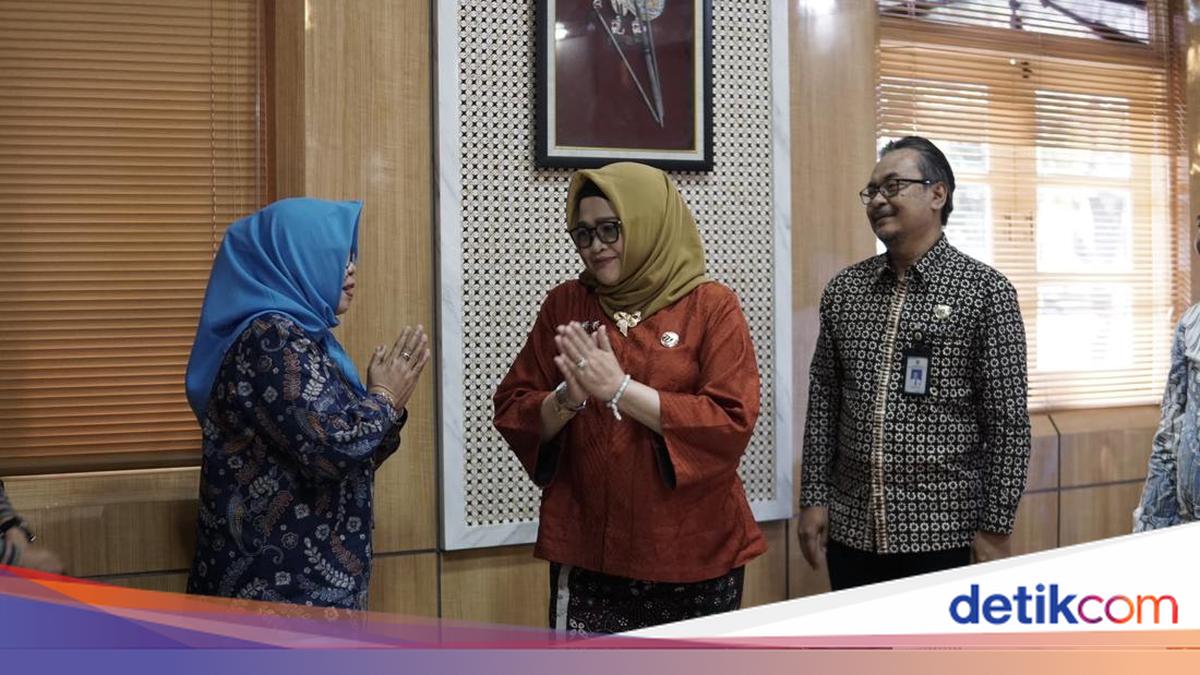
The Yogyakarta Special Region (DIY) Government and the DIY Central Statistics Agency (BPS) held a closed meeting, following the DIY Government’s statement questioning the changed decile data that drew public protests. The meeting aimed to align understanding of welfare data and the connection between central and regional data.
The meeting was held at the DIY Regional Secretary’s office in the Kepatihan Complex, Yogyakarta, on Thursday afternoon. It was attended by the DIY Regional Secretary and staff, along with the Acting Head of BPS DIY and staff. No information circulated before the closed meeting took place.
DIY Regional Secretary Ni Made Dwi Panti Indrayanti said the meeting discussed decile determination, which she said is the authority of the central government. As a data user, Made said, the DIY Government needs to understand the criteria and basis of the grouping so that data used in poverty handling can be understood comprehensively and in line with conditions in the region.
“The data comes from the centre, not something we determine. What we discuss is the criteria and how far they go. How they compile and classify it is what we need to ask BPS,” Made explained in a written statement received by detikJogja on Thursday evening (20/8/2026).
Made said the DIY Government actually also has data developed through collaboration with district and city governments. The data is integrated in the One Poverty Data system and provides a detailed picture of community conditions.
“So actually with that one data system, we can monitor. It is already very detailed in terms of what poverty category someone falls into, what assistance they receive, and what type. It is all visible there,” she said.
The meeting, Made said, was also aimed at aligning rather than comparing data held by the regional government with central government data.
“It is not that we want to compare data. But to align data,” Made stressed.
Meanwhile, Acting Head of BPS DIY Endang Tri Wahyuningsih explained that DTSEN is a database that integrates social and economic information to support more targeted government policies. Endang said DTSEN was built through the integration of various data sources such as Regsosek, DTKS, and P3KE, enriched with data from PLN, BPJS Kesehatan, and others. It is then matched with population administration data.
In DTSEN, family data is collected based on relative welfare levels, then ranked and divided into 10 groups called deciles. Decile 1 covers the 10 percent of families with the lowest relative welfare level, while Decile 10 represents the 10 percent of families with the highest relative welfare level.
“Decile position determination considers 41 input variables grouped into family identity, housing conditions and quality, asset ownership, and family member information including education, employment, income, disability, and chronic illness,” she explained.
“Therefore, decile cannot be equated with income level nor become an absolute label stating someone is rich or poor,” Endang continued.
Endang said DTSEN is continuously updated and results are available every three months. Thus, a family’s socio-economic condition can change and decile position can also change following updates and data refreshes from various sources.
“The most important thing is how we jointly maintain data quality so that it can complement each other,” Endang said.
For residents who feel their economic condition does not match their listed decile position, they can carry out independent updates through the Cek Bansos application or the Cek DTSEN channel. However, a submission does not automatically change the decile because the data must first go through a verification and validation process.
It was previously reported that the DIY Government questioned the welfare grouping data or deciles issued by BPS. The decile data had changed significantly, drawing protests from the public.
The decile grouping refers to the National Socio-Economic Single Data (DTSEN). Through this system, Indonesian citizens are grouped into 10 categories or deciles. Each decile covers about 10 percent of the population, with decile 1 as the group with the lowest welfare level and decile 10 as the group with the highest welfare level.
Decile determination does not only look at family income. A number of other indicators are also taken into account, ranging from housing conditions, education, family members’ employment, electricity usage, to asset ownership.
DIY Regional Secretary Ni Made Dwipanti Indrayanti said the protests that emerged in the community were about deciles changing from low to high. This made poverty figures appear to decline.
“Many people protested about the deciles. I also protested to Mrs Endang yesterday, how could that happen. Was it to reduce the burden, so everything was raised, so to speak,” Made said when met at the Kepatihan Complex, Yogyakarta, on Wednesday (19/8).