
Yogyakarta Culture Office Does Not Recommend Demolition of Historic Lempuyangan Houses
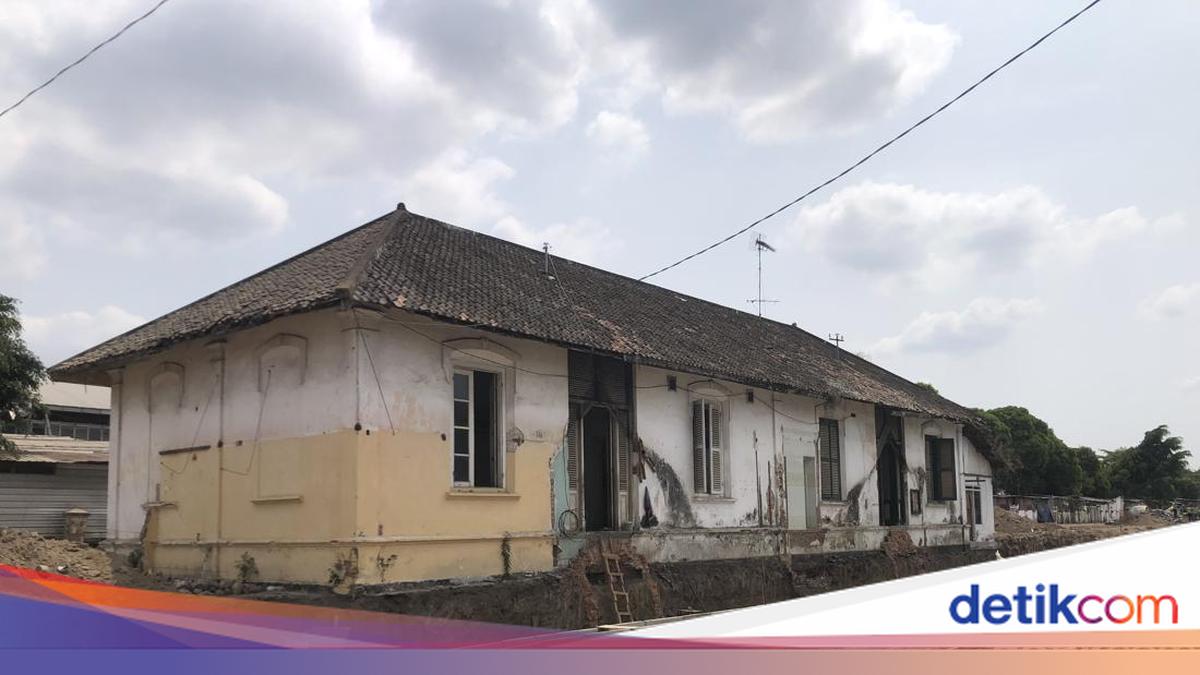
Yogyakarta City’s Culture Office (Disbud) says it did not recommend demolishing 13 historic houses south of Lempuyangan Station. It only recommended that PT KAI fully document the houses and retain two of them.
“We did not issue an official written recommendation for their demolition. Instead, we recommended preserved-by-record documentation for PT KAI’s paperwork, and that the two houses, numbers 10 and 11, be retained and, if appropriate, proposed for cultural-heritage status,” said Susilo Munandar, head of the Cultural Heritage Division at the Yogyakarta City Culture Office, when met at its office on Wednesday (14 October 2026).
Susilo said PT KAI had sent the Culture Office a letter on 24 October concerning plans to demolish the 13 former staff houses. After receiving it, the office carried out a series of observations and assessments, and held consultations with various parties.
The process found that the 13 historic houses were not designated cultural-heritage buildings, as no decree had been issued by the Ministry, the Yogyakarta Special Region administration or the Yogyakarta City administration.
Susilo said the Culture Office responded to PT KAI’s letter with recommendations. First, the company was asked to document the 13 houses in detail, a process described as “preserved by record”.
The office also recommended that PT KAI retain two of the 13 houses as a form of preservation and propose them for designation as cultural-heritage buildings.
“To our knowledge, the city government does not issue demolition permits. We have also checked with the Public Works Department, and there are no such permits,” Susilo said.
“So this was not a demolition permit. The recommendation was for preserved-by-record documentation, as well as retaining those two houses. Whether they are demolished may not be within our authority, since the request submitted to us was for demolition,” he added.
Susilo said PT KAI had held a meeting with the Culture Office to report on progress in implementing the recommendations.
“On 13 April 2026, PT KAI completed its assessment and preserved-by-record work, documenting the 13 houses,” Susilo said.
“The results were in line with the department’s recommendations: all the houses were documented through photographs and detailed records, including drone video footage and technical and architectural drawings. The two units mentioned earlier were also retained,” he said.
The former houses of KAI officials opposite Yogyakarta’s Lempuyangan Station have since been demolished. PT KAI says the land will be used to expand the station forecourt and build a replacement road.
“As an initial step in reorganising the area, particularly south of Lempuyangan Station, the station area will be expanded, with a dedicated access road for passengers arriving at and departing from the station separated from the public road,” said Feni Novida Saragih, public relations manager for KAI’s Yogyakarta regional division, on Friday (9 October).
She said the station’s forecourt needed to be expanded because passenger numbers on both long-distance trains and the KRL commuter service were continuing to rise. In 2024, Lempuyangan Station served 5,392,700 passengers; in 2025, the total rose by 4 per cent to 5,605,414.
“On an average day, 12,586 long-distance rail passengers board or alight at Lempuyangan Station. The Yogyakarta–Palur KRL Commuterline carries 3,500 passengers. The station also handles freight,” she said.