
Yogyakarta Becak Driver Baffled by Inclusion in Desil 9 of National Socio-Economic Data
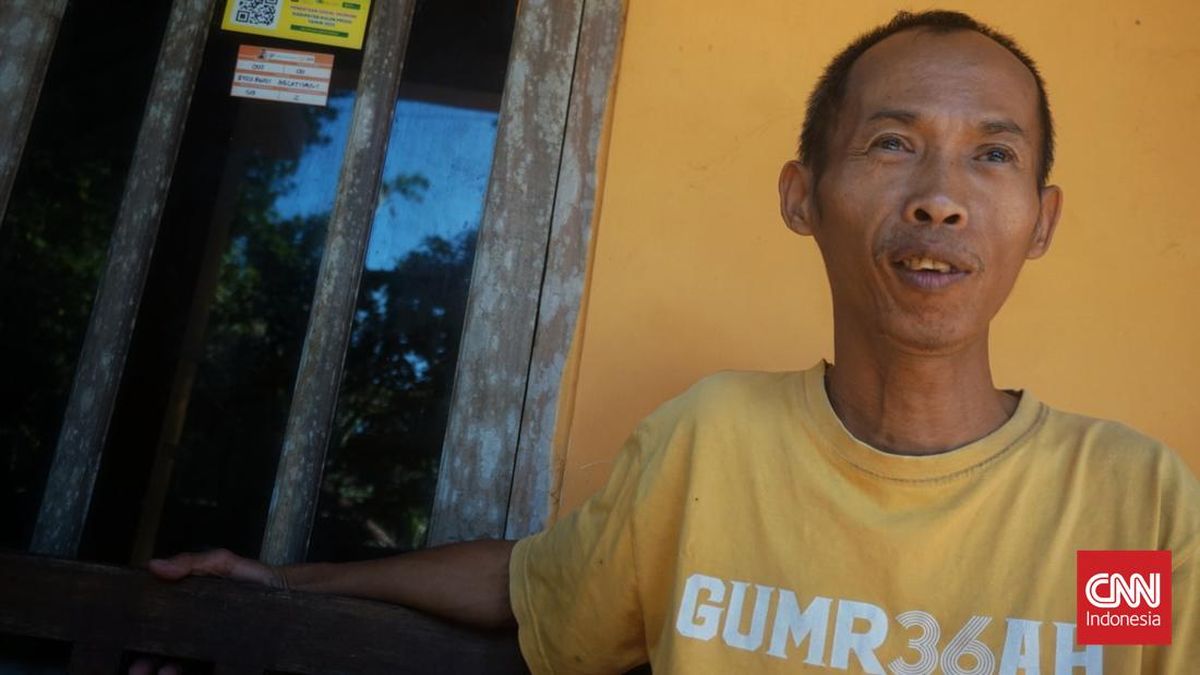
Timbul (49), a resident of Ngentakrejo, Lendah, Kulon Progo, Yogyakarta, never expected to be classified in desil 9 of the National Single Socio-Economic Data (DTSEN). Timbul says he is merely a motorcycle becak driver who works daily in Malioboro, Yogyakarta City. As a single parent, he is already grateful to take home a net profit of Rp50,000 a day. He is also confused because he does not feel he owns assets that would define him as part of a group with relatively high welfare. The house where he lives is an inheritance from his late parents, planned to be divided among Timbul and his six siblings.
Timbul learned about two weeks ago that he was classified in desil 9 of DTSEN. His youngest son had been accepted to study through the independent admission route at the Faculty of Engineering of Yogyakarta State University (UNY). Due to their tight financial situation, Timbul and his son sought relief for the university entrance fee of Rp15 million through the Indonesia Smart Programme (PIP) and scholarships. The payment deadline is December this year. “My son wanted to get a certificate of indigence from the village office. But it turned out that the village head checked and found the desil was 9,” Timbul said when met at his residence on Monday afternoon (24/8).
As far as Timbul knew, he had previously been in desil 1, the group with the lowest relative welfare or the poorest 10 percent of the population. He has received various government social assistance for years. “Income from driving a becak is uncertain. Sometimes I can get passengers, sometimes not. Often I get nothing all day. In the morning I sometimes go to the market to offer chicken for sale,” Timbul said. “How can my desil be higher than the village head, who is desil 8?” he wondered.
Timbul has tried to find a way to change his desil to match his actual condition. However, he said the explanation from the Family Hope Programme (PKH) was not enlightening. Nevertheless, Timbul can breathe a little easier. His situation was heard by the Deputy Regent of Kulon Progo, Ambar Purwoko, who visited his house this morning. According to Timbul, Ambar understands his real condition and is trying to contact the Central Statistics Agency (BPS) to correct Timbul’s desil category, which is considered far off the mark. Timbul still very much hopes for government assistance, including access to education fee relief for his son. “For now, to enter university, I pay half first. That money is a joint contribution from me and my son. It turned out that the pocket money I gave my son was saved. We have to pay first so he does not fall behind in his studies,” he said.
Separately, the Acting Head of the BPS Yogyakarta, Endang Tri Wahyuningsih, said she had heard about Timbul’s problem. Endang explained that DTSEN is sourced from various data and involves many stages and parties in its formation. According to her, changes to desil data are still possible if verification finds conditions that do not match previous data. “If the public finds a desil change that does not match their actual condition, it can be reported through the provided channels for further verification,” Endang said when met at her office in Bantul, Yogyakarta. “Thus, people who factually meet the criteria can still receive assistance according to the provisions,” she added.
Previously, BPS Head Amalia Adininggar Widyasanti said desil does not indicate absolute poverty. Desil shows the position of a family compared to other families based on various socio-economic characteristics. “Desil shows the relative position of a family compared to other families based on various socio-economic characteristics. Therefore, the desil figure should be understood as a picture of relative position in welfare ranking, not as a single measure of a family’s economic condition,” Amalia said in a written statement on Friday (21/8). In DTSEN, families are divided into 10 groups based on relative welfare levels. Desil 1 is the group with the lowest relative welfare, while desil 10 is the group with the highest relative welfare.
BPS stressed that desil determination is not based solely on income. The ranking also considers housing conditions, drinking water sources, cooking fuel and energy, asset ownership, electricity consumption and capacity, family composition, education, employment, health, and disability. These characteristics are calculated together using the Proxy Means Test (PMT) statistical method. Therefore, a single indicator does not automatically determine a family’s desil position. “Desil is not an absolute measure of poverty nor a nominal measure of a family’s income or wealth,” BPS wrote. BPS also stressed that desil is not a list of aid recipients. The data is used by ministries and agencies as one basis for determining programme targets or priorities according to their respective objectives and provisions.
Meanwhile, the Yogyakarta Special Region Provincial Government has assured that it will not ignore residents whose desil data turns out to be inaccurate compared to their actual conditions and who should have the right to receive social assistance. The provincial government said it will continue to strive for residents who have been excluded from the desil of social assistance recipients to obtain their rights to government aid. Head of the Yogyakarta Social Service, Suyarno, confirmed that there are residents who have been placed in a high desil in DTSEN while their actual welfare level is relatively low.
Source: jawawa.id (https://jawawa.id/newsitem/yogyakarta-becak-driver-baffled-by-inclusion-in-desil-9-of-national-socio-economic-data-1787651557)
Originally published by CNN Indonesia (https://www.cnnindonesia.com/nasional/20260824202034-20-1396002/cerita-sopir-becak-motor-di-malioboro-jogja-heran-masuk-desil-9), translated from Indonesian