
Yogi Given a Judicial Pardon in Starlink Resale Case: What Does It Mean?
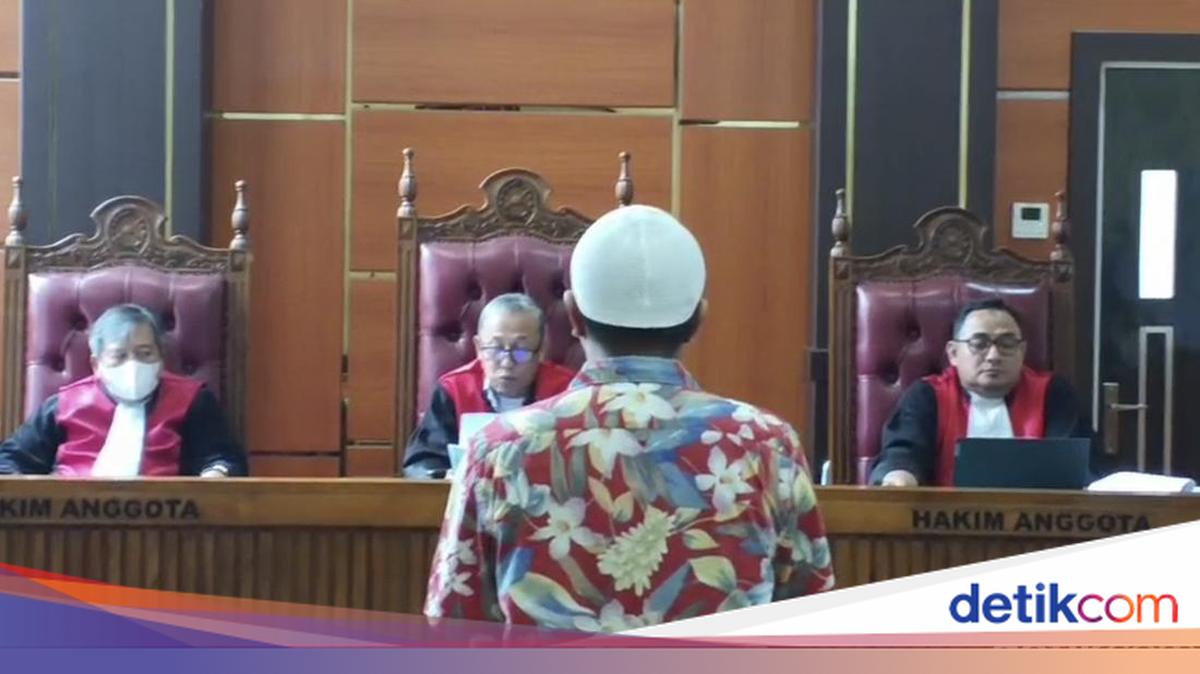
A panel of judges at the Padang District Court (PN Padang) found Yogi Gilang Arya Setia guilty of reselling Starlink internet services in Sikakap, the Mentawai Islands, West Sumatra, but granted him a judicial pardon. What does a judicial pardon mean?
“The defendant, Yogi Gilang Arya Setia, known as Yogi, has been found guilty of the telecommunications offence at the heart of this case. The court grants forgiveness to the defendant, Yogi Gilang Arya Setia, known as Yogi,” presiding judge Fitrizal Yanto said as he read the verdict on Thursday (15 October 2026).
Yogi had initially been sentenced to three months in prison. However, the panel decided to grant the defendant a pardon.
“The court rules that Yogi Gilang Arya Setia, known as Yogi, is not to be sentenced or subjected to any measure,” the panel added.
What, then, is a pardon ruling?
A judicial pardon is a new mechanism that has been applied since Indonesia’s new Criminal Code and Criminal Procedure Code came into force. Law No. 1/2023 on the Criminal Code sets out guidelines for sentencing. The relevant provision reads:
Article 54
- In imposing a sentence, the following must be taken into consideration:
the offender’s degree of culpability;
the motive and purpose of the offence;
the offender’s state of mind;
whether the offence was planned;
the manner in which the offence was committed;
the offender’s attitude and actions after committing the offence;
the offender’s life history, social circumstances and economic circumstances;
the effect of the sentence on the offender’s future;
the effect of the offence on the victim or the victim’s family;
forgiveness by the victim and/or the victim’s family; and/or
legal values and the sense of justice prevailing in society.
- The minor nature of the offence, the offender’s personal circumstances, or circumstances at the time of the offence and those arising afterwards may be considered as grounds for not imposing a sentence or measure, taking into account justice and humanity.
The pardon provisions are set out in greater detail in Law No. 20/2025 on the Criminal Procedure Code. Article 1, point 19 of the new code defines a judicial pardon as a statement delivered by a judge in an open court hearing that the defendant is proven guilty, but that, owing to the minor nature of the offence, the offender’s personal circumstances, or circumstances at the time of the offence and those arising afterwards, the judge imposes neither a sentence nor a measure, taking justice and humanity into account.
Article 246 sets out the circumstances in which a judge may grant a pardon to a defendant. It reads:
Article 246
- A judge may issue a ruling finding the defendant guilty but imposing no sentence or measure, taking into consideration:
the minor nature of the offence;
the offender’s personal circumstances; and/or
circumstances at the time of and after the offence.
- A ruling as referred to in paragraph (1) is classified as a separate type of ruling, namely a Judicial Pardon Ruling.
A judicial pardon ruling may be appealed. However, the Criminal Procedure Code stipulates that it cannot be appealed to the Supreme Court (MA) by way of cassation. This is provided for in Article 299(2)(b) of the new code, which states:
- An application for cassation review as referred to in paragraph (1) cannot be made against:
- a ruling in the form of a judicial pardon.
The Supreme Court has also issued guidance for judges on judicial pardons through Supreme Court Regulation (Perma) No. 3 of 2026. The regulation specifies the offences or statutory provisions for which a judicial pardon may be granted.
These include offences carrying a maximum prison sentence of one year or a fine of no more than Category III (Rp50 million). A judicial pardon may also be applied to complaint-based offences.
The case against Yogi
Yogi faced legal proceedings for reselling Starlink internet services. He was charged with violating Law No. 36 of 1999 on Telecommunications. The case was registered as No. 450/Pid.Sus/2026/PN Pdg.
The case began in 2024, when Yogi bought a Starlink satellite internet device and installed it at his parents’ guesthouse in Sikakap village. Because mobile telecommunications signals in Sikakap were poor, local residents and government agencies made extensive use of the internet connection at the site.
Yogi later expanded the network’s coverage and established a company called PT Mentawai Network Provider. Through the company, he resold the Starlink internet service.
The company officially received a Business Identification Number (NIB) from the central government on 2 October 2025. Other supporting operating permits were still being processed.
On 2 October 2025, the Mentawai Islands Police issued a Model A police report over the alleged operation of a telecommunications business without a permit. Yogi was arrested and detained from 8 July 2026.
Source: jawawa.id (https://jawawa.id/newsitem/yogi-given-a-judicial-pardon-in-starlink-resale-case-what-does-it-mean-1792137122)
Originally published by detikcom (https://news.detik.com/berita/d-8709979/yogi-divonis-maaf-oleh-hakim-di-kasus-jual-ulang-starlink-apa-maksudnya), translated from Indonesian