
YKAN and Wakatobi’s Indigenous Communities Strengthen Climate Adaptation Through Culture
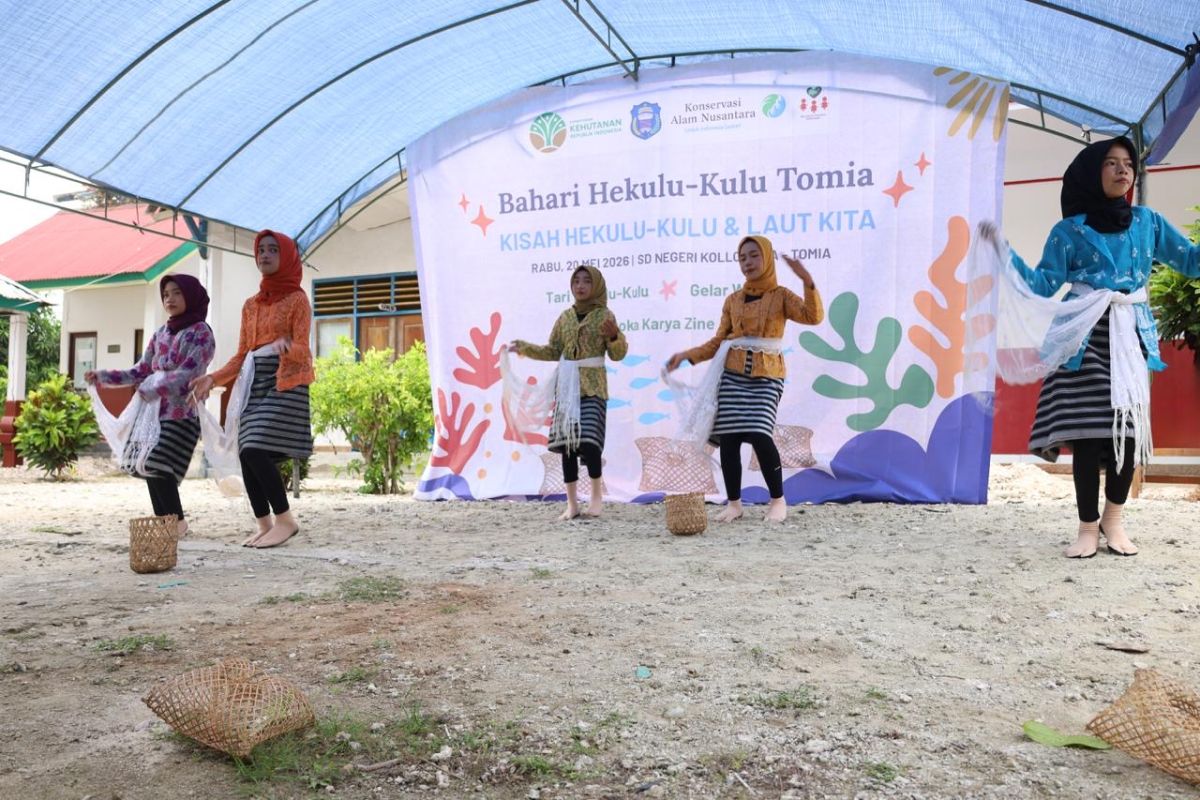
Kendari, Southeast Sulawesi — The Nusantara Nature Conservation Foundation (YKAN), together with the indigenous communities and a number of stakeholders in Wakatobi Regency, Southeast Sulawesi (Sulawesi Tenggara), is strengthening climate change adaptation through cultural approaches and the preservation of local knowledge. Muhammad Ilman, Director of Marine Program at YKAN, said by phone from Kendari on Thursday that the effort is realised through the Barata Kahedupa Herbal Plant Festival on Kaledupa Island and the Bahari Hekulu-Kulu stage on Tomia Island. ‘These activities involve local government, the Wakatobi National Park Authority (BTNW), indigenous communities, local communities, and educational institutions as part of reinforcing coastal community resilience to climate change,’ Ilman said.
He noted that climate change does not only affect the physical environment but also influences cultural practices, ways of life, and the resilience of coastal communities. Therefore, he added, modern science must be paired with traditional knowledge, customs, and local culture to raise awareness while strengthening social-ecological resilience. ‘Coastal community resilience cannot be built solely with infrastructure or technical interventions. Local knowledge, cultural practices, and people’s relationship with nature are important capital in facing climate change,’ he said.
He disclosed that as an archipelagic region, Wakatobi faces threats from sea-level rise, changes in seasonal patterns, coastal erosion, and rising sea temperatures that affect coastal ecosystems and people’s livelihoods. ‘This condition also impacts food and medicines, which still rely heavily on imports from outside the region,’ he added.
Therefore, strengthening local food production, utilising medicinal plants, and preserving traditional values are seen as important to bolster coastal communities’ resilience. Ilman explained that the Barata Kahedupa Herbal Plant Festival features educational games, herbal plant workshops, herbal displays, and cross-generational discussions on traditional medicine. Meanwhile, the Bahari Hekulu-Kulu stage in Tomia focuses on regenerating cultural and ecological knowledge through traditional dances, creative workshops, and environmental education for pupils.
He hopes the two activities can serve as examples of culture-based climate adaptation in coastal areas and small islands in Indonesia. The Head of the Indigenous Community of Kaledupa Island, Lakina Barata Kahedupa La Ode Saidin, said traditional knowledge is not merely cultural heritage but part of the coastal people’s way of life transmitted generation to generation. He stated that the traditions and local knowledge employed by ancestors contained ways for coastal communities to adapt to environmental changes long before the term climate change became widely known. ‘Medicinal plants, customary rituals, and ancestral knowledge are not merely old stories. All of these are ways for communities to understand nature and nurture life,’ Saidin said.
Meanwhile, the head of the Wakatobi National Park Authority (BTNW), La Ode Ahyar Thamrin Mufti, viewed the cultural approach as playing a crucial role in maintaining the conservation area’s sustainability and in strengthening community awareness of the environment. ‘Local knowledge among the Wakatobi people arises from a long relationship with nature. When traditions and culture are kept, conservation values also live within the community,’ he said.