
Yesterday: Social assistance disbursed this month to circular on energy-saving learning
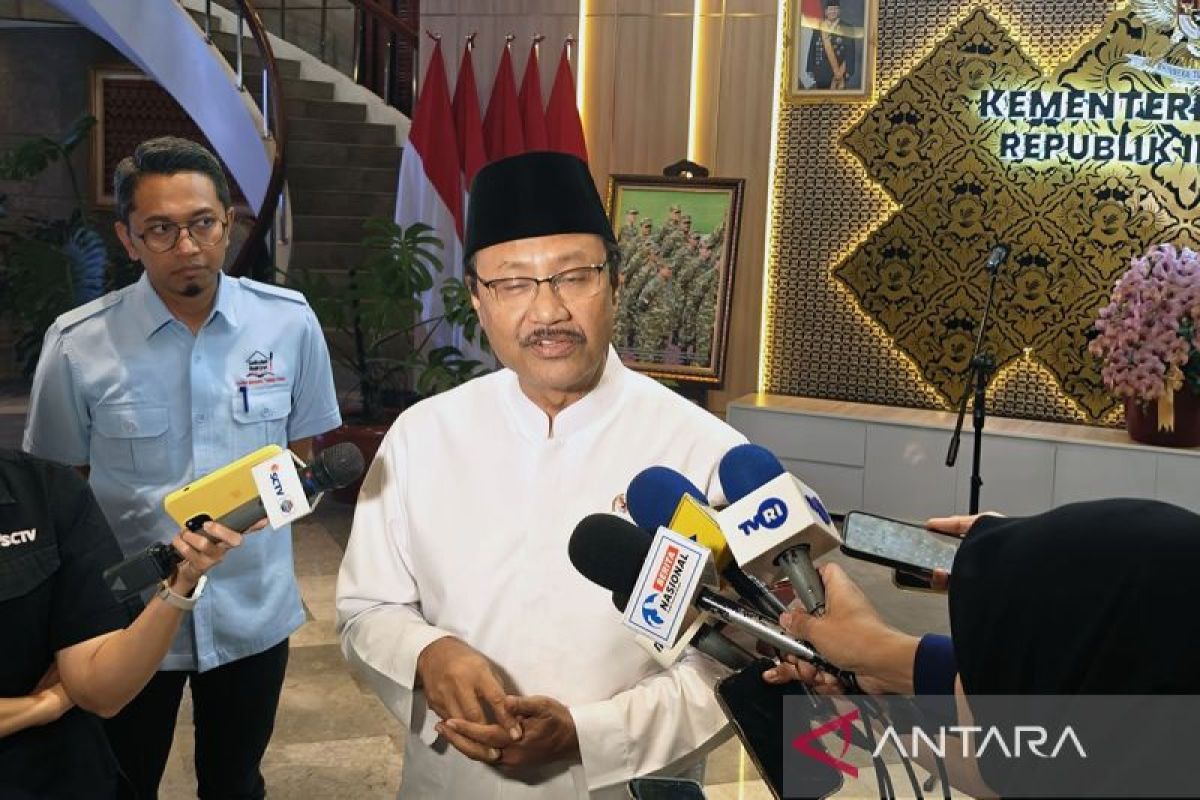
Jakarta (ANTARA) - Several interesting humanities news items occurred on Wednesday (1 April) and can be revisited as a summary of events to start the day today. The news begins with the disbursement of social assistance (bansos) this month up to the mechanism for energy-saving learning in schools. 1. Ministry of Social Affairs: Regular quarterly II social assistance to be disbursed in the second week of April this year The Ministry of Social Affairs (Kemensos) has confirmed that the distribution of regular social assistance (bansos) under the Family Hope Programme and Non-Cash Food Assistance (BPNT) for the second quarter will begin in the second week of April 2026. Social Affairs Minister Saifullah Yusuf stated that the acceleration of this distribution is supported by the updating of beneficiary data based on the National Socio-Economic Single Data (DTSEN) by the Central Statistics Agency (BPS), which is now received earlier than in previous periods. “Now, every 10th of the month, we receive the results of the data update, and that serves as the guideline for monthly social assistance distribution. So for this second quarter (disbursement) starting in the second week of April,” said the Minister. 2. Field check, BPS: 3,934 JKN PBI catastrophic survivors have died The Central Statistics Agency (BPS) has confirmed that 3,934 individuals from the BPJS Health participant segment of Premium Assistance Recipients (PBI) under the National Health Insurance (JKN) with catastrophic illnesses have passed away, based on the results of the first-stage field verification. BPS Head Amalia Adininggar Widyasanti said the finding is the result of a ground check on 106,153 individuals or PBI JKN recipients who were previously reactivated because they were identified as having chronic or catastrophic illnesses and requiring immediate services. “Yes, from the ground check results, we found 3,934 individuals who have already passed away,” she said. 3. 1,256 SPPG without wastewater treatment plants and hygiene certificates in eastern Indonesia temporarily halted The National Nutrition Agency (BGN) has once again taken firm action by temporarily suspending operations of 1,256 Nutrition Fulfilment Service Units (SPPG) in eastern Indonesia effective 1 April 2026. Director of Monitoring and Regional Supervision III of BGN Rudi Setiawan said the action was taken because the SPPG have not registered for the Hygiene and Sanitation Fitness Certificate (SLHS) and do not have a Wastewater Treatment Installation (IPAL). “We want to ensure that all SPPG truly meet standards, both in terms of food safety and waste management. This is important to protect the health of the beneficiaries,” said Rudi. 4. BRIN: Cassava has potential to become a source of sustainable income and food Professor of Agricultural Economic Research from the National Research and Innovation Agency (BRIN) Robert Asnawi revealed that cassava has great potential to become a source of sustainable income and food in Indonesia. Robert noted that more than 80 percent of cassava production in Indonesia is still sold in fresh form. This opens up significant opportunities to increase added value for farmers. “This should result in cassava having great potential to become a food substitute while strengthening national food security,” he said. 5. Ministry of Basic and Secondary Education issues circular regulating energy-saving face-to-face learning The Ministry of Basic and Secondary Education (Kemendikdasmen) has issued Ministerial Circular No. 10 of 2026 to ensure that face-to-face learning in schools continues normally while supporting energy-saving policies. Minister of Basic and Secondary Education Abdul Mu’ti said the circular covers the implementation of face-to-face learning in efforts to optimise learning outcomes and strengthen character in schools. “Face-to-face learning remains a priority. At the same time, we encourage educational units to actively participate in supporting energy efficiency policies through the habituation of thrifty and environmentally friendly behaviour in schools,” said the Minister.