
Yen Suddenly Strengthens Sharply, Rp41,000 Trillion Carry Trade 'Bomb' Could Explode
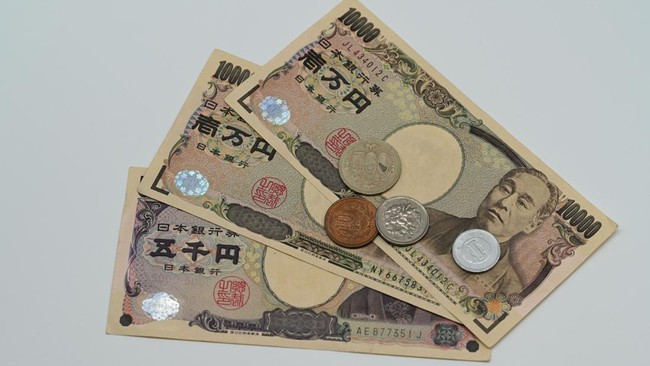
A sharp strengthening of the Japanese yen is beginning to drive investors out of carry trade transactions ahead of the Bank of Japan (BOJ) meeting next week.
In yen carry trade transactions, investors borrow yen at low costs because Japanese interest rates have historically remained at low levels. These funds are then placed in other currencies or assets that offer much higher yields.
This strategy can be profitable as long as the yen’s trend remains weak and the interest rate differential remains relatively wide. However, the risk of loss from this activity can increase when the yen strengthens or when Japanese interest rates are raised by the central bank.
Currently, rising Japanese interest rates and a strengthening yen are occurring simultaneously. According to Refinitiv data, the yen strengthened to JPY 152.89/US$ during intraday trading on Tuesday (8/9/2026), reaching its strongest level since February. This strengthening occurred in a very short period, as less than a week prior, the yen was still trading around JPY 160/US$.
Over the past week alone, the yen managed to gain 2.37% against the greenback. This movement is the reverse of the conditions seen last July, when the yen hit its weakest level in 40 years. That weakness prompted joint intervention by Japan and the United States.
The current strengthening of the yen is driven by expectations of a BOJ interest rate hike next week. The market also anticipates that the Japanese central bank may accelerate monetary policy tightening.
Furthermore, signs of Japanese investors’ funds returning from abroad are becoming visible. US pressure regarding the weakening yen has also increased investor caution in maintaining short positions on the Japanese currency.
This situation is causing investors who previously borrowed or sold yen to begin closing their positions. They must repurchase yen to repay loans, thereby increasing demand for the Japanese currency.
Saxo Investment Strategy Head, Charu Chanana, stated that investors are beginning to abandon carry trade transactions even before the BOJ actually raises interest rates. “The carry trade is in a vulnerable position because markets are starting to close positions before the anticipated BOJ rate hike is announced,” said Chanana, as quoted by Reuters.
According to him, while some yen short positions have indeed been closed, the remaining volume is still quite large, meaning further yen strengthening could drive even more investors out of these transactions. “If the yen continues to strengthen, investors could shift from gradually reducing positions to closing them rapidly and simultaneously,” he added.
Value Reaches Rp41,000 Trillion
The exact value of yen carry trade transactions is difficult to calculate precisely. However, cross-border yen lending data can be used as one indicator to estimate the amount of funds involved.
Based on a Jefferies analysis of Bank for International Settlements (BIS) data, cross-border yen lending reached a record JPY 360 trillion, or approximately US2.35trillion, uptoMarch2026.ThisvalueisequivalenttoaboutRp41, 431trillion(assuminganexchangerateofRp17, 630/US). This figure represents the largest accumulation of carry trade transactions in three decades.
The magnitude of this position means that an abrupt closure of transactions risks triggering turmoil in financial markets. A similar situation occurred in August 2024, when investors simultaneously exited yen carry trades, putting pressure on global markets.
Aozora Bank Market Strategy Head, Akira Moroga, stated that investors previously expected Japanese Prime Minister Sanae Takaichi to maintain loose monetary policy while implementing fiscal stimulus. These expectations led investors to undertake very large yen carry trade transactions. However, changing expectations regarding BOJ policy are now driving more investors out of these trades. “Yen carry traders have taken excessively large positions and are now closing them more rapidly,” said Moroga.
Market Awaits BOJ Decision
The BOJ has moved away from the ultra-low interest rate policy that served as the foundation for yen carry trades for years. The shift began in March 2024, when the BOJ ended its negative interest rate policy and set short-term rates in the 0%-0.1% range. Rates were subsequently raised to 0.25% in July 2024 and rose again to 0.5% in January 2025. Tightening continued with a rate hike to 0.75% in December 2025. The BOJ raised rates again to 1% in June 2026, the highest level in decades.
Consequently, Japanese interest rates have risen by approximately 100 basis points in less than two and a half years. The BOJ has also stated it will continue to raise interest rates if economic, inflationary, and financial conditions proceed as expected.
The market is now awaiting the BOJ meeting on 17-18 September 2026. The Japanese central bank is expected to raise interest rates by another 25 basis points to 1.25%. This hike will increase the cost of borrowing yen and narrow the yield differential between Japan and other nations, making carry trades less attractive.
Investors must also account for the risk of intervention should the yen weaken too deeply. Therefore, yen short positions are now influenced not only by interest rate differentials but also by Japanese government policy and pressure from the US.
Chanana believes that the large remaining yen short positions could trigger even faster transaction closures if the Japanese currency continues to strengthen. The closing of carry trade positions could also impact assets previously purchased using yen loans. Investors may potentially sell stocks, bonds, and high-interest-rate currencies to repay these loans.