
Yen Plunges to Weakest Level Since 1986, Why Is Japan Bleeding?
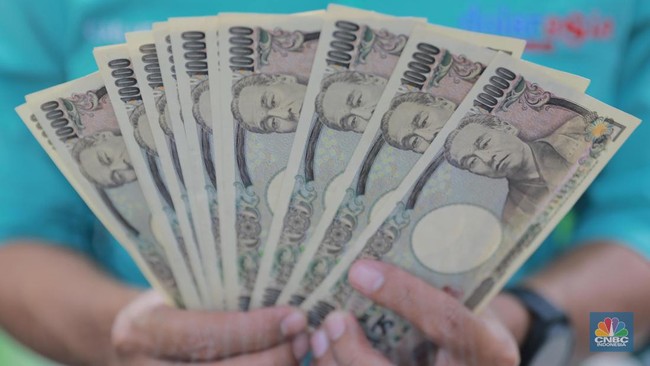
The yen has continued its sharp decline against the US dollar, touching its weakest level in nearly four decades. The currency closed down 0.41% at JPY 163.16 per dollar on Tuesday, a position not seen since December 1986, and was trading around JPY 163.21 on Wednesday morning. The pressure on the yen comes as the dollar strengthens globally, buoyed by rising oil prices and higher US Treasury yields. The ongoing conflict in the Middle East, with US forces entering their eleventh night of consecutive strikes on Iran, has further driven investors towards the safe-haven dollar. The greenback typically benefits from heightened geopolitical uncertainty, while rising oil prices also support the currency as global energy transactions are largely conducted in dollars. The persistent weakness has market participants closely monitoring the possibility of Japanese government intervention in the foreign exchange market.
The Bank of Japan’s (BOJ) efforts to support the yen by ending its negative interest rate policy and raising its benchmark rate to 1%—the highest since 1995—have so far proven ineffective. The rate remains significantly lower than the US Federal Reserve’s rate of 3.50%-3.75%, and this wide differential continues to encourage carry trades, where investors borrow cheaply in yen to invest in higher-yielding dollar assets. As long as the returns on dollar assets remain more attractive, demand for the dollar will stay strong, making a yen recovery difficult. The BOJ is constrained from raising rates more aggressively because domestic inflation is slowing, with headline inflation at 1.5% year-on-year in May 2026, below the central bank’s 2% target. Money supply growth is also weak, with M2 expanding by just 2.2% in June, indicating that higher rates risk further depressing consumption and investment.
Adding to the currency’s woes, Japan’s trade balance swung to a deficit of 406.9 billion yen in June, a stark reversal from a surplus of 122.3 billion yen a year earlier and far exceeding market forecasts. Imports surged by 25.4% to a record 11.34 trillion yen, driven by strong domestic demand following government stimulus and a 59.3% jump in crude oil imports as Japan sought alternative suppliers to bypass disruptions in the Strait of Hormuz. Although exports rose 19.3% to 10.93 trillion yen, supported by a weak yen and demand for AI-related chips, the growth was insufficient to offset the import bill. For the first half of the year, Japan recorded a total trade deficit of 1.01 trillion yen. The need for companies to purchase more foreign currency, particularly dollars, to pay for imports is adding further downward pressure on the yen.