
Yen Leads Asia in Pushing Back Dollar, Rupiah and Ringgit Strengthen, Won Falls
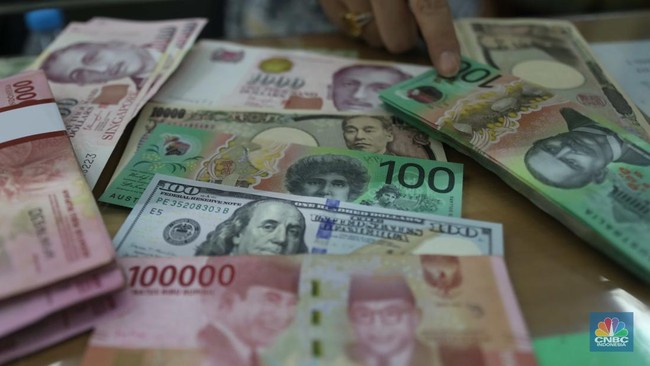
Most Asian currencies strengthened against the United States dollar on Friday morning, led by the Japanese yen, as the dollar index weakened in global markets.
Based on Refinitiv data as of 09:15 Western Indonesia Time, nine out of ten Asian currencies gained ground against the dollar. The Indonesian rupiah appreciated by 0.11% to Rp18,050 per US dollar, though it remained above the psychological level of Rp18,000. The Malaysian ringgit followed with a 0.32% gain to MYR 4.061 per US dollar.
The Japanese yen recorded the sharpest rise, climbing 0.55% to JPY 161.46 per US dollar. The Thai baht strengthened by 0.24% to THB 33.26, while the Taiwan dollar rose 0.22% to TWD 32.077. The Chinese yuan appreciated 0.19% to CNY 6.779 per US dollar. The Singapore dollar and Philippine peso both edged up 0.16%, reaching SGD 1.289 and PHP 61.520 respectively. The South Korean won was the sole laggard, slipping 0.04% to KRW 1,505.78.
The US dollar index weakened by 0.18% to 100.725, providing a boost to Asian currencies. The greenback’s decline came as markets reassessed the renewed tensions between the US and Iran, oil price movements, and the direction of Federal Reserve interest rate policy.
Expectations for a Fed rate hike have slightly diminished. According to the CME FedWatch Tool, the probability of a rate increase at the 28-29 July meeting fell to 26.2%, down from 31% in the previous session. For the September meeting, the likelihood of a hike stood at 61.7%, lower than the 66.6% recorded on Wednesday but still above the 54.1% seen a week earlier.
Minutes from the Fed’s 16-17 June meeting, the first chaired by Kevin Warsh, revealed that policymakers’ concerns about inflation had intensified, with some participants seeing grounds for an immediate rate increase. However, New York Fed President John Williams stated on Thursday that despite renewed conflict in the Middle East, he did not expect energy price increases to be sustained for the remainder of the year.
Meanwhile, US weekly jobless claims fell by 2,000 to 215,000, below economists’ estimates of 218,000, indicating a relatively stable labour market.