
Yemenis’ Plea Amid Government-Houthi Conflict: ‘We Want Peace’
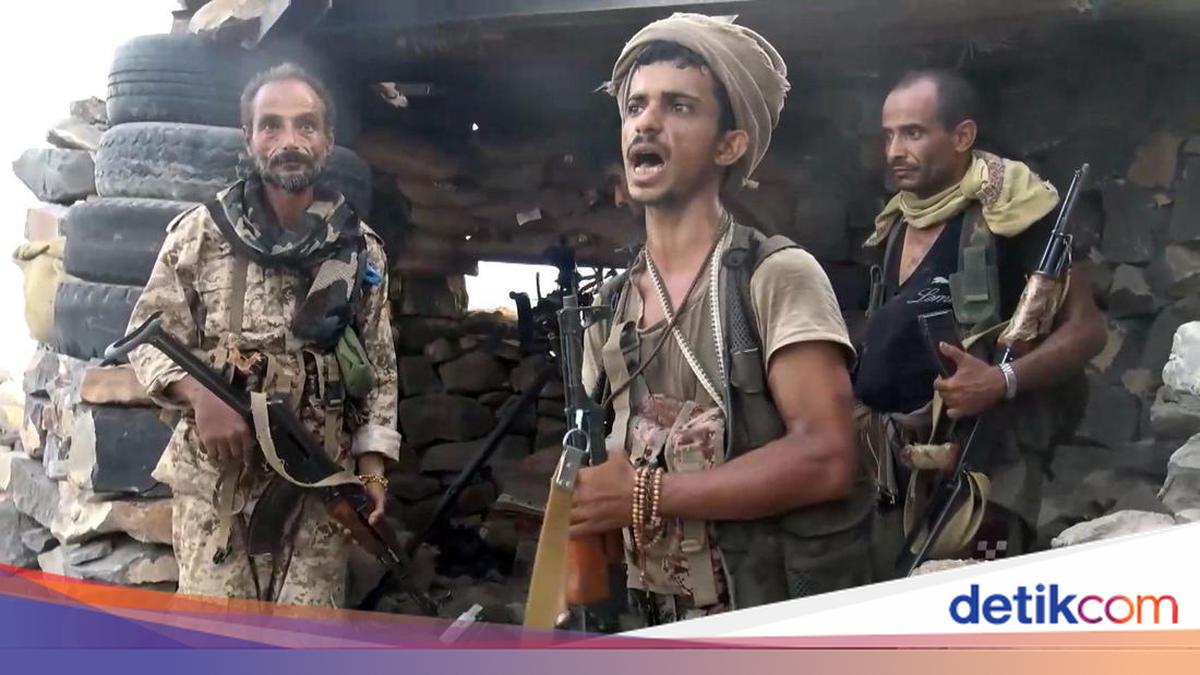
We were travelling at high speed in a pick-up truck with pro-government Yemeni forces, crossing the desert. Houthi fighters had been driven out of the area just a few days earlier, according to what we had heard.
Every so often, I looked towards the Arabian Sea and the distant mountain peaks, with their steep ravines.
As the two sides fight across vast, empty stretches of desert, it is difficult to see what victory over the enemy looks like.
But pro-government forces in Lahj province showed us a new defensive line they had built from sandbags.
“There was fierce fighting,” said Tawfiq Al Haboun, a bearded commander in military uniform.
“They have snipers, artillery and ballistic missile launchers,” he said of the Houthi fighters.
War is raging in this remote corner of the Middle East. Its impact is felt not only by Yemenis but also by people around the world.
Yemen’s deep-rooted civil war can no longer be ignored. It is part of a wider conflict stretching from Tehran to Riyadh, where a barrage of missiles struck the international airport at the weekend.
Al Haboun showed me fragments of fibreglass and metal shrapnel in his leg. He said his injuries were caused by a Houthi drone carrying C4 explosives.
Al Haboun is a member of the Southern Forces, part of a loose alliance of groups fighting for Yemen’s government. The government is internationally recognised and supported by Saudi Arabia, including through its air force.
The Houthis seized Yemen’s capital, Sanaa, in 2014 in an attempt to overthrow the government.
A year later, a Saudi-led coalition of Arab states moved to drive them out. Despite years of devastating air strikes, Saudi Arabia has been unable to defeat the Houthis.
Commander Al Haboun told me that about 500 Houthi fighters remained in the highlands overlooking the strategic maritime corridor of Bab al-Mandab, which connects the Red Sea to the Gulf of Aden.
We could not see the narrow waterway, which is vital for oil exports, during our journey.
The Houthis seized the area in a lightning offensive last September.
Al Haboun claimed that pro-government forces had retaken about 85% of the territory.
The Houthis have consistently denied losing control of other areas. But, according to our local sources, they have not made that denial about the Bab al-Mandab area.
Until Yemen’s pro-government forces regain full control of the territory, global oil supplies and prices will remain under pressure.
We later heard that fierce fighting had taken place on the day of our visit.
Five military vehicles belonging to pro-government Yemeni forces were reportedly hit by improvised explosive devices planted by the Houthis. It was unclear how many fighters had been killed or wounded.
As international energy markets face turmoil, famine threatens Yemenis. People are exhausted and have been forced to flee by the latest wave of violence.
The International Organization for Migration (IOM) says about 200,000 people have been displaced from their homes since the escalation in Yemen began in early September. The war is taking place in the poorest country in the Arab world.
As we left the area, we saw a distressing scene: families scattered beneath trees, seeking shelter.
Among a group of women and children, we met Aisha. Sitting on the ground, she was gaunt and looked old.
Aisha had fled her home in the Kahboob mountains, an area hit by Houthi drone strikes.
“We have been here for 30 days,” Aisha told me.
“I have no livestock, no money, no water, no food, not even a blanket… we had to run with only the clothes we were wearing,” she said.
At the weekend, people at Riyadh International Airport in Saudi Arabia panicked. A Houthi attack, one of the deadliest in Saudi Arabia in more than a decade, shook the country and damaged the sense of security felt by its government and people.
But in an operating theatre in the Yemeni port city of Aden, geopolitics seemed far away.
The hospital was overwhelmed, and doctors worked day and night to treat wounded pro-government fighters arriving from the front line.
The southern city of Aden has served as the seat of the internationally supported government since 2015.
We visited a military hospital where 51 wounded people arrived in a single day. Many had gunshot wounds, and some needed amputations.
In a crowded ward, a Houthi fighter lay alongside a combatant from the opposing side. Doctors told us they made no distinction between them.
“I don’t care where he comes from, his background or his religion. He is a human being, so I have to treat him as one,” said Dr Bassam Hazar.
Scores of wounded people were brought to the military hospital in Aden on the same day in early October.
Even if the war ends, some people will never forget it.
A man sat silently on his bed. A white bandage covered what remained of his left arm, and staples ran along the top of his head.
Others had not lost their fighting spirit. Ahmed Ali Mahmoud was smiling and upbeat despite having several broken bones.
“I’m not waiting until I have fully recovered,” he told me.
“I just want to be able to stand upright. I think it is a religious duty and a national duty to return to fighting.
“The Houthis have destroyed this country. With victory, I won’t even feel these fractures,” said the pro-government fighter.
The wounded pro-government fighter Ahmed Ali Mahmoud said he wanted to return to the fight against the Houthis.
In the next ward lay Ali, a 12-year-old boy whose age was just one year greater than that of Yemen’s civil war.
Ali was injured in a drone strike while walking in the street and was due to undergo a complex operation.
“There is shrapnel close to his spine,” said Dr Amr Reyadh Assaqaf, standing beside his bed.
“This operation will not be easy, but, God willing, our staff will be able to manage it.”
He told me Ali was quiet and gentle.
“At first he was depressed,” he said, “but we gave him toys to play with and his mood gradually improved.”
Twelve-year-old Ali was injured in a drone strike while walking in the street.
But will the war continue to haunt Ali into adulthood?
A ceasefire in 2022 brought several years of fragile calm.
But the Houthis are now a stronger adversary, as they demonstrated at the weekend.
The Houthis already control most of Yemen’s population. If a new mediation effort takes place, as some speculate it may, they could make tough demands.
Back at the hospital, as he prepared for the next wave of casualties, Dr Bassam Hazar hoped for change. But he was not sure it would come soon.
“War may be good for the news, but it is terrible for people,” he said.
“Sons lose their fathers, and mothers lose their sons. We need peace.”
Source: jawawa.id (https://jawawa.id/newsitem/yemenis-plea-amid-government-houthi-conflict-we-want-peace-1791892495)
Originally published by detikcom (https://news.detik.com/bbc-world/d-8705377/jeritan-warga-yaman-saat-konflik-pemerintah-vs-houthi-kami-ingin-perdamaian), translated from Indonesian