
Yellow Coconut Leaves in Javanese Weddings: Their Philosophy and Meaning
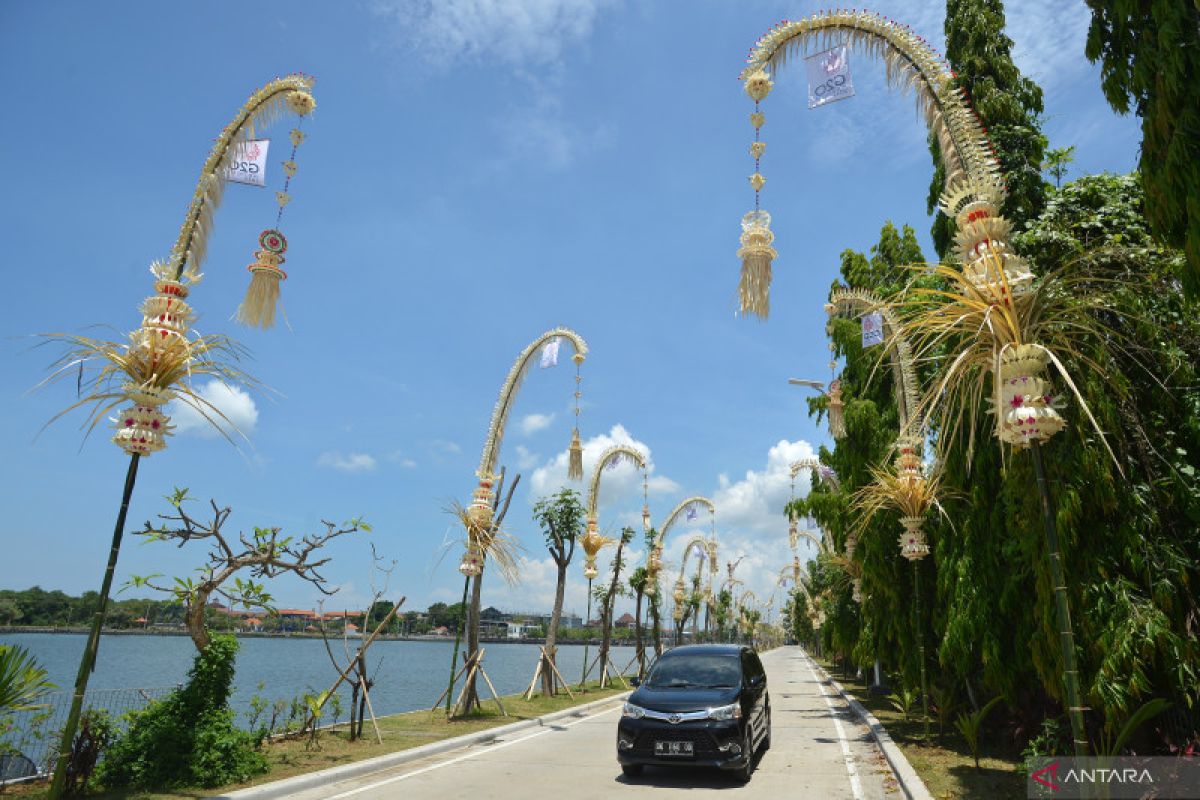
Jakarta (ANTARA) – Janur kuning is a common decoration at traditional Javanese weddings. These young coconut leaves, which are yellowish-green, are usually arranged into various shapes and placed around the wedding venue.
Their presence is not merely intended to beautify the setting or indicate that a celebration is taking place. In Javanese tradition, janur kuning carries symbolism and expresses hopes for the couple as they begin married life.
The tradition has endured amid the development of modern wedding styles. Janur kuning is still used at many weddings, both those that follow Javanese customs in full and those that incorporate only selected traditional elements.
What does janur kuning mean, what is the philosophy behind it, and what functions does it serve at weddings? Here is an explanation.
Janur is a young coconut leaf, usually pale yellow to greenish in colour. Its pliable texture makes it easy to weave and shape into various decorations.
At traditional Javanese weddings, janur kuning is used as part of the decoration and ceremonial equipment. It can be formed into arches at entrances, venue ornaments and kembar mayang arrangements, which feature in wedding rituals.
The use of janur is also connected with the tarub tradition: the installation of particular decorations and items around a home or venue where a celebration is being held. In practice, tarub signals to the community that a family is hosting an event, including a wedding.
Research by Nihayatul Karimah and Prilla Lukis Wediyantoro, published in the English Journal of Merdeka in 2025, describes the use of janur kuning and woven young coconut leaves in tarub as an element of traditional Javanese wedding decoration. Besides beautifying the venue, tarub informs nearby residents that a family is holding a celebration.
Janur kuning has several meanings in Javanese tradition. These are associated not only with its form and colour, but also with the family’s hopes for the newlyweds.
- A symbol of happiness and good wishes
Janur kuning is often understood as a symbol of happiness and good wishes. Its presence at a wedding represents the family’s prayers that the couple will enjoy a joyful married life.
The colour yellow is also commonly associated in cultural interpretations with light, cheerfulness and prosperity. Janur is therefore used to welcome a happy occasion.
- A symbol of purity and good intentions
Janur is also associated with purity and good intentions in establishing a household. This meaning reflects the hope that the couple will begin their life together with sincere hearts.
In local tradition, the symbol serves as a reminder that marriage is not only the union of two people, but also a commitment to care for and respect one another.
Interpretations of janur can differ between regions and families, however. There is no single meaning shared by all Javanese communities.
- A symbol of guidance and the light of life
Some cultural interpretations connect the word janur with an expression meaning light or guidance. This is linked to the hope that the couple will find direction as they navigate married life.
A study published in Springer’s Journal of Ethnic Foods in 2023 also discusses the meaning of janur in Javanese culture. It connects janur with light, happiness and celebration, and notes its use at various festivities, including weddings.
This is a cultural interpretation, however, rather than the only scientifically agreed explanation of the word’s origin.
- An image of domestic harmony
Janur used in wedding decorations can also represent the hope that husband and wife will live in harmony.
The couple is expected to understand one another, work together and face the challenges of married life as a team. Janur is therefore not just decoration, but also a reminder of the values to uphold after the wedding.
Alongside its philosophical significance, janur kuning has practical functions at traditional Javanese weddings. Here are some of its uses.
- Marking a wedding celebration
One function of janur kuning is to signal that a family is holding a celebration.
It is usually placed at the front of the house, by the entrance or around the event venue. Passers-by and guests can then see that a wedding is taking place there.
- Enhancing wedding decorations
Janur is pliable and can be woven and shaped into a variety of ornaments. These decorations can embellish entrances, the wedding dais and areas where guests are welcomed.
It also lends a distinctive traditional feel and is often combined with modern decorations.
- Forming part of kembar mayang
Janur kuning is one of the main materials used to make kembar mayang, a traditional decorative arrangement used in Javanese wedding ceremonies.
Kembar mayang is usually made by shaping janur into various ornaments and combining it with certain leaves and flowers. Its form and arrangement carry symbolism relating to life and the hopes held for the couple.
Research by Sri Widayanti, published in Gadjah Mada University’s Jurnal Filsafat in 2008, describes kembar mayang as an element of traditional Javanese ceremonies. The arrangement carries philosophical meaning about the relationship between people and nature, and symbolises a person’s transition from single life to marriage.
- Completing traditional wedding rituals
In some Javanese wedding traditions, janur is used as part of the ceremonial equipment. It can be seen in the installation of tarub and in the making of kembar mayang.
Procedures and requirements vary from one region to another. The way janur is used is therefore not the same at every traditional Javanese wedding.
Janur kuning and kembar mayang are often mistaken for the same thing. They are different, although related.
Janur kuning is the young coconut leaf used as the basic material for decorations. Kembar mayang, meanwhile, is a traditional arrangement made from janur and additional materials such as leaves and flowers.
In other words, janur is a material that can be shaped into various ornaments, while kembar mayang is one particular arrangement with a specific role in traditional Javanese wedding rituals.
Is janur kuning used only at traditional Javanese weddings?
Although it is strongly associated with Javanese weddings, janur is not limited to marriage ceremonies. The young coconut leaves can also be found at other traditional celebrations and events.
In Javanese communities, janur is used to decorate venues for celebrations such as circumcision ceremonies and family events. Its form and meaning can be adapted to the occasion and local customs.
The use of janur at modern weddings has also evolved. Some couples retain its traditional form, while others adapt it as a decorative element in contemporary wedding designs.
At its heart, janur kuning is a cultural heritage that shows how Javanese communities express prayers and hopes through symbols in wedding ceremonies. Its presence not only beautifies the venue, but also reminds couples of the values of togetherness, commitment and good wishes as they build a household.
Source: jawawa.id (https://jawawa.id/newsitem/yellow-coconut-leaves-in-javanese-weddings-their-philosophy-and-meaning-1794131553)
Originally published by Antara (Indonesian) (https://www.antaranews.com/berita/5839843/janur-kuning-dalam-pernikahan-jawa-ini-filosofi-dan-maknanya), translated from Indonesian