
Yatsi Madani University Reveals Family Economic Conditions as Barrier to Stunting Prevention
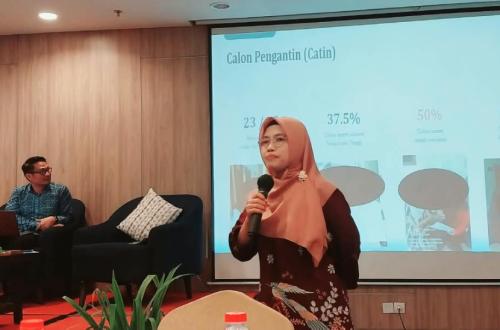
Family economic conditions have emerged as a significant barrier to stunting prevention in Tangerang Regency. This finding was revealed during a Stunting Case Audit (AKS) conducted through family mentoring and visits in the Tigaraksa District.
The findings were presented during a public discussion on the dissemination of the GATI program identification results and the Stunting Case Audit at the Vega Hotel Gading Serpong, Tangerang Regency, on Thursday (27/08/2026).
Lastri Mei Winarni, a lecturer at the Faculty of Health Sciences, Yatsi Madani University, stated that many families already understand the importance of meeting nutritional needs for children. However, economic limitations mean this knowledge cannot always be applied in daily life.
“One of the things we found is a gap between knowledge and the family’s ability to apply that knowledge in daily life. Families understand how to provide good food to children, but economic conditions remain a major obstacle,” said Lastri.
The audit also identified issues at various stages of family life. For example, among prospective brides, unstable economic conditions and smoking habits among husbands were observed. Among pregnant women, issues such as anaemia and chronic energy deficiency (CED) were identified. Post-childbirth, problems included decreased breast milk production and sub-optimal exclusive breastfeeding.
According to Lastri, these conditions indicate that stunting prevention cannot focus solely on the child. The role of the father, economic conditions, maternal health, the environment, and the family’s decision-making capacity all influence a child’s health.
“We see that mothers cannot be placed as the sole party responsible for a child’s health. The father’s role, family economic status, maternal health, the environment, and the family’s ability to make decisions are all interconnected,” she explained.
During the mentoring process, cadres conducted gradual family visits to provide education on prenatal check-ups, physical and psychological preparation for mothers, complementary feeding (MPASI), toddler nutrition, maternal mental health, the father’s role, clean and healthy living behaviours, and family planning.
Evaluation results showed that this education increased the level of family knowledge. Based on measurements, the level of family knowledge rose from 96.3 per cent before education to 97.5 per cent after education.
However, Lastri assessed that increased knowledge does not automatically result in behavioural changes if families still face economic hurdles and minimal support from their environment or partners.
“Education alone is not enough. When a family knows what to do but lacks the economic capacity, environmental support, or partner support to implement it, behavioural change will be difficult to sustain. Therefore, the audit results must serve as the basis for subsequent interventions,” she said.
She added that the results of the Stunting Case Audit need to be followed up through integrated, cross-sectoral programmes. Universities can play a role through research, community mentoring, education, and the development of interventions tailored to the specific conditions of local families.
The event, organised by the Tangerang Regency Population and Family Planning Service (DPPKB), featured several family development practitioners. The event was opened by the Head of DPPKB Tangerang Regency, Achmad Muchlis, and featured the Regent of Tangerang, Moch. Maesyal Rasyid, as the keynote speaker.
Source: jawawa.id (https://jawawa.id/newsitem/yatsi-madani-university-reveals-family-economic-conditions-as-barrier-to-stunting-prevention-1788436798)
Originally published by Republika (https://news.republika.co.id/berita/tksab1416/universitas-yatsi-madani-ungkap-ekonomi-keluarga-jadi-hambatan-penanganan-stunting), translated from Indonesian