
Yasonna States People's Sovereignty Must Be Discussed Beyond Mere Philosophy
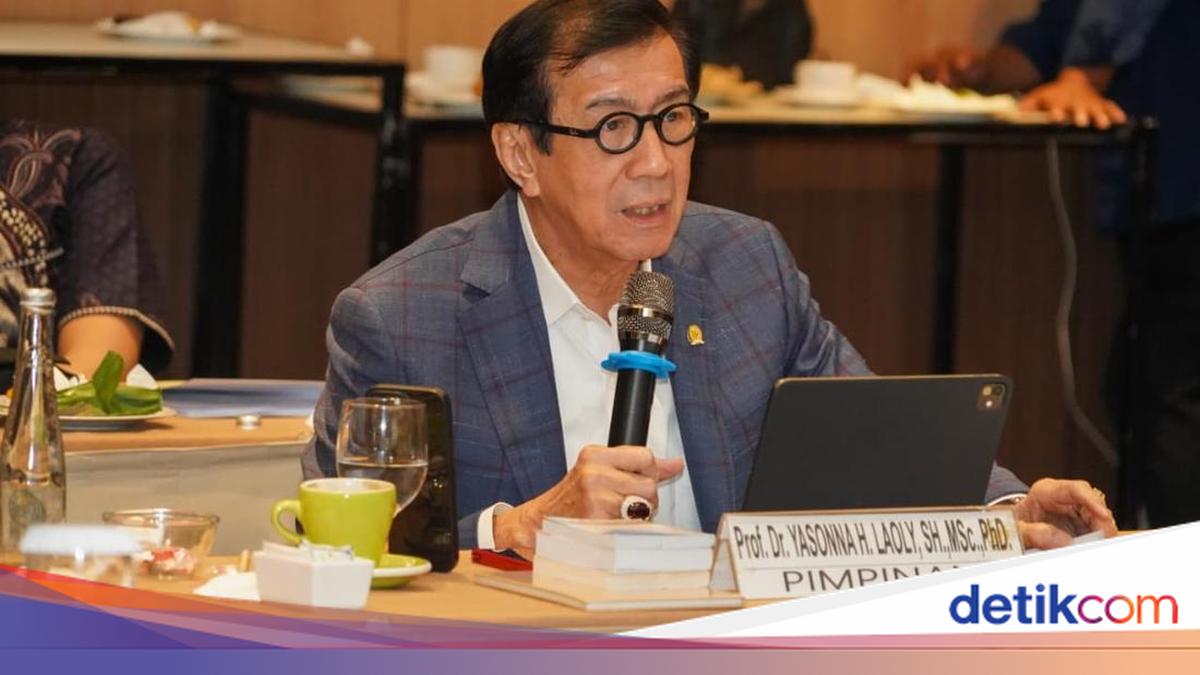
The MPR RI Research Body continues to delve into the theme of people’s sovereignty from the perspective of Pancasila Democracy. The Chairman of the MPR RI Research Body, Yasonna H. Laoly, stated that this theme is crucial to study continuously, not only from philosophical and constitutional aspects but also from the practical implementation of democracy in Indonesia.
According to him, the theme of people’s sovereignty has actually been discussed in several regions and universities, involving experts, practitioners, and researchers. These discussions must continue as there are still many issues that require deeper investigation.
“We have discussed this theme in several places last year. We agreed, including the leadership, that we need to continue deepening this subject,” Yasonla stated in a briefing on Friday (11/9/2026). He shared this during a Focus Group Discussion (FGD) for Group I in South Tangerang on Thursday (10/9).
Yasonna revealed that Group I of the MPR Research Body is specifically examining people’s sovereignty through the lens of Pancasila. This study is part of several themes currently being addressed by the MPR Research Body, including state finances and regional autonomy.
In the process, the body has visited various regions to absorb views from academics, practitioners, and researchers. He noted that the discussion on people’s sovereignty needs to look at how these principles are truly realised in the conduct of the state.
“We, as political practitioners, will look more at not just the philosophy of the law, but also in practice—how the practice of people’s sovereignty is manifested and implemented to this day,” he said.
Pancasila Democracy and Regulation
Furthermore, he explained that Pancasila Democracy can be seen through the second and fourth precepts of Pancasila: just and civilised humanity, and democracy led by the wisdom of deliberations among representatives.
In his view, these two principles possess broad and abstract meanings that need to be translated into various legal instruments.
“Pancasulated Democracy can be seen from two precepts: just and civilised humanity, and democracy led by the wisdom of deliberations among representatives. These are very abstract statements. We translate them into laws,” said Yasonna.
He cited the translation of these principles through various regulations, such as the Election Law, regional elections (Pilkada), and presidential elections. However, Yasonna assessed that the issue does not end with the existence of regulations, as the equally important factor is how those rules are implemented in practice.
“The problem lies in the practice, the implementation, and so on,” he added.
Amendment or Refinement
Yasonna stated that the MPR Research Body is also keeping the discussion open regarding whether the various issues in democratic practice require constitutional changes or can be addressed through the refinement of existing laws and regulations. This study is running alongside the discussion on the State Policy Guidelines (PPHN).
“Some believe we need to go as far as an amendment. This is happening alongside the PPHN, which we are still studying. Others say it is enough to refine our legal framework and so on,” he said.
To enrich the study, the MPR Research Body has invited several political practitioners, including the Executive Director of Poltracking Indonesia, Hanta Yuda; the Executive Director of Charta Politika Indonesia, Yunarto Wijaya; and the Executive Director of Parameter Politik Indonesia, Adi Prayitno.
Executive Director of Poltracking Indonesia, Hanta Yuda, assessed that people’s sovereignty should not stop at electoral activities. According to him, elections should be viewed as the gateway to people’s sovereignty, rather than the end of public participation.
“Elections are the gateway to sovereignty; they are only the entrance, not the exit,” said Hanta. He encouraged the concept of sustainable sovereignty so that the public maintains the space to supervise and convey aspirations after an election.
Meanwhile, the Executive Director of Charta Politica Indonesia, Yunarto Wijaya, highlighted the gap between the interests of the political elite and the aspirations of the people. He assessed that democracy is often deemed important by the elite leading up to elections, whereas the public requires democracy to continue functioning after power has been established.
Yunarto also warned of the potential weakening of check and balance mechanisms when a government coalition becomes too large. Similarly, observer Adi Prayitno emphasised the importance of public participation as the lifeblood of people’s sovereignty, both through elections and non-conventional participation such as demonstrations, protests, and petitions.