
Yaqut files objection against hajj quota corruption charges
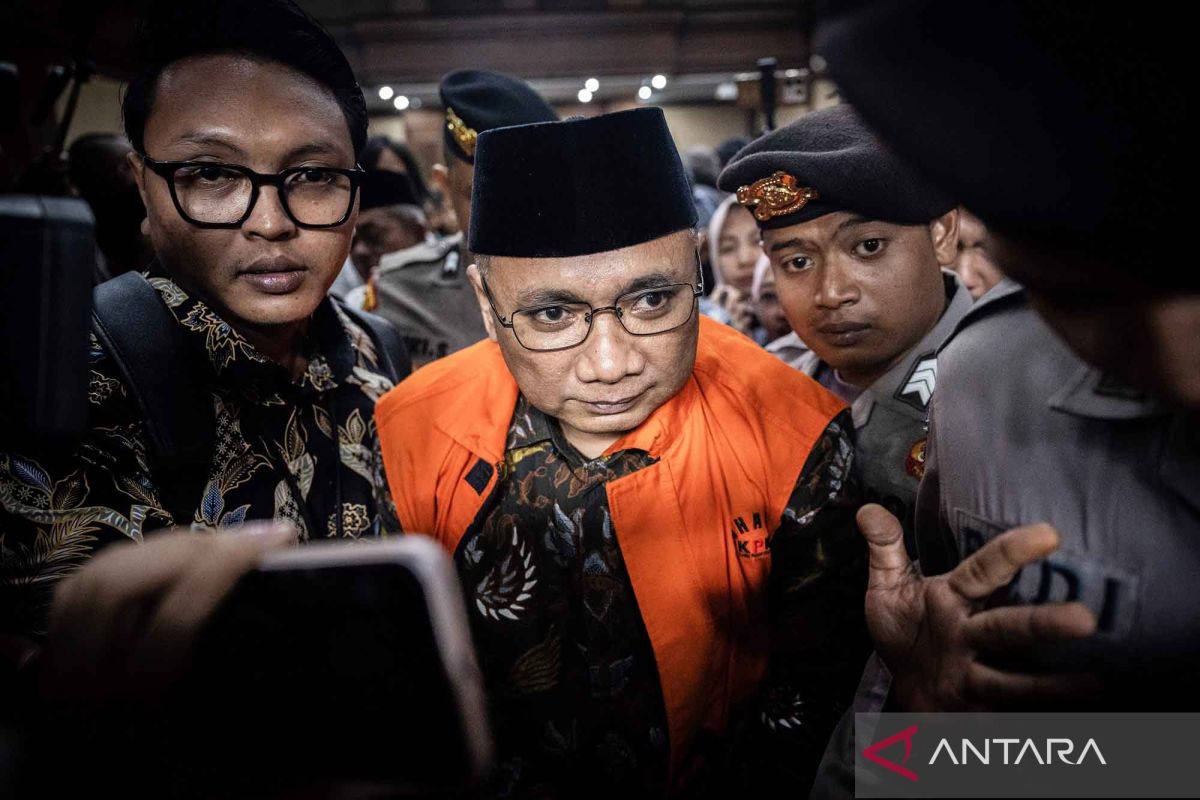
Former Religious Affairs Minister Yaqut Cholil Qoumas, through his legal team, has filed an objection to the corruption charges against him regarding the 2023-2024 Indonesian hajj quota. Advocate Dodi Abdulkadir explained the objection was filed because the legal team believes there are issues with the legal construction used by prosecutors to charge Yaqut. “We are, among other things, questioning the disappearance of Fuad Hasan Masyhur’s name from the final part of the indictment, even though his name is mentioned several times in the case file,” Dodi said after a hearing at the Corruption Court in Central Jakarta on Tuesday. The trial will continue on Tuesday, 12 August, with the agenda of hearing the objection from the legal team. Dodi questioned why Yaqut should be held criminally responsible for mistakes made by others. He highlighted Fuad’s role, which has been present since the issue of additional hajj quotas arose in 2020. He assessed that the case ignores other parties allegedly involved in the buying, selling, or utilisation of hajj quotas. Furthermore, the legal team disputes the allegation that Yaqut received 271,000 US dollars, arguing the indictment does not clearly explain the evidence of this receipt. Dodi also questioned why bribery or gratification charges were not used if the prosecutors claim a state official received money. Another issue raised is the application of administrative law. He argued that Yaqut’s actions in issuing policies as a minister should also be tested within the framework of administrative law. “This means that as a minister, he has the authority to issue policies and ministerial decisions, and the scope for reviewing such policies is within administrative law,” he said. Meanwhile, another of Yaqut’s lawyers, Mellisa Anggraini, highlighted the basis for calculating the state financial loss, which reached Rp622 billion. She explained that the loss was built from three components: profits of Special Hajj Organisers from dispatched pilgrims, profits from the sale of officer quotas, and profits from dispatching pilgrims deemed not entitled along with acceleration fees. She questioned how profits received by PIHK from pilgrims’ money could be categorised as a state financial loss. “Where is the state money in these three components? The money came from the pilgrims, was received by PIHK, and enjoyed by PIHK,” Mellisa stated. She argued that if there were ministry officials who profited from this practice, the issue should be constructed as alleged bribery or gratification, not automatically as a state financial loss. In this case, Yaqut is accused of causing state losses of Rp622.09 billion by diverting and arranging the distribution of additional special hajj quotas for 2024 by 50 percent without a technical study basis. He is also accused of filling the additional special hajj quotas for 2023 and 2024 with pilgrims who did not meet the established mechanisms. The actions were allegedly carried out together with his former special staff member, Ishfah Abidal Aziz, Maktour Operations Director Ismail Adham, and the former General Chair of the Hajj and Umrah Tour Travel Association, Asrul Aziz Taba. The indictment states the quota filling was done to accommodate requests from PIHK associations, accompanied by the receipt of acceleration fees from pilgrims and special hajj officers. The state loss is detailed as Rp438.09 billion from the difference in PIHK revenue and expenditure for dispatching ineligible pilgrims, Rp39.95 billion from the sale of special hajj officer quotas, and Rp143.92 billion in acceleration fees. Yaqut is accused of personally profiting by 271,500 US dollars, equivalent to Rp4.83 billion. He is charged under Article 603 in conjunction with Article 20 letter c of the National Criminal Code, or Article 3 in conjunction with Article 18 of Law Number 31 of 1999 on the Eradication of Corruption Crimes as amended by Law Number 20 of 2001.