
Yangtze River Delta International Design Exhibition Held in Jakarta
Mercu Buana University (UMB) is further strengthening its position within the global academic network. Through the organisation of an international exhibition titled ‘Cross-Cultural Innovative Brand Design from the Yangtze River Delta’, UMB is creating space for strategic collaboration that brings together Chinese design innovation with Indonesian academic potential.
The event, which took place from 1–14 June 2026, was officially opened on Tuesday (2/6/2026) at the UMB Campus in West Jakarta. Supported by the China National Arts Fund, this event serves not only to showcase visual aesthetics but also to act as a bridge for research and knowledge exchange between nations.
The Vice Rector for Student Affairs and Cooperation at UMB, Irmulansati Tomohardjo, emphasised that international collaboration is a key pillar in improving the quality of education. According to her, cross-cultural interaction provides new perspectives for students and lecturers regarding the dynamics of the global creative industry.
“Through activities such as this, students do not only learn theory in the classroom, but also understand best practices and the latest developments at an international level. This is our commitment to creating a globally-oriented learning environment,” said Irmulansati.
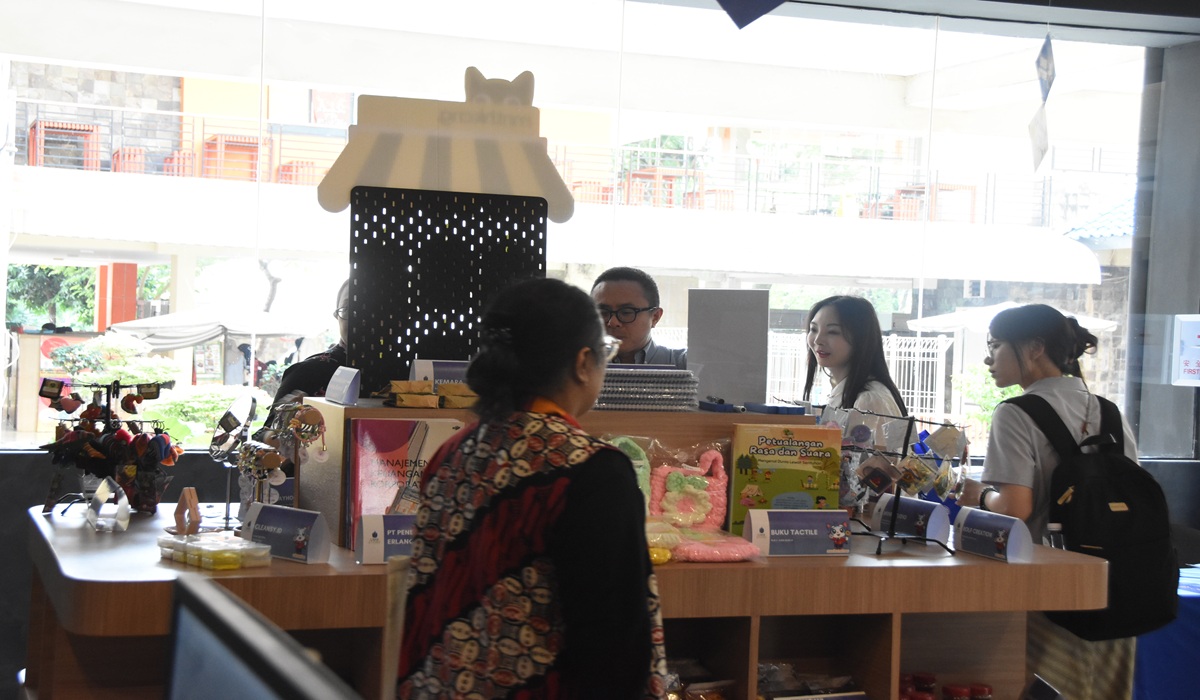
The exhibition features at least 100 outstanding design works created by young Chinese designers. The primary focus is on the development of brand identity in the Yangtze River Delta region, which successfully blends traditional values with contemporary approaches.
In addition to the physical exhibition, the agenda included an academic symposium featuring international experts, including the Dean of the Sino-German Branding Faculty, Yiping Zhang, and the Vice Dean of the School of Art, Design, and Media, Jian Sun. Intensive discussions were held to analyse brand development opportunities in the era of globalisation.
For Mercu Buana University, this initiative is expected to trigger broader cooperation in the future, ranging from student exchange programmes and joint research to the alignment of curricula with global industry needs. This step strengthens UMB’s position as an institution actively producing internationally competitive human resources.