
XL Ready to Compete for Golden Frequencies, Indosat Still Considering
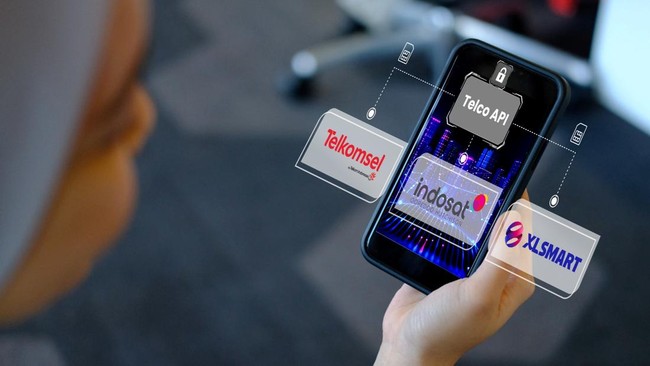
Jakarta, CNBC Indonesia - The Ministry of Communication and Digital (Komdigi) is preparing a selection process for the 700 MHz and 2.6 GHz radio frequency bands in 2026.
In response to the plan, XLSMART has expressed its interest in participating in the spectrum selection prepared by the government.
XLSMART’s Group Head of Corporate Communications & Sustainability, Reza Mirza, stated that the company will take part in the frequency band selection process.
“Yes, we are interested and will participate in the selection process for the 700 MHz and 2.6 GHz frequency bands,” Reza said in a written statement received by CNBC Indonesia.
Meanwhile, Indosat Ooredoo Hutchison stated that it is still conducting internal discussions regarding the spectrum selection plan. The company has not yet been able to provide an official decision.
“As of now, we are still in the internal discussion stage and there are no detailed information that we can share with the media. We will inform further developments as progress is made,” said Indosat’s management.
For information, the 700 MHz frequency band is a low-band spectrum known as the “digital dividend” because it originates from the migration of analogue television broadcasts to digital (Analogue Switch Off/ASO).
This frequency has wide signal coverage and the ability to penetrate physical obstacles such as buildings, making it effective for improving cellular signal quality, both outdoors and indoors.
These characteristics make it the backbone for expanding mobile broadband services to wider areas.
Meanwhile, the 2.6 GHz frequency band is a mid-band spectrum ideal for supporting network capacity and large-scale data transmission speeds, including for 5G technology development.
This frequency is focused on accommodating high data traffic density in urban areas while providing a more stable high-speed mobile internet experience.
Through the selection of both frequency bands, the government targets the provision of minimum mobile broadband internet services based on 4G technology more evenly, especially in villages and sub-districts that still have limited telecommunications access.
In addition, operators are also encouraged to improve high-speed internet quality through strengthening 5G services in various regions.