
Xinyi Admission Dismantles Narrative of IDR 174 Trillion Investment in Rempang Under Jokowi Era
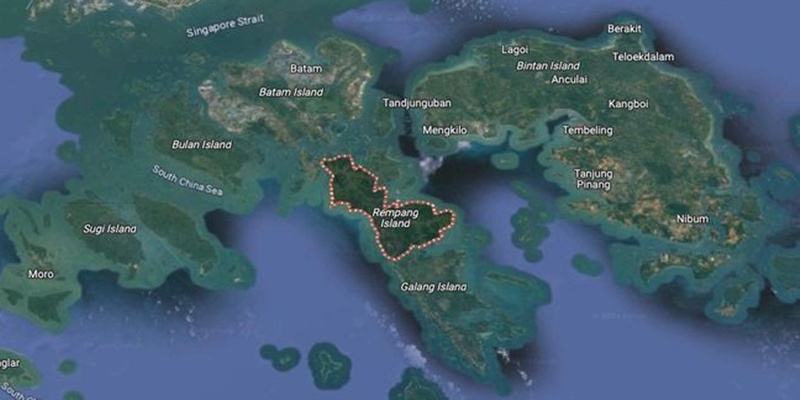
Indonesian Audit Watch (IAW) founding secretary Iskandar Sitorus believes the admission by the Hong Kong-based company proves the importance of re-evaluating the governance of the Rempang Eco-City national strategic project (PSN), which was promoted from the outset as an investment worth IDR 174 trillion.
“All this time, the public was convinced that Rempang would become a magnet for giant investment. However, after Xinyi itself spoke up, it was revealed that there was never any binding investment agreement or contract. This is no longer about whether the investment is cancelled or not, but about how the investment narrative was built before its legal foundation was truly ready,” Iskandar said in a statement received in Jakarta on Sunday, 19 July 2026.
According to Iskandar, the statement delivered by Xinyi to the Business & Human Rights Resource Centre on 3 February 2025 is an important fact that cannot be ignored. In its clarification, Xinyi stated it never initiated the eco-city project nor signed any agreement with the Indonesian government. The company only received an initial offer regarding the price and project requirements from the Batam authorities.
“If the main investor itself says there was never a contract, then the public has the right to question the government’s basis when announcing the IDR 174 trillion investment value. An investment of that size should stand on clear legal documents, not merely initial talks or exploration,” he said.
Iskandar added that this explanation was further reinforced in the ESG Report 2025 published by Xinyi in April 2026. In that report, the company stressed it was neither the developer nor the proponent of the Batam Eco-City project and decided not to proceed with the investment plan after considering the social and environmental impacts.
“What is interesting is that Xinyi actually admitted to considering community aspirations and concerns about mangrove preservation before deciding to withdraw. On the other hand, the government at the time continued the project despite growing public rejection. This is an irony that deserves evaluation,” he said.
Furthermore, Iskandar assessed that Xinyi’s withdrawal also unveils the weak foundation of the investment narrative that the government had been building. According to him, the government once made Xinyi the main investor for the Rempang Eco-City project. However, the company later confirmed it never appointed any party to represent them in project discussions with the local government or BP Batam.
“This means the claim regarding the main investor is invalidated by the company’s own admission. Even the power plant development plan that was once linked to Xinyi was also denied because there was never any agreement or contract,” he stated.
Iskandar also highlighted the lack of transparency from PT Makmur Elok Graha (MEG) as the developer of the Rempang Eco-City area. He noted that to date, the company has not provided a public explanation regarding various allegations that emerged during the area’s development process.
“MEG is the official development partner for the area, but it has almost never provided an explanation to the public. Yet various reports on social conflicts, alleged violence against residents, and eviction processes continue to surface. The state should ensure that national strategic project partners also uphold the principle of accountability,” he revealed.
Additionally, Iskandar reminded that the findings of the Indonesian Ombudsman’s investigation, which uncovered a number of maladministration issues in the Rempang project, must not be ignored. These range from the recognition of Kampung Tua, land status that is not yet clear and clean, the designation of the PSN which was deemed too hasty, to conflict handling that triggered fear within the community.
“If fundamental issues such as land status, protection of indigenous peoples, and legal certainty are not resolved, do not rush to build an investment narrative. It is precisely that foundation which must be settled first so that investors have certainty and the community obtains justice,” he asserted.
Therefore, Iskandar believes the administration of President Prabowo Subianto now inherits a heavy homework. He said the new government does not need to maintain the old narrative but must focus on resolving the problems left behind so that the Rempang conflict does not continue to drag on.
“The task of the current government is not to inherit an immature investment narrative, but to resolve all its legal issues, improve its governance, restore public trust, and ensure every strategic project is truly built on legal certainty. Announcing investments may yield short-term political gains, but if the foundation is fragile, it is the people and the next government who will bear the consequences,” Iskandar concluded.
Source: jawawa.id (https://jawawa.id/newsitem/xinyi-admission-dismantles-narrative-of-idr-174-trillion-investment-in-rempang-under-jokowi-era-1784526618)
Originally published by rmol.id (https://rmol.id/politik/read/2026/07/20/715138/pengakuan-xinyi-runtuhkan-narasi-investasi-rp174-triliun-era-jokowi-di-rempang), translated from Indonesian