
Xinjiang scientific expedition discovers ‘the toughest desert plant’
Urumqi (ANTARA) — A type of moss found in a desert in China’s north-western Xinjiang Uygur Autonomous Region can survive conditions that would kill most plants, including severe dehydration, intense radiation, extreme cold and a space environment resembling Mars.
The finding was among the major advances announced on Saturday (10 October) by the Third Xinjiang Scientific Expedition in Urumqi, the regional capital. Scientists have described the moss, whose scientific name is Syntrichia caninervis, as “the toughest desert plant discovered to date”.
The latest evidence of the moss’s exceptional resilience came from experiments in space.
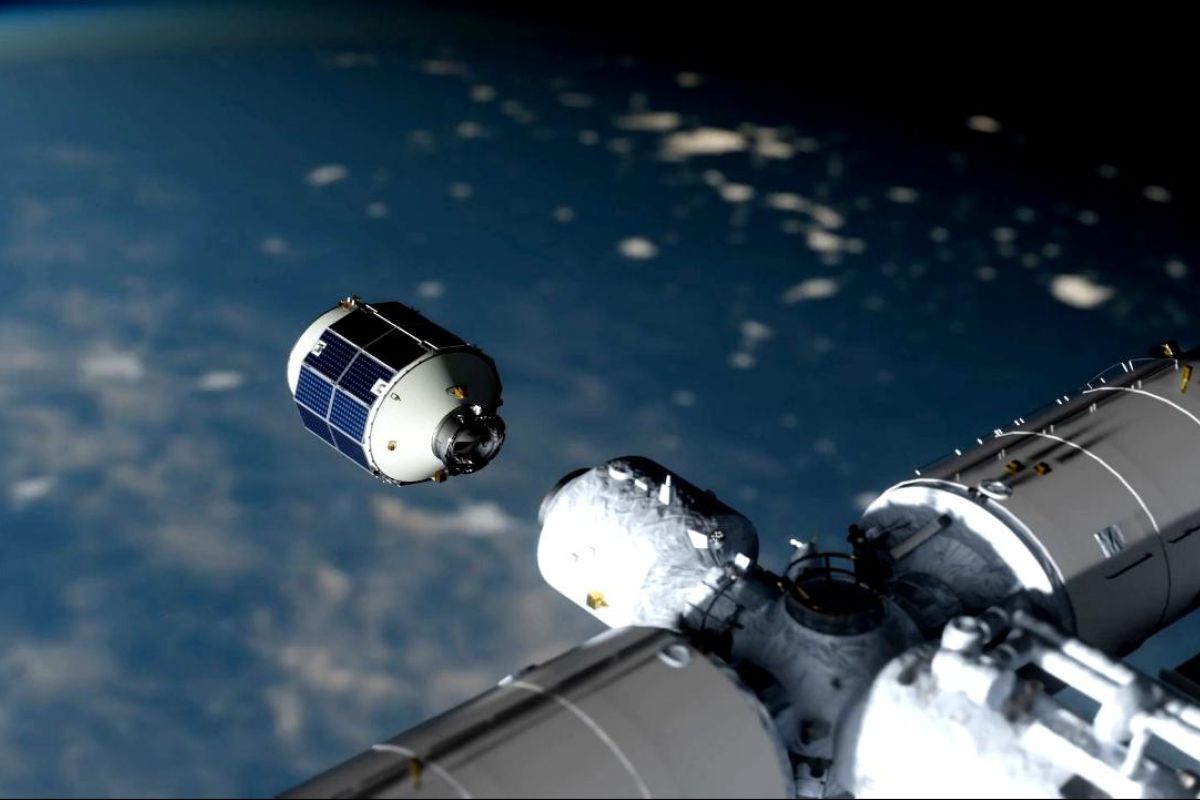
In March this year, dried Syntrichia caninervis moss was carried into space aboard Qingzhou, China’s experimental cargo spacecraft, for an experiment to reactivate life in orbit.
Under microgravity and cosmic radiation, a controlled watering system supplied only a small amount of water. The dried moss nevertheless revived, changing colour from dark grey to yellowish green.
“This is the first case in which an intact plant has been taken into low Earth orbit and successfully revived,” said Li Xiaoshuang, a researcher at the Xinjiang Institute of Ecology and Geography, which is affiliated with the Chinese Academy of Sciences.
Further observations in orbit showed that the moss continued to regenerate and grow well, indicating its potential as an ideal subject for life-sciences research in deep space, Li added.
In 2024, Li, as lead author, published a study of the moss in the academic journal The Innovation, describing it as a highly promising pioneer plant for “colonising space environments”.
Researchers on the scientific expedition found the plant in the Gurbantünggüt Desert.
Laboratory analysis showed that it could survive the loss of more than 98 per cent of the water in its cells through dehydration, remain viable after rapid freezing at minus 196 degrees Celsius, and withstand intense gamma radiation.
To understand how the moss survives extreme conditions, researchers obtained high-quality genetic data at chromosome level and identified a large number of genes associated with stress responses, revealing the molecular code behind the species’ tolerance.
The moss could provide genetic material for improving food crops and restoring land affected by desertification, Li said.
The Third Xinjiang Scientific Expedition was launched in 2021 by China’s Ministry of Science and Technology. The two previous expeditions took place in the 1950s and 1980s, respectively.
Over the past five years, the expedition team has studied Xinjiang’s ecology, land and agriculture, biodiversity and biological resources, as well as its mineral, energy and water resources.
Source: jawawa.id (https://jawawa.id/newsitem/xinjiang-scientific-expedition-discovers-the-toughest-desert-plant-1791712312)
Originally published by Antara (Indonesian) (https://www.antaranews.com/berita/5780850/ekspedisi-ilmiah-xinjiang-temukan-tumbuhan-gurun-paling-tangguh), translated from Indonesian