
Xi Jinping's Response as Americans Flock to Chinese AI Models
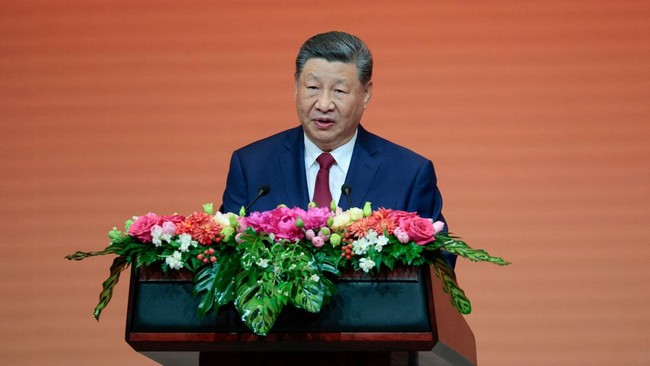
Jakarta, CNBC Indonesia - A growing number of American companies are switching to artificial intelligence models developed in China. According to data from OpenRouter, Chinese AI models contributed to 63 per cent of token usage by US firms during the first week of July 2026. This marks a sharp increase from the same period in 2025, when Chinese models accounted for less than 10 per cent of overall token usage by US companies, the data showed. OpenRouter is a marketplace that allows users to access hundreds of AI models from various providers. President Xi Jinping has called for China to play a greater role in formulating global rules on AI, as Chinese AI models gain popularity among US firms, according to a GuruFocus report. Speaking at the World AI Conference in Shanghai, Xi stressed the importance of keeping AI under human control while encouraging international cooperation on security, technical standards, and access for developing countries. He also promoted the World AI Cooperation Organization, a new group with nearly 30 member states, which could give Beijing greater influence in global AI governance. The expansion of Chinese AI has put pressure on established technology companies and investor sentiment across the sector. Chinese AI startup Moonshot recently launched its Kimi K3 model shortly before Xi’s speech, causing further unease among US AI developers. Moonshot claims its latest model can compete with leading products from US-based OpenAI and Anthropic. The debut of Kimi K3 triggered a sharp decline in AI and semiconductor stocks, as investors drew comparisons to the market disruption caused by DeepSeek last year. DeepSeek has since become the most popular Chinese model among US companies on the OpenRouter platform. AI assistant startup Lindy AI reported that switching from Anthropic’s model to DeepSeek reduced its inference costs by 90 per cent. However, the rapid adoption of lower-cost Chinese AI models may face increasing regulatory risks in both China and the US. Chinese officials have discussed security concerns with Alibaba Group Holding, the developer of the Qwen model family, and are considering restricting foreign access to the country’s most advanced systems. These discussions remain at an early stage with no current enforcement plans. Separately, US policymakers have launched investigations into Airbnb and Anysphere, the developer of the Cursor programming platform, over their use of Chinese models. Meanwhile, US firm Palantir Technologies has described China’s open-source models as an economic threat. Investors may therefore view China’s open-weight model strategy as both a competitive challenge for US AI developers and a potential source of disruption.