
Xi Jinping Boosts Chinese Manufacturing, Sparking European Concerns
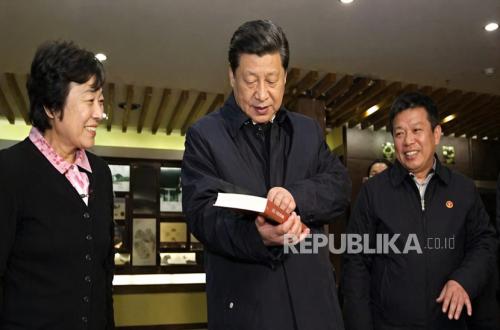
President Xi Jinping is pushing his country to expand and strengthen its advanced manufacturing sector. Beijing also aims to increase self-reliance and control over strategic industrial chains amidst intensifying global technological competition.
This drive comes at a time when China’s manufacturing capacity has become a new source of concern in Europe. The increase in exports of electric vehicles, clean energy technology, and various Chinese industrial products has raised fears regarding a new wave of competitive pressure, often referred to as ‘China Shock 2.0’.
Xi stated that China must continue to make advanced manufacturing larger and stronger. At the same time, Beijing needs to enhance its independence and its ability to control industrial chains.
These remarks were made by Xi during the National Advanced Manufacturing Conference in Beijing this week, as reported by the official Xinhua news agency on Thursday.
Xi also called for the accelerated development of a modern industrial system, with the advanced manufacturing sector serving as its backbone. According to him, China has made significant progress towards becoming a global manufacturing powerhouse.
China’s advanced manufacturing sector, Xi noted, continues to improve its innovation capabilities, competitiveness, and industrial strength. Beijing is now striving to ensure that this progress does not rely solely on foreign technology and components.
This strategy is a vital part of China’s efforts to strengthen technological self-reliance amidst increasing trade and technology restrictions in recent years. Mastery of the supply chain is seen as increasingly decisive for a nation’s ability to maintain production during geopolitical disruptions or technology export restrictions.
However, the expansion of China’s manufacturing capacity brings other consequences for its trading partners. Europe, in particular, is beginning to worry about the flood of Chinese manufactured products with highly competitive prices entering international markets.
Electric vehicles are one of the sectors receiving the most attention. In addition to EVs, concerns also encompass various green technology products whose production capacity is growing rapidly in China.
This situation has sparked debate regarding the potential arrival of ‘China Shock 2.0’. The term refers to the fear that the surge in Chinese manufacturing exports will once again exert significant pressure on producers in other countries.
These concerns are becoming increasingly relevant as Beijing’s economic policy direction has shifted in recent years. The Chinese government has redirected credit and resources from the property sector towards advanced manufacturing and high-tech industries.
This move was undertaken to seek new growth engines after the property sector, which for years was one of China’s primary economic drivers, faced significant pressure. Beijing subsequently increased support for strategic industries deemed capable of strengthening China’s position in global economic competition.
High-tech manufacturing is also expanding rapidly. However, this explosion of investment and production has not yet fully translated into increased household income and stronger domestic consumption.
This condition remains a critical issue within the Chinese economy. If domestic demand is unable to absorb the growth in production, Chinese companies become increasingly dependent on foreign markets to sell the goods they produce.
It is at this point that Beijing’s manufacturing strategy directly intersects with European concerns. China’s growing production capacity could increase export pressure on global markets when domestic consumption does not grow as quickly as its industrial capacity.