
Xi Jinping Aims to Unify Chinese People Through Mooncake Festival
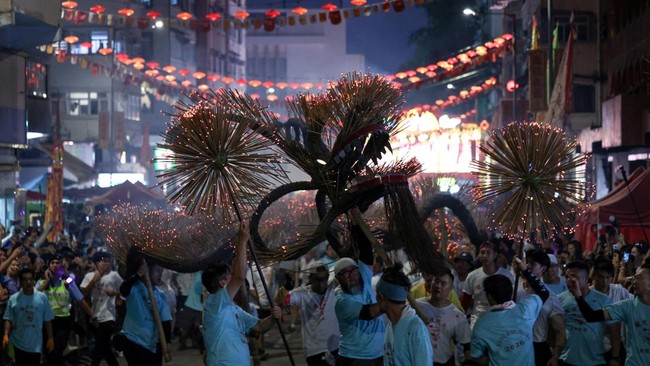
China is reviving traditions that were once regarded as symbols of the past. The Mid-Autumn Festival, which had been sidelined during the nation’s push towards modernity, is now being celebrated with great fanfare. In Zhangzhou, Fujian Province, celebrations are no longer limited to eating mooncakes; the city is adorned with lunar ornaments, and citizens can enjoy dinners in luxury campsites.
However, behind this festivity lies a larger agenda. The Chinese government is utilising traditional festivals as an instrument to strengthen national cultural identity while positioning the Communist Party of China as the guardian of the nation’s heritage and traditions.
From Suppressed Tradition to Chinese National Identity
The resurgence of traditional festivals marks a significant shift in China’s modern history. In the early 20th century, reformers viewed the lunar calendar and various traditional festivals as symbols of backwardness. After the establishment of the Republic of China in 1912, the country began adopting the Gregorian calendar. The Communist Party of China later took a harder stance, labelling several traditions as “feudal superstition.”
Lunar New Year was even prohibited during the Cultural Revolution before finally being restored in 1980. Two decades later, this stance reversed. In 2005, the Communist Party called for the preservation of several traditional festivals, including the Mid-Autumn Festival, the Qingming Festival (Tomb-Sweeping Day), and the Dragon Boat Festival.
Under Xi Jinping’s leadership, the revival of tradition has gained a stronger political dimension. Traditional festivals are positioned as part of the effort to build “Chinese cultural confidence.” State media also employs narratives such as “living under the same moon” to emphasise ties between different ethnicities, families, and communities on both sides of the Taiwan Strait. Thus, festivals are no longer merely a legacy of the past; they have become a way for China to define its contemporary national identity.
Chinese Traditional Festivals Now Become an Economic Engine
Despite government support, the revival of these festivals is not driven solely by the state. For the people, celebrations remain closely linked to family and tradition. In Fujian, for instance, many young people working or studying in other cities return to their hometowns to celebrate the festival with their families.
At the same time, various cities in China are beginning to develop traditional festivals into tourist attractions. Zhangzhou hosts cultural performances, Xi’an organises moon-themed poetry shows, and other cities offer local culinary and traditional experiences. The economic potential is evident from large-scale celebrations like the Spring Festival (Lunar New Year). Over the last four years, the number of domestic trips and consumer spending during these holidays has continued to increase. Festivals have evolved into a meeting point for culture, tourism, and consumption.
Local governments have economic incentives to make celebrations more attractive, while the public gains more options to enjoy old traditions in more modern ways. The revival of festivals ultimately not only strengthens cultural preservation but also opens opportunities for the tourism, culinary, and local economic sectors.
When State-Revived Traditions Become Difficult to Control
However, the revival of tradition also presents a dilemma for the Communist Party of China. As society delves deeper into tradition, it becomes increasingly difficult for the state to determine its meaning and direction. In Zhangzhou, for example, temples remain an important part of community life. However, their development requires approval from religious authorities, their teachings must follow state interpretations, and places of worship are required to display the national flag.
Issues of identity also arise. Many festivals promoted by the government are rooted in Han culture, while other ethnic groups possess different traditions. Lunar New Year, for instance, is not a primary traditional festival for the predominantly Muslim Uyghur population. Some activists have claimed that some Uyghur citizens face pressure to consume alcohol and eat pork-filled dumplings as a form of participation in these celebrations.
On the other hand, the revival of tradition also has the potential to revive the role of temples, Confucian teachers, and local communities as sources of moral authority outside the state. This is where the paradox of Xi Jinping’s policy emerges. The Communist Party seeks to revive old traditions to strengthen national identity and build an image as the guardian of Chinese culture. However, traditions that existed long before the founding of the Communist Party cannot always be fully controlled by the state.
Source: jawawa.id (https://jawawa.id/newsitem/xi-jinping-aims-to-unify-chinese-people-through-mooncake-festival-1790686482)
Originally published by CNBC Indonesia (https://www.cnbcindonesia.com/research/20260929160517-128-771884/xi-jinping-berambisi-mengikat-rakyat-china-lewat-festival-mooncake), translated from Indonesian